Will nobody think of the hugely powerful family who paid out millions to avoid public testimony about an alleged rape, and who covered up the regular taxis of sex-trafficked hookers ferried to its palace?

The #DailyTelegraph is off its meds again, letting #CharlesMoore run amok with his pretence that the #HouseOfWindsor is just some ordinary family.

If you are feeling masochistic, the full text is free at https://archive.is/oyKUC

#ukpol #BritishMonarchy #AndrewMountbattenWindsor #Andrew

Charles Moore - Decertified - Minneapolis Police, Kansas

Charles Moore was most likely a police officer at the Minneapolis Police. To qualify Charles Moore likely had a high school diploma or GED equivalent, fire...

Cop Blaster: Police Misconduct Reporting & Monitoring
Visualising the Great Pacific Garbage Patch

In 1997 Captain Charles Moore was sailing from Hawaii to California when he noticed a steady stream of plastics bobbing in the ocean. He had discovered the Great Pacific Garbage Patch.

BBC

: wish
." Happy 85th Birthday, Charles Moore!"
." Thank you for gifting us the Forth language!"
;

wish

Happy 85th Birthday, Charles Moore! 🎉 The genius behind the Forth programming language, your contributions have played a foundational role in computing. Here’s to the brilliance you’ve shared and the impact you’ve made on the tech world. #CharlesMoore #Forth #Legend

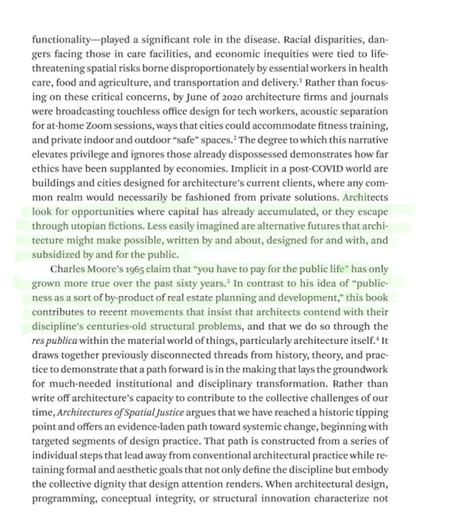
Architectures of Spatial Justice. by Dana Cuff, director of CityLab at UCLA; from @mitpress 2023. Presents ethically & public-mission driven driven practices that break with professional conventions to correct long standing inequities in the built environment. https://books.google.com/books/about/Architectures_of_Spatial_Justice.html?id=9nB5EAAAQBAJ. Cites & channels #EdSoja on #SpatialJustice https://en.wikipedia.org/wiki/Edward_Soja & #CharlesMoore's landmark 1965 essay on California architecture “You Have to Pay for the Public Life” umich.instructure.com/files/3950686/
Architectures of Spatial Justice

A field-defining work that demonstrates how architects are breaking with professional conventions to advance spatial justice and design more equitable buildings and cities.As state violence, the pandemic, and environmental collapse have exposed systemic inequities, architects and urbanists have been pushed to confront how their actions contribute to racism and climate crisis—and how they can effect change. Establishing an ethics of spatial justice to lead architecture forward, Dana Cuff shows why the discipline requires critical examination—in relation to not only buildings and the capital required to realize them but privilege, power, aesthetics, and sociality. That is, it requires a reevaluation of architecture’s fundamental tenets.Organized around projects and topics, Architectures of Spatial Justice is a compelling blend of theory, history, and applied practice that focuses on two foundational conditions of architecture: its relation to the public and its dependence on capital. The book draws on studies of architectural projects from around the world, with instructive case studies from Chile, Mexico, Japan, and the United States that focus in particular on urban centers, where architecture is most directly engaged with social justice issues.Emerging from more than two decades of the author’s own project-based research, Architectures of Spatial Justice examines ethically driven practices that break with professional conventions to correct long-standing inequities in the built environment, uncovering architecture’s limits—and its potential.

Google Books