Wild Killer Whales Sometimes Offer Food to Humans, Scientists Say

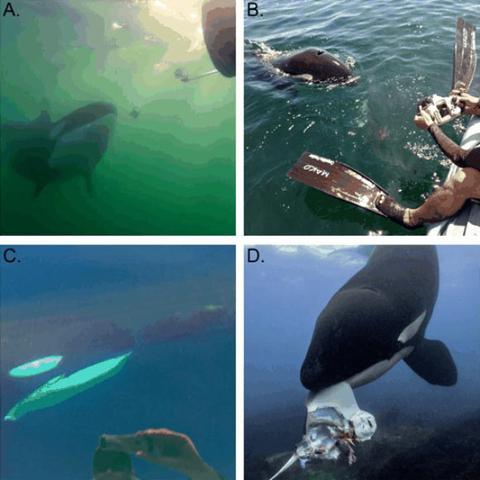
In a paper published online in the Journal of Comparative Psychology, marine biologists report on 34 interactions spanning two decades in which killer whales (Orcinus orca) in the wild attempted to offer food to humans. The incid…
#dining #cooking #diet #food #Food #altruism #Cetacea #Human #Killerwhale #Orcinus #Orcinusorca
https://www.diningandcooking.com/2166489/wild-killer-whales-sometimes-offer-food-to-humans-scientists-say/

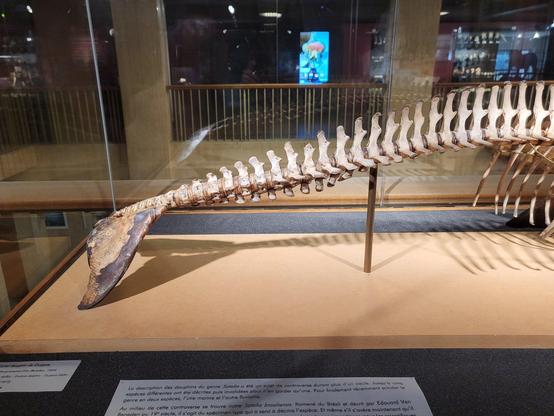
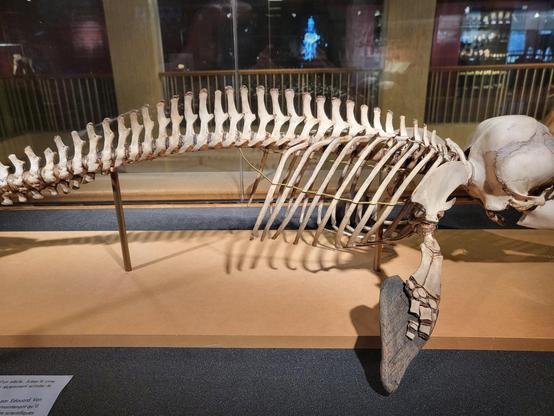
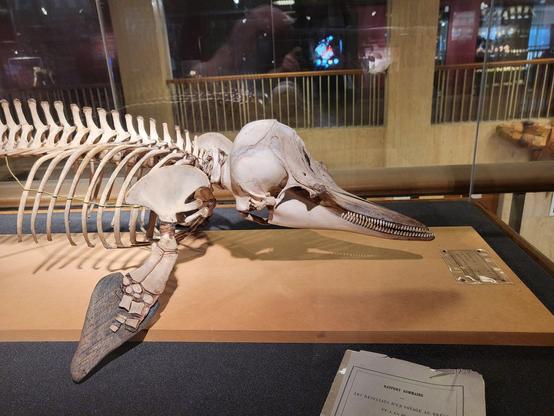
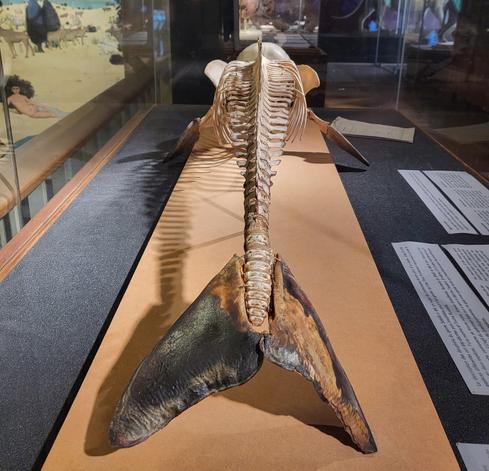
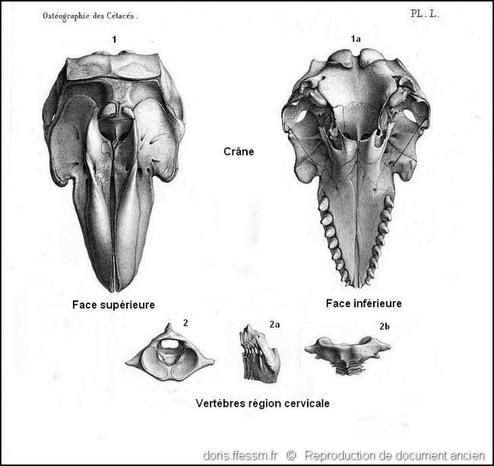
Fantastic skeleton of a Guiana dolphin at the Aquarium-Museum of Liège.

It was originally described by Van Beneden as the type specimen of Sotalia brasiliensis in the 19th century, which is now considered to be a synonym of Sotalia guianensis.

#cetacea #dolphin #zoology #taxonomy #science

The #RicesWhale: A Whole New Species of #Whale Discovered In 2021

Named the Rice’s whale after #DaleRice, a biologist who was the first to clue into the existence of the giant animal, it is found off the coast of #Florida in the #GulfOfMexico & was first described (the scientific term for being officially given a name) in 2021.

#Cetacea #auspol #USPol

https://www.theinertia.com/environment/rices-whale-discovery-2021/

The Rice's Whale: A New Species of Whale Discovered In 2021

The Inertia

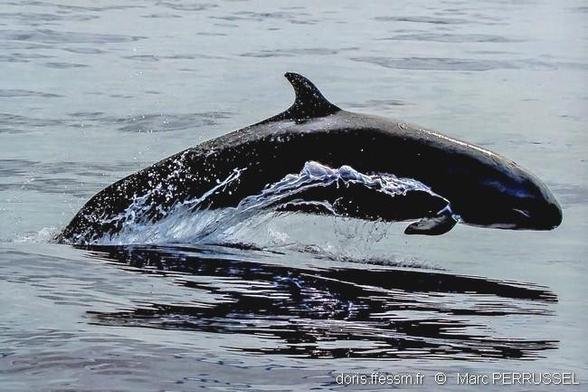
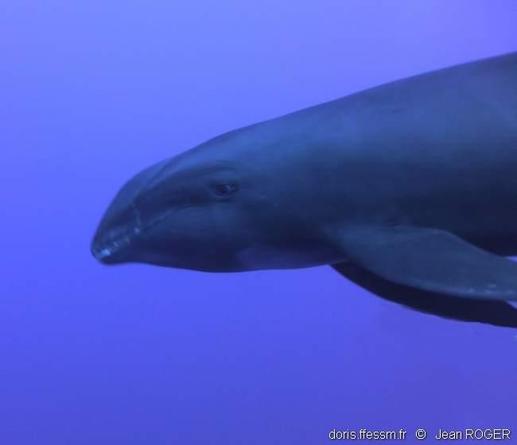
La fiche publiée ce jour concerne un #mammifère marin, nageant dans les eaux tropicales et tempérées chaudes de tous les océans, dans des zones comprises entre 30° Nord et 30° Sud.
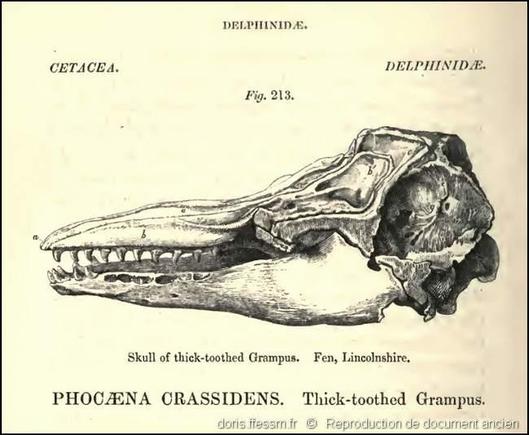
Il s'agit de la #pseudorque.

JOUIS Gustave, LE GRANCHÉ Philippe in : #DORIS 09/03/2024 :
Pseudorca crassidens (Owen, 1846), https://doris.ffessm.fr/ref/specie/4901

#Biodiversite #Cetacea #Mammalia #biodiversity #Odontoceti #FalseKillerWhale #biodiversita #FalsaOrca #biodiversidad

Pseudorca crassidens | DORIS

Voir la fiche de cette espèce

Phylogenetic analysis suggests fully aquatic mammals are unlikely to evolve back into terrestrial creatures

A trio of biologists and environmental scientists, two with the University of Fribourg and the third with the Swiss Institute of Bioinformatics, has found that fully aquatic mammals, such as whales and porpoises, are very unlikely to evolve back into land animals. In their study, reported in Proceedings of the Royal Society B, B. M. Farina, S. Faurby and D. Silvestro conducted phylogenetic analyses of more than 5,000 mammalian species.

Phys.org

#NewPaper #Cetacea

Werth, A.J. & Crompton, A.W. (2023) Cetacean tongue mobility and function: A comparative review. Journal of Anatomy, 00, 1– 31. Available from: https://doi.org/10.1111/joa.13876

#NewPaper #Paleontology #Cetacea

Alexander J. Werth and Brian L. Beatty (2023)
Osteological correlates of evolutionary transitions in cetacean feeding and related oropharyngeal functions
Frontiers in Ecology and Evolution 11: 1179804
doi: https://doi.org/10.3389/fevo.2023.1179804
https://www.frontiersin.org/articles/10.3389/fevo.2023.1179804/full

Osteological correlates of evolutionary transitions in cetacean feeding and related oropharyngeal functions

Teeth are often the first structures that anatomists and paleontologists examine to understand the ecology and morphology of feeding, both because teeth are highly specialized structures that provide precise information, and because they are among the best and most commonly preserved fossils. Unfortunately, many fragmentary fossil and recent specimens lack teeth, and some come from edentulous individuals and taxa, as in mysticete (baleen) whales. In our broad comparative review, we survey non-dental osteological features that, due to size, shape, arrangement, and surface features reflecting muscle attachments, provide useful clues to general or specific aspects of prey capture, intraoral transport, processing, or swallowing. We focus on hyoid, palatal, and pterygoid bones, mandibular symphyses and processes such as the coronoid, and the temporal fossa and zygomatic arch, as well as adjacent cranial bones relating to oral and pharyngeal anatomy. These bones relate to muscles of five general locations especially indicative of feeding: mandibular, hyoid, tongue, pharyngeal, and facial regions. Together these bones and muscles affect feeding and related activities including suckling and breathing. We discuss osteological correlates that provide special relevance to key transitions in cetacean evolutionary history, such as the shift from predominantly terrestrial to aquatic feeding, the shift from typical mammalian mastication to swallowing prey entirely or nearly whole, and th...

Frontiers
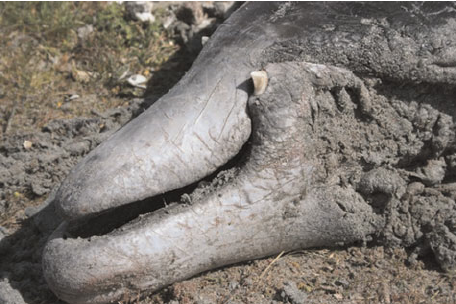
Un rasgo característico de los zifios (Ziphiidae) macho es la presencia de uno o dos pares de dientes que sobresalen, como en los jabalíes, y con los que compiten contra otros machos por las hembras. 📸A. Henry #cetaceos #cetacean #Cetacea #diente #teeth