@celeduc @gerrymcgovern
And wondering where they'll magically get this water from! (Perhaps harvesting it as the sister combustion by-product of C02? Lets play #carboncycle
https://www.susiarnott.co.uk/photosynthesis-game/
photosynthesis game – Susi Arnott/Walking Pictures

Study finds nitrogen pollution alters forest soil respiration and carbon cycling

📰 Original title: A hidden pollutant is changing how the world's forests breathe

🤖 IA: It's not clickbait ✅
👥 Users: It's not clickbait ✅

View full AI summary https://en.killbait.com/study-finds-nitrogen-pollution-alters-forest-soil-respiration-and-carbon-cycling.html?utm_source=mastodon_world&utm_medium=social&utm_campaign=killbait.mastodon_world

#climatechange #nitrogenpollution #forestsoils #carboncycle

Study finds nitrogen pollution alters forest soil respiration and carbon cycling

New global research reveals that excess nitrogen pollution is significantly altering how forests regulate carbon through soil respiration, the process by which roots and soil microbes release carbon dioxide as they break down organic matter. Soil respiration is one of the largest carbon fluxes on Earth, exceeding annual human fossil fuel emissions several times over. The study, conducted by an international team and published in Nature Communications, analyzed data from 168 nitrogen addition experiments, thousands of field observations, and global nitrogen deposition maps. Using machine learning, researchers identified two distinct ecosystem responses to nitrogen inputs depending on whether forests are nitrogen-limited or nitrogen-saturated. In nitrogen-limited forests, commonly found in boreal and remote mountainous regions, small increases in nitrogen initially stimulate microbial activity, root growth, and decomposition, leading to higher soil respiration. However, this positive effect follows an inverted U-shaped curve, eventually peaking and declining as excess nitrogen accumulates, toxicity develops, and available carbon substrates diminish. In contrast, nitrogen-saturated forests—often located in industrialized regions such as parts of Europe, eastern China, and the eastern United States—can experience abrupt declines in soil respiration when additional nitrogen is introduced. This is linked to soil acidification, loss of microbial diversity, and reduced root activity. Overall, the study estimates that global nitrogen deposition has increased soil respiration by about 5%, though this average masks strong regional differences. Importantly, reduced respiration in heavily polluted areas may not indicate improved conditions but rather ecosystem stress and reduced resilience. The findings highlight hidden tipping points in forest ecosystems and suggest that continued nitrogen pollution from agriculture, industry, and transportation could disrupt global carbon cycling. Reducing nitrogen emissions may help preserve soil health, maintain biodiversity, and stabilize forest carbon storage under climate change.

KillBait

Study finds nitrogen pollution alters forest soil respiration and carbon cycling

📰 Original title: A hidden pollutant is changing how the world's forests breathe

🤖 IA: It's not clickbait ✅
👥 Users: It's not clickbait ✅

View full AI summary https://en.killbait.com/study-finds-nitrogen-pollution-alters-forest-soil-respiration-and-carbon-cycling.html?utm_source=mastodon_social&utm_medium=social&utm_campaign=killbait.mastodon_social

#climatechange #nitrogenpollution #forestsoils #carboncycle

Study finds nitrogen pollution alters forest soil respiration and carbon cycling

New global research reveals that excess nitrogen pollution is significantly altering how forests regulate carbon through soil respiration, the process by which roots and soil microbes release carbon dioxide as they break down organic matter. Soil respiration is one of the largest carbon fluxes on Earth, exceeding annual human fossil fuel emissions several times over. The study, conducted by an international team and published in Nature Communications, analyzed data from 168 nitrogen addition experiments, thousands of field observations, and global nitrogen deposition maps. Using machine learning, researchers identified two distinct ecosystem responses to nitrogen inputs depending on whether forests are nitrogen-limited or nitrogen-saturated. In nitrogen-limited forests, commonly found in boreal and remote mountainous regions, small increases in nitrogen initially stimulate microbial activity, root growth, and decomposition, leading to higher soil respiration. However, this positive effect follows an inverted U-shaped curve, eventually peaking and declining as excess nitrogen accumulates, toxicity develops, and available carbon substrates diminish. In contrast, nitrogen-saturated forests—often located in industrialized regions such as parts of Europe, eastern China, and the eastern United States—can experience abrupt declines in soil respiration when additional nitrogen is introduced. This is linked to soil acidification, loss of microbial diversity, and reduced root activity. Overall, the study estimates that global nitrogen deposition has increased soil respiration by about 5%, though this average masks strong regional differences. Importantly, reduced respiration in heavily polluted areas may not indicate improved conditions but rather ecosystem stress and reduced resilience. The findings highlight hidden tipping points in forest ecosystems and suggest that continued nitrogen pollution from agriculture, industry, and transportation could disrupt global carbon cycling. Reducing nitrogen emissions may help preserve soil health, maintain biodiversity, and stabilize forest carbon storage under climate change.

KillBait

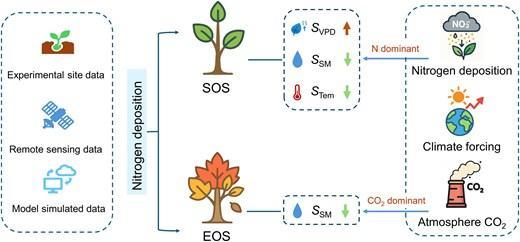
How nitrogen deposition influences the #ClimaticSensitivity of #VegetationPhenology🌡️? Yuzhu Chen et al. found that #NitrogenDeposition is the principal driver behind the altered sensitivity of growing season💨.

#CarbonCycle #GlobalChange

https://doi.org/10.1093/jpe/rtaf195

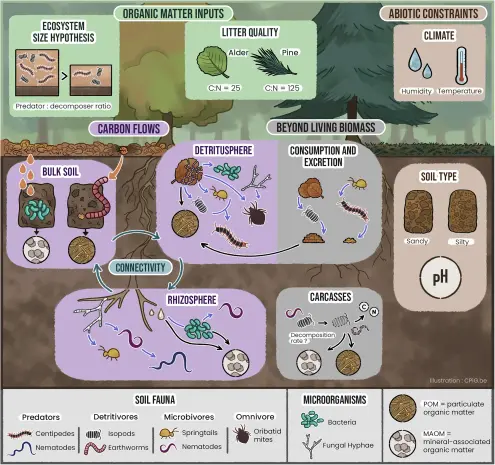
New publication: A soil #foodweb approach to integrate #soil fauna into multitrophic biogeochemistry. #carboncycle #climatechange
https://doi.org/10.1038/s43247-026-03322-4
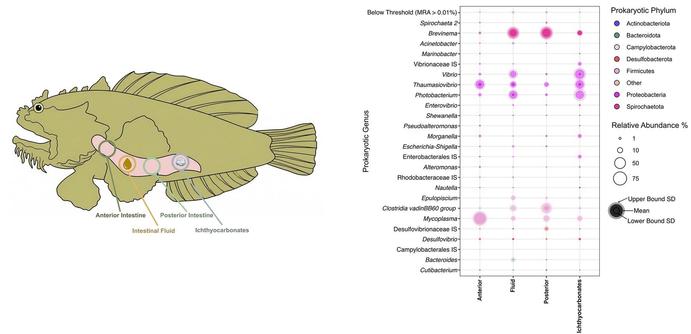
What role do #fish play in the oceanic #CarbonCycle via calcium carbonate precipitation? Study of the toadfish gut reveals Vibrio #bacteria that could aid CaCO3 precipitation, expanding the role of #symbiosis in marine #biomineralization @PLOSBiology https://plos.io/49aY5SH

👀We see you, Acidobacteriota😍

This #genomic analysis of Acidobacteriota across diverse taxa and #environments reveals the phylum's underestimated functional importance in global #biogeochemical cycles.

https://doi.org/10.1111/jse.70071
@WileyEcology
#systematics #CarbonCycle #nutrients

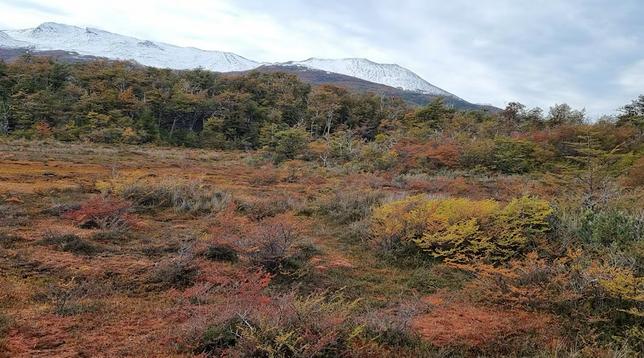
Peatlands are vital for tackling climate change, yet scientists still haven’t found them all | The-14

Peatlands store vast carbon yet remain poorly mapped worldwide. New research highlights urgent gaps in knowledge & their critical role in climate change action.

The-14 Pictures

🌍🌊 Why it matters? Understanding how habitat shifts alter reef metabolism is essential for predicting ecosystem resilience, biodiversity functioning, and coastal carbon cycling under environmental change. (9/9)

👉 https://doi.org/q4n7

#MarineEcology #BlueCarbon #MediterraneanSea #ClimateChange #EcosystemFunction #Macroalgae #CarbonCycle

The summer carbon budget of fucoid forests and encrusting coralline barrens on a NW Mediterranean rocky reef

AbstractBackground and Aims. Shifts from macroalgal forests to encrusting coralline barrens are widespread on temperate rocky reefs, yet differences in the

OUP Academic

🌿🌊Just published in @AnnBot : “The summer carbon budget of fucoid forests and encrusting coralline barrens on a NW Mediterranean rocky reef” by Fabio Bulleri and co-authors. 🧵 (1/9)

👉 https://doi.org/q4n7

#AoBpapers #MarineEcology #BlueCarbon #MediterraneanSea #ClimateChange #EcosystemFunction #Macroalgae #CarbonCycle