CA3 Community Town Hall Auburn, CA Nov. 15th, 2025 4PM PT Details and RSVP at www.mobilize.us/wethefighter... #fightingoligarchy #goldcountry #ca3 #ca03 #auburn
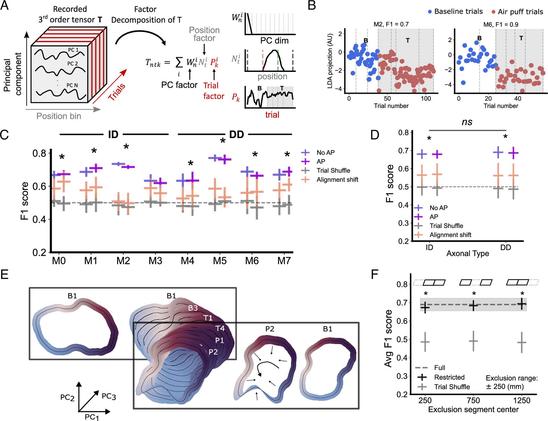
If you missed our poster at #sfn2023, here's the article: https://www.biorxiv.org/content/10.1101/2023.11.10.566641v1
_______
In a nutshell, we looked at how >30,000 #CA1 #hippocampus neurons coordinate their activity in relation to #space / #time both at the population and single neuron level. We also look at presynpatic (#CA3) and postsynaptic (#lateralseptum) neurons to evaluate hierarchical computations. Also tried my best at modelling a grid-to-time cell circuit based on real data to get insights in local integration
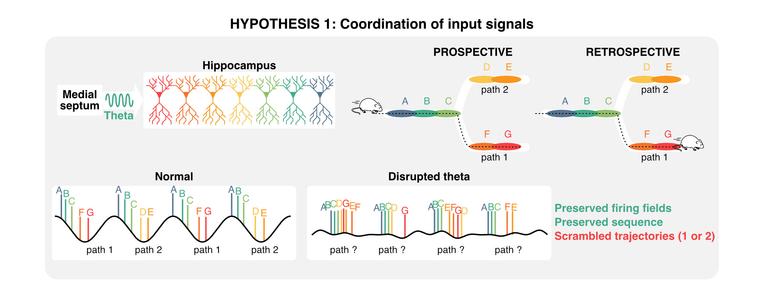
But this does not explain why many of these manipulations decrease memory performance in vivo. We propose 3 main (testable) hypotheses building on previous theories to explain how memory could be altered in conditions where theta is disrupted:
1) hippocampal neurons could fail to integrate presynaptic (e.g. #CA3 and #entorhinal_cortex) activities at the right time

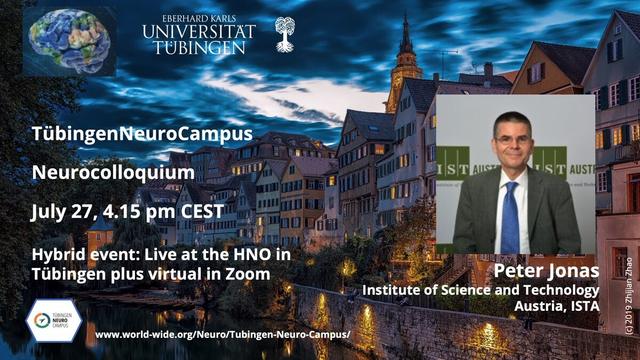
There will be a talk by Peter Jonas (ISTAustria) on "#Synaptic mechanisms of #patterncompletion in the #hippocampal #CA3 region":

⏰ Thu July 27 at 4.15pm CEST
🌎 https://t.co/tlk4CorzwE
📍 University of #Tübingen, Hertie-Institut für klinische Hirnforschung (HIH), Host: Ulrike Hedrich

#neuroscience

TNC Neurocolloquium Thursdays 4.15pm CEST

The Neurocolloquium of the TübingenNeuroCampus will be happening hybrid, live in the Lecture Hall of the HNO in Tübingen and in Zoom: The next talk will be on Thursday, December 7, 2023 at 4.15 pm CET Speaker: Prof. Uri Hasson (Princeton) Title: "Deep language models as a cognitive model for natural language processing in the human brain" To receive the zoom details, please insert your email adress below.

Google Docs
California Leadership - Gavin Newsom

YouTube

An article "A Hippocampal Cognitive Prosthesis: Multi-Input, Multi-Output Nonlinear Modeling and VLSI Implementation" by Theodore W. Berger, et al.
(https://www.ncbi.nlm.nih.gov/pmc/articles/PMC3395724/) tells about a brain implant with 16 analog-to-digital converters and 32 channels of output.

I've been discussing it with Prozion (https://github.com/prozion) before and he has a very good question.
"How does the implant function at all with that amount of channels?"

The previous explanation from "Computational Cognitive Neuroscience" about memory de-indexing sheds some light on that: the article is about the same brain regions: CA1, CA3 and DG.

#neuroscience #CA1 #CA3 #Hippocampus

A Hippocampal Cognitive Prosthesis: Multi-Input, Multi-Output Nonlinear Modeling and VLSI Implementation

This paper describes the development of a cognitive prosthesis designed to restore the ability to form new long-term memories typically lost after damage to the hippocampus. The animal model used is delayed nonmatch-to-sample (DNMS) behavior in the rat, ...