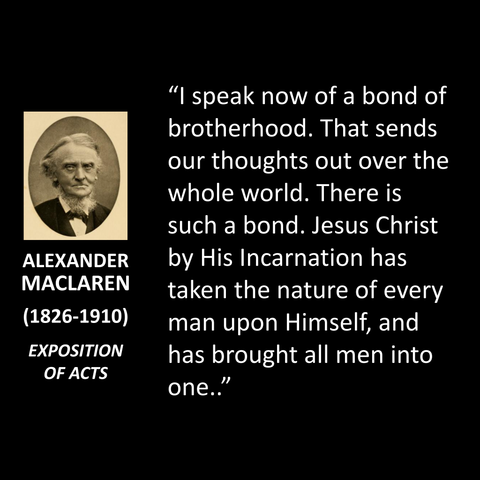
Maclaren—Scottish Baptist, expounding Acts—says the Incarnation creates a bond of universal brotherhood: Christ took every man’s nature and brought all into one. The early church’s communal sharing was the visible witness of this. Some Calvinist applications of “Esau I hated” have drifted from Calvin’s own instructions about kindness. More Calvinist than Calvin is a specific achievement.

#baptist #christian #bookofacts #sharingeconomy #bodyofchrist

Breathing into God’s Reign

“‘Dear Lord God, I wish to preach in your honor. I wish to speak about you, glorify you, praise your name. Although I can’t do this well of myself, I pray that you may make it good.’”[i]

Introduction

While all the events marking key and signature moments in the life and death of Christ must be equally emphasized in the life of the church, it is his ascension and thus the sending of the divine Holy Spirit that establishes and motivates the church, the body of Christ, the ecclesia, the union of people committed to the message of Jesus Christ crucified and raised. Without the Spirit there would be no church. As the Iona Abbey creed proclaims, the Holy Spirit,
God within us,” is the life-giving breath of the church. The Spirit is the one who plows and prepares hearts and minds to hear and receive the proclamation of the gospel; it is the Spirit who opens ears and eyes to see God and Christ in others; it is the Spirit who motivates recalcitrant limbs and high-inertia bodies to participate in God’s mission of the divine revolution of love, life, and liberation; and, it is the Spirit who causes the church to be and assures that the church will always be in the world, even if it means taking on different shapes and forms as it moves through the ages, adapting.

And it’s this last portion that is crucial for us today. The Spirit will always be the source and foundation of the church, despite us. While this is a comforting notion, removing the burden from our backs to “save the church,” it must also be our wake-up call urging us to press into the Spirit more and more, living in a way expressing our divinely ordered dependence on the Spirit not only for the life of our church or the life of our denominational expression of church, but as the unified body of Christ who represents Christ in the world individually and corporately through our words and deeds for the well-being of the our neighbors to the glory of God.

1 Corinthians 12:3b-13

In our Epistle text this morning, Paul begins with a declaration regarding what can be said by the divine Holy Spirit,[ii] Wherefore I am imparting to you this knowledge that …  no one is able to confess, “Jesus [is] Lord” if not through the agency of the Holy Spirit (v3a, 3c). Paul is making a strong distinction between what is and is not said by the Spirit of God.[iii] Too often, we incorrectly credit the divine Spirit with things that the Spirit would not say, things that have emotional energy behind them and things that carry depth of insight; but, not all of it is of the Spirit. For Paul, the principal declaration of the Spirit in the life of believers is the confession that “Jesus is Lord.” To say this is to be inspired by the Spirit. In fact, for Paul, it is the Spirit speaking through the one who says it. For no one concludes that a crucified man is the Messiah unless their ears and eyes have been opened by the Spirit to hear and see what God has done in Christ in the Easter event. Thus, the Spirit declares through the believer that Jesus IS Lord. (This is more than saying “Jesus lived” or “Jesus was Crucified” or “Jesus was raised”.)

Paul then discusses the acts of the believers motivated by the divine Holy Spirit. First, Paul emphasizes divine unity amid human diversity.[iv]

Now there are apportionings of the gifts of grace, but the same Spirit; and there are apportionings of servanthoods, and the same Lord; and there are apportionings of what activates effects, but the same God, the one who brings about/causes all things in all people (vv4-6).

The point Paul is making is that the various gifts of grace that believers have and express are from the same source and, thusly, do not allow for hierarchy to be created—the same God is behind each gift to each believer. [v] While the gifts are different from each other,[vi] they come from the same source and share in the same portion, God’s grace is freely distributed to all by God’s will.[vii] This automatically, for Paul, shifts the focus from the way things are done in the kingdom of humanity to the way things are done within the reign of God;[viii] there are no “special” apportionings, no one is singled out for being better or lesser in this divine economy of the distribution of spiritual gifts of God’s grace.[ix] All people and all gifts of grace are for the body of Christ and not to bring this or that one person fame and glory in the kingdom of humanity. This is why Paul then says, Now to each one the public manifestation of the Spirit is given toward the common advantage of others (v7).

Then Paul lists what type of gifts of God’s grace are distributed and apportioned to believers.

For to one is given the articulate utterance of “wisdom”, and to another rational statement of “knowledge” according to the same spirit. To a different person, a special endowment of faith by the same Spirit, to another gifts of healing by the one Spirit, to another the working of miraculous power, to one prophecy, to another the discernment of spirits, to another sorts of tongues, to another the explanation of tongues (vv.8-10).

This is not an inventory by which to create some test to discern who has what “spiritual gift.” What Paul is demonstrating is where and when the divine Spirit moves and is at work for the wellbeing of the body. Paul does not say that any of these gifts of grace participate as one time distributions but that the Spirit, in their orientation toward democracy and egalitarianism, distributes the gifts across the body of Christ so that the believers may, together, build each other up, encourage each other, and work toward and participate in the mission of the reign of God as Jesus did. In other words, the believers are to live in the world and among their neighbor eagerly using the gifts of grace they have received in that moment to the neighbor’s wellbeing and to the glory of God.[x] No one person gets all the gifts; no one gift carries more power or importance. Each person and all gifts function to benefit others. (Full stop.)

To have “wisdom” and “knowledge” is not to have sudden and special insight into others or events; rather, it’s about seeing and perceiving events and people through the lens of God’s grace,[xi] and to do so in a way that benefits others and the gospel.[xii] To be wise and knowledgeable in the economy of God is to see God at work everywhere through the Cross of Christ and by the power of the Holy Spirit. Same goes for the gifts of “faith,” the (separate gift[xiii]) “healing,”[xiv] and “strength.” To have a special endowment of faith isn’t to believe blindly whatever the authority tells you to believe, but to believe in such a way that the common good is lifted and encouraged.[xv] Same, too, with healing and power which can (both) occur in various ways and by differing means (i.e. it’s not always spiritual, miraculous healing and power but could be done by temporal means[xvi]). Both “Prophecy” and the “discerning of Spirits” is about speaking rightly and seeing through false doctrine, being able to say what is and what is not of the reign of God. Both prophecy and discerning of spirits participate in furthering God’s reign as God’s truth is proclaimed and the lies of the kingdom of humanity are exposed.[xvii] The gift of “kinds of tongues” and the “interpretation of tongues” reflects deep spiritual groans that come from the subterranean self of believers; these groanings are unintelligible by the one groaning and another is needed to help to understand.[xviii] This unintelligible groaning and interpretation benefit everyone involved because, if we are honest, we all have deep subterranean desires and pleas that we cannot utter with regular words and need help in understanding and accessing those deep desires and please.[xix] (The gift and interpretation of tongues is not about new prophecy in the world or about speaking other languages, per se; it’s about participating in the birthing of the reign of God as both midwife and child-bearer.) The point of all this discussion, for Paul, is that the divine Spirit gives gifts of grace for the common good of all, to assist in the proclamation of the gospel, and to push back the evil forces of the kingdom of humanity eager to destroy human beings. [xx]

Conclusion

Paul concludes with,

Now all these things God works by the one and the same Spirit who distributes to each one distinctly just as the Spirit wills. For just as the body is one and has many members, and all the members of the body, being many, are one body; this is the case with Christ. For also by one Spirit we, we all are baptized into one body, whether Jewish or Greek, whether slave or free, namely we were all given to drink one Spirit (vv.11-13).

Just as Christ is one, so too is the body of Christ one even though there are many members and many apportionings of gifts of grace. All of this diversity and difference is to serve the body of Christ so that this body of Christ can go into the world and allow God’s love and grace to spill over into the world, making the world a better place for those who are the beloved of God, our neighbors, those who are currently suffering in body and mind. We, as the body of Christ, are a body politically speaking, [xxi] thus we are Christ’s representative in the world as he is absent and only by the power of the Holy Spirit. We are one by our baptism into Christ,[xxii] by our shared faith in Christ, and by the power of the Spirit bringing us together to be the body of Christ and to bring us into union with God so that wherever we go and wherever we are, there, too, is God… just as is the case with Christ. As Christ breathed his last on the cross, we, by faith in Christ and in union with God by the power and presence of the Holy Spirit, take up that breath and participate in the breathing into God’s reign through our words and deeds for the wellbeing of our neighbor to the glory of God. In other words, we participate in the Spirit’s life-giving breath of the church no matter where we find ourselves in history. Thus, there will always be church wherever there are those who can, by the power of the Spirit, confess Jesus is Lord.

[i] LW 54:157-158; Table Talk 1590.

[ii] Anthony C. Thiselton, The First Epistle to the Corinthians, NIGTC, eds. I. Howard Marshall and Donald A. Hagner (Grand Rapids: Eerdmans, 2000), 917. “On this basis Paul is asking what content of human speech may be said to count as what is spoken by the Spirit or through the agency of the Spirit of God.”

[iii] Thiselton, The First Epistle to the Corinthians, 917. “…what experiences and actions, as well as words, will count as manifestations of the Holy Spriit, rather than self-induced experiences, acts, or words, or even those induced by other agencies?”

[iv] Thiselton, The First Epistle to the Corinthians, 928. “…in these verses, at least, Paul places his emphasis on the unit of source which lies behind a diversity of phenomena.”

[v] Thiselton, The First Epistle to the Corinthians, 928. “The cohesive bestowal of the gifts ensures their fundamental unity.”

[vi] Thiselton, The First Epistle to the Corinthians, 929-930. “Paul’s change of the Corinthian term πνευματικά, spiritual things, to χαρίσματα, spiritual gifts, ‘gifts of grace,’ calls attention to God’s generous act of freely apportioning different gifts to different recipients. Once again, grace through the cross governs ecclesiology and ministry.”

[vii] Thiselton, The First Epistle to the Corinthians, 930. “By the application of persuasive definition or code switching Paul redefines what counts as spiritual by talking about what God freely gives, on his own initiative, and in his own sovereign choice (12:11) as empowerments …through the agency of the Holy Spirit for practical service of God and of other persons…”

[viii] Thiselton, The First Epistle to the Corinthians, 939. “The background which controls the exegesis, therefore, derives from the contrast between the pretentiousness and competitive status-seeking of humans wisdom…and the gift of divine wisdom…”

[ix] Thiselton, The First Epistle to the Corinthians, 930. “The lexicographical convention of distinguishing ‘general’ from ‘special’ gifts already imports distorting pre-judgments into a subtle rhetorical strategy on the part of Paul which intended to shift the focus form human status claims about πνεῦμα to more humbling realities about God’s different apportionings of gifts…”

[x] Thiselton, The First Epistle to the Corinthians, 936. “The Spirit produces visible effects for the profit of all, not for self-glorification. If the latter is prominent, suspicion is invited. δἰδοται reflects both continuous process of giving, and the sovereignty of God in choosing and in freely giving.”

[xi] Thiselton, The First Epistle to the Corinthians, 939. “Wisdom, in this context, becomes an evaluation of realities in the light of God’s grace and the cross of Christ. I s part of a response to grace.”

[xii] Thiselton, The First Epistle to the Corinthians, 944. “Paul does not seek the wisdom of the Sophists, but neither does he disparage practical reflection and judicious evaluation. Gifts of articular communicative utterance may draw on wisdom and knowledge from God especially when this serves both ‘the common good’ of all and the proclamation of the cross. (This is a far cry from some modern notions about coded messages for the welfare of individuals.)”

[xiii] Thiselton, The First Epistle to the Corinthians, 947. “It is not necessarily the healer who receives the gift of special faith.”

[xiv] Thiselton, The First Epistle to the Corinthians, 947. “But if the majority associate healing with the faith cited in the first part of the verse, and if this faith is a sovereign gift given to specific, chosen persons and not to all believers, Paul may not expect that all believers who need various kinds of healing will necessarily manifest the gift of faith with which healing may be associated. This is given to ἐτέρῳ, a different person, or another.”

[xv] Thiselton, The First Epistle to the Corinthians, 946. “…rather than focus on the category of miracle, it is more helpful to consider the conceptual entailments of faith in the God who is Almighty and sovereign in relation to his own world. This links faith here with λόγος γνώσεως…”

[xvi] Thiselton, The First Epistle to the Corinthians, 950. “An exegetical scrutiny leaves open the possibility of gifts of various kinds of healings in whatever mode, through whatever instrument or human agent, and at whatever time God may choose, as one of many specific gifts…

[xvii] Thiselton, The First Epistle to the Corinthians, 967. “The basic criterion for assessing the difference between the Spirit and forces of evil appears to operate more broadly in the public domain, having to do with whether the phenomena in question promote and witness to the sovereign Lordship of Jesus Christ (v.3).”

[xviii] Thiselton, The First Epistle to the Corinthians, 988. “Tongues may then be viewed as ‘the language of the unconscious’ because it is unintelligible (unless it is ‘interpreted’) not only to others but also to the speaker.”

[xix] Thiselton, The First Epistle to the Corinthians, 988. “…Paul sees tongues as a genuine gift of the Spirt which can help the individual…”

[xx] Thiselton, The First Epistle to the Corinthians, 956. “It is therefore essential to regain the collective and corporate framework of these gifts ‘to some…to another.’ Specific human agents (not all) may receive a particular gift from the Spirit to advance the gospel against oppressive forces, for the benefit of all.”

[xxi] Thiselton, The First Epistle to the Corinthians, 996. “It is the use of the political bodyrhetoric that is the object of comparison; Christ remains the main subject whom the rhetoric serves, as an analogy which later will be given an unexpected twist by ‘code switching’ what appears to be an unqualified hierarchy.”

[xxii] Thiselton, The First Epistle to the Corinthians, 997. “The previous verse had concluded with ὀ Χριστός as the focus of unity. Paul amplifies this unity by speaking of the common agency and experience of one Spirit and one body as focused in the very baptism that proclaimed and marked their turning to Christ and their new identity as people of the Spirit.”

#1Corinthians #1Corinthians12 #AnthonyThiselton #BodyOfChrist #CommonGood #DivineLove #GodSReign #HolySpirit #Jesus #JesusTheChrist #KingdomOfHumanity #Liberation #Life #Love #Pentecost #PentecostSunday #Representation #SpiritualGifts

Where Two or Three Are Gathered [Sermon]

When I was in the Chicago area, I studied improv. I was also a part of a group called the Mikes of Chicago. We were a group of volunteers who put on a midnight show called “The Improv Open Mike.”

Volunteers were called Mikes. New volunteers were called Mikies. A core group of four who guided the group were called Michaels.

The Michaels didn’t really have power over the Mikes and Mikies. It’s really had to have power over volunteers who can just leave at any time without consequence.

But the Michaels had responsibility to care for the group as a whole. They were servant-leaders. There was not real benefit to being a Michael. Just some more work.

Let’s go to God in prayer.

God of wisdom, may the words that I speak, and the ways they are received by each of our hearts and minds, help us to continue to grow into the people, and the church, that you have dreamed us to be.

Amen.

Two of them.

Our reading from Luke this morning says “two of them were going to a village called Emmaus.”

Scripture doesn’t tell us which two at first. Peter was probably not one of them, because earlier in the same chapter Peter hears the testimony of the women who had been to the tomb and runs to the tomb himself, sees it is empty, and goes home.

And then there is the beginning of today’s reading

“On the same day two of them.”

Luke 24:13a, NRSVue

But later it says

“Then one of them, whose name was Cleopas, answered him,”

Luke 24:18a, NRSVue

So one of them was named Cleopas. That’s not one of the Twelve. In fact, later we read

That same hour they got up and returned to Jerusalem, and they found the eleven and their companions gathered together
Luke 24:33, NRSVue

So Jesus appeared to Cleopas and another disciple, but they were not part of the inner circle of twelve.

There are traditions where the spiritual leadership is seen as above the rest of the people. There is a hierarchy.

And while our denominations, the United Church of Christ and the Christian Church (Disciples of Christ), do have people whose responsibility is to serve larger or smaller portions of the denomination, we don’t really have a hierarchy.

The local church calls its pastor, as you called me nearly eight years ago. And while I’m not in a position to care for the association, region, conference, or denomination, I am called to serve this community of faith.

Part of that call is to represent the church at meetings of the conference, region, and association, which is why I will be traveling to Concord on Wednesday for meetings Thursday through Saturday.

It’s also why I won’t be preaching next Sunday.

But you do not come to this church because of me. This is not the United Church of Cindi. If it were, I would be out of here so fast…

You come because of the community itself, because in this community you find Jesus.

The UCC side of this church had communion every month, as is common in UCC churches. I knew one church that had it twice a month.

But the Disciples side of this church had communion every week, as is the custom in Disciples churches. For the disciples, as for some other denominations, communion is the center of worship. They find Jesus in the breaking of the bread.

So when our churches – the First Christian Church of Eureka and the First Congregational Church of Eureka – came together, the united church had communion every week.

I’m very much in favor of this.

As someone is turned away from a church, one of the first things denied to a member is communion. People may be denied communion because they were not current with their pledges, or because they were accused of some sin like being gay. And gradually, they are pushed out of the church, but it often begins with being denied communion.

At this church, as with many churches, we have an open table. That means we don’t turn people away from communion.

So that means someone who was driven out of a community of faith, who was denied communion, can take communion here on the first Sunday they come, no questions asked. And it doesn’t matter if their first Sunday is the first Sunday of the month, or the third, or the fifth.

And while the United Church of Christ requires that an ordained minister preside at the table, or at least bless the elements, the Christian Church (Disciples of Christ) allows trained lay people to celebrate communion.

Because it is not the celebrant who brings Jesus to the table. It is the gathering of even two or three.

Even if the two are Cleopas and his traveling companion, who were not part of the Twelve.

We are a church that gathers on Sunday mornings. That’s not unusual. Most churches do that.

We are a church that comes together on Wednesdays for Church around the Table or for a movie night or for a discussion of a book like “Separation of Church and Hate.”

Many churches do something like that.

We are a church whose choir sometimes comes together to perform at larger gatherings.

Some churches do that.

We are a church that comes together for marches.

Some churches do that.

We are a church that comes together for protests.

Some churches do that.

We are a church that comes together to feed hungry people and provide clothing to those in need.

Some churches do that.

And every time we come together to do these things, we are a portion of the body of Christ, doing the work of Jesus in the world, and Jesus is with us in these moments.

Sometimes there are just a few people: maybe only two or three. And that’s okay. Because where two or three are gathered, Jesus is with us.

At the Improv Open Mike, the Michaels would have had a tough time running the show by themselves. If all four of them were there, they could probably do it. But what made it the Improv Open Mike was the combined work of the Michaels, the Mikes, the Mikies, and all of the people who came to see and be part of the show.

The show wasn’t created by the Michaels. It was created by the whole community.

Church isn’t created by the pastor or by the Conference Minister or General Minister. Church is created by people coming together, to be with each other, to find Christ in their midsts.

So my challenge this week is to find opportunities to be with at least one or two other people, to find community, and to find Christ in the sharing of the work or the breaking of the bread.

Jesus is here now, where two or three are gathered.

Amen.

Let’s sing NCH 321 Break Now the Bread of Life

* Scripture quotations marked NRSVue are taken from the New Revised Standard Version Updated Edition. Copyright © 2021 National Council of Churches of Christ in the United States of America. Used by permission. All rights reserved worldwide. https://www.friendshippress.org/pages/about-the-nrsvue

* Scripture quotations marked KJV are taken from the King James version of the Bible.

Follow this blog on Mastodon or the Fediverse to receive updates directly in your feed.

#bodyOfChrist #communion #twoOrThree
The New Revised Standard Version Updated Edition

The NRSV Updated Edition (NRSVue) is informed by the results of discovery and study of hundreds of ancient manuscripts, such as the Dead Sea Scrolls, in the more than thirty years since the first publication of the NRSV. The National Council of the Churches of Christ in the USA (NCC) partnered with the Society of Bibli

Friendship Press

Connected in Christ

Embracing the Gift of Fellowship

As the Day Begins

As morning light breaks and a new day unfolds, we turn to Hebrews 10:23–25, where the writer urges us with these words: “Let us hold fast the confession of our hope without wavering, for he who promised is faithful. And let us consider how to stir up one another to love and good works, not neglecting to meet together, as is the habit of some, but encouraging one another, and all the more as you see the Day drawing near.” This passage speaks directly to the heart of Christian community. The call here is not merely to attend a gathering out of duty, but to actively participate in the life of the body of believers. The phrase “not forsaking the assembling of ourselves together” reminds us that isolation weakens our faith, while shared life strengthens it. In a world that often prizes independence, Scripture invites us into interdependence—we truly need one another.

Every believer carries something unique from God: a personality shaped by His hand, skills honed through experience, spiritual gifts bestowed by the Spirit, and talents ready to serve. When we come together, these gifts flow like streams into a river, meeting needs within the church and shining the gospel outward. Think of the deep calm that comes from being truly known and loved— that sense of tranquility when someone values you for who you are in Christ. The body of Christ is designed for this mutual care. We encourage one another toward love and good deeds, especially as we anticipate Christ’s return. Skipping the gathering, as some had begun to do in the early church, risks drifting from hope and from the very relationships that sustain perseverance. Today, let this truth settle in: your presence matters, your contribution blesses, and the fellowship you share builds up the whole body.

As you step into this day, carry the awareness that you belong to something greater than yourself. Look for opportunities to connect—perhaps a conversation after worship, a shared meal, or a simple word of encouragement. In doing so, you fulfill the heart of this passage: stirring one another toward lives that reflect Christ’s love. The church isn’t a building or an event; it’s people united in Him, drawing strength from one another to face whatever lies ahead.

Triune Prayer

Heavenly Father, I come before You this morning with a grateful heart, thanking You for calling me into Your family. You are the Almighty who knit me together and placed me in the body of Christ, not as an isolated member but as one who belongs. Thank You for the promise of Your faithfulness that anchors my hope. I ask for grace to hold fast without wavering, and for eyes to see how I can encourage those around me today. Help me resist the pull toward self-sufficiency, and draw me into meaningful fellowship where Your love is shared freely.

Lord Jesus, Christ the head of the church, I praise You for being the perfect example of humble service and sacrificial love. You gave Yourself for us, uniting us as one body through Your blood. Thank You for the gifts You distribute so generously, equipping each of us to build up the others. I pray for strength to stir up love and good works in my brothers and sisters, and for humility to receive the encouragement they offer me. May my interactions today reflect Your heart, pointing others to the hope found only in You.

Holy Spirit, Comforter and Helper, I invite Your presence into this day. You are the Spirit of Truth who binds us together in unity. Fill me afresh, guiding my words and actions so that I might exhort others with kindness and wisdom. Thank You for the tranquility that comes from genuine connection in the body. Open doors for fellowship today, and give me courage to step through them. Guard my heart against discouragement or isolation, and lead me to glorify God in community.

Thought for the Day Make it a priority today to reach out to another believer—offer encouragement, share a burden, or simply show up. In gathering together, we obey Scripture and experience the joy of being part of Christ’s body.

For further reflection on the vital role of Christian fellowship, see this insightful article from Desiring God: The Forgotten Habit: Fellowship as a Means of God’s Grace.

FEEL FREE TO COMMENT, SUBSCRIBE, AND REPOST, SO OTHERS MAY KNOW

#assemblingTogether #bodyOfChrist #ChristianCommunity #churchFellowship #Hebrews1025 #mutualEncouragement #spiritualGiftsInTheChurch

Gathered Together in Grace

As the Day Begins

“Let us hold fast the confession of our hope without wavering, for He who promised is faithful. And let us consider one another in order to stir up love and good works, not forsaking the assembling of ourselves together, as is the manner of some, but exhorting one another…” (Hebrews 10:23–25).

Human beings were created for relationship. From the opening pages of Scripture, God declares that it is not good for man to be alone (Genesis 2:18). While that statement speaks directly about companionship in marriage, the wider biblical narrative reveals that God designed humanity for fellowship in every dimension of life. Nowhere is this more evident than within the body of Christ. The writer of Hebrews urges believers not to abandon gathering together because spiritual life was never meant to be lived in isolation. The Greek word translated “assembling” is episynagōgē, which conveys the idea of a purposeful gathering—a deliberate coming together for shared faith and encouragement.

The early church understood this deeply. Acts 2:42 describes believers devoting themselves to teaching, fellowship, the breaking of bread, and prayer. Christianity was not simply a private belief system; it was a shared life. Each person brought gifts and strengths that strengthened the whole community. The Apostle Paul expands on this truth in 1 Corinthians 12, explaining that believers are like different parts of a body. The hand cannot say to the foot, “I have no need of you.” In the same way, the church thrives when every member contributes their unique calling and ability. The Spirit distributes gifts “for the common good” (sympheron, meaning benefit or advantage to all).

Modern culture often pushes people toward independence and self-sufficiency, yet the gospel invites us into interdependence. Spiritual growth accelerates when believers walk together. Encouragement spoken at the right moment can steady a wavering heart. Prayer shared with another can lift burdens that feel too heavy to carry alone. Even the simple act of worshiping together reminds us that we are not fighting life’s battles by ourselves. When believers gather, the presence of Christ is uniquely experienced among them, just as Jesus promised: “For where two or three are gathered together in My name, I am there in the midst of them” (Matthew 18:20).

As the day begins, remember that your faith journey is connected to the lives of others. God has placed you within His family intentionally. Your presence, encouragement, and gifts matter more than you may realize. Someone today may need the strength that flows through your faithfulness.

Triune Prayer

Father, You are the Most High (El Elyon), the One who created us not only to know You but also to know one another. I thank You for the family of believers You have placed around me. Forgive me for the moments when I have tried to walk alone, relying only on my own strength and understanding. Help me recognize the beauty of Your design for community. Shape my heart so that I value the church not merely as a place I attend but as a living body in which I belong and serve.

Jesus, You are the Christ, the Head of the church and the Shepherd who gathers Your people together. Through Your sacrifice, You formed a redeemed family drawn from every nation and generation. Teach me to love fellow believers with the same patience and mercy You show to me each day. Help me encourage others and strengthen their faith. May my words, actions, and attitudes reflect Your grace so that the body of Christ becomes stronger through my presence.

Holy Spirit, blessed Spirit of Truth, dwell within me and guide my relationships with other believers. Give me discernment to see where my gifts can bless the church and courage to use them faithfully. Stir within me a desire to gather, worship, pray, and serve alongside others who call upon the name of Jesus. When discouragement whispers that isolation is easier, remind me that You empower the church as a united people. Let Your presence knit our hearts together in love and mission.

Thought for the Day

Look for one intentional way today to strengthen the body of Christ—encourage another believer, pray with someone, or participate actively in your church community.

Further Reflection

For additional insight on the biblical meaning of Christian fellowship, see this article from Christianity Today:
https://www.christianitytoday.com/biblestudies/articles/spiritualformation/value-of-christian-fellowship.html

FEEL FREE TO COMMENT, SUBSCRIBE, AND REPOST, SO OTHERS MAY KNOW


#bodyOfChrist #ChristianFellowship #churchCommunity #Hebrews1025Devotion #spiritualEncouragement

More Than a Membership — A Place to Belong

As the Day Begins

“Honor all people. Love the brotherhood. Fear God.”
— 1 Peter 2:17

The Apostle Peter gives us a simple yet powerful picture of how believers are meant to live together. In a single verse he connects three important attitudes that shape the life of a Christian community: respect for all people, love for fellow believers, and reverence for God. When these three attitudes come together, the church becomes more than a gathering place—it becomes a living family of faith. The Greek word Peter uses for “brotherhood” is adelphotēs, which refers to a shared spiritual family bound together through Christ. It is not merely an organization but a fellowship of people who belong to God and, therefore, belong to one another.

The church was never intended to be a place defined by a membership list or attendance record. It was meant to be a community where spiritual gifts and practical talents flourish together for the glory of Christ. The Apostle Paul describes this beautifully in 1 Corinthians 12:27: “Now you are the body of Christ, and each one of you is a part of it.” Each believer carries a unique role, just as every part of the body has a distinct purpose. Some encourage, some teach, some serve quietly behind the scenes. Yet together they advance the mission of God’s kingdom. When believers recognize this truth, the church becomes a place where every person discovers that their life matters to God and that their contribution matters to others.

Peter also reminds us that the church must be a place of loving acceptance. That does not mean approving of sin, but it certainly means welcoming sinners. After all, every believer stands before God because of grace. Scripture reminds us in Romans 5:8, “But God demonstrates His own love for us in this: While we were still sinners, Christ died for us.” The church should reflect that same grace. People should walk through its doors and sense they are valued not because they are perfect, but because they are created in the image of God. The Hebrew word tselem (image) in Genesis 1:27 reminds us that every human life bears God’s imprint.

Belonging to a church therefore runs deeper than affiliation. It is a shared life marked by care, service, and mutual encouragement. When believers gather with open hearts and willing hands, the church becomes a visible expression of Christ’s love on earth. In such a place, people discover not only that they belong to a congregation, but that they truly belong to God.

Triune Prayer

Father (God), Creator and Sustainer of all life, I begin this day grateful that You have called me into Your family. You are the One who formed the church and gave it life through Your eternal plan. Thank You for placing believers together so we might encourage one another and grow stronger in faith. Help me to honor all people today, recognizing that each person I encounter is made in Your image. Teach me to value the church not merely as a building or gathering but as Your living community. Give me a heart that seeks unity, kindness, and humility so that my actions contribute to the strengthening of Your people.

Jesus (Christ), my Savior and Redeemer, You are the head of the church and the One who purchased it with Your own blood. Thank You for calling imperfect people into Your kingdom and giving us a place in Your body. When I am tempted to withdraw or become critical, remind me that Your church is a fellowship of grace. Help me to love the brotherhood as Peter instructed, seeing fellow believers not as competitors or strangers but as brothers and sisters redeemed by the same sacrifice. Let my words today build others up and reflect the compassion You showed to all who came to You.

Holy Spirit (Comforter), gentle guide and teacher of truth, dwell within me and shape my heart today. Fill me with the spirit of unity that binds believers together in Christ. Help me to see opportunities to serve within the church and within the world around me. When discouragement or division appears, remind me that You are still at work among God’s people. Lead me to be a person who strengthens community, encourages faith, and reflects the love of Christ wherever I go.

Thought for the Day

Belonging to God’s church is not about having your name on a roll—it is about having your heart invested in God’s people. Look for one way today to encourage, serve, or uplift someone in the body of Christ.

For further reflection on Christian fellowship and the meaning of church community, see:
https://www.gotquestions.org/body-of-Christ.html

FEEL FREE TO COMMENT, SUBSCRIBE, AND REPOST, SO OTHERS MAY KNOW


#1Peter217Devotion #belongingToTheChurch #bodyOfChrist #ChristianCommunity #churchFellowship

When Love Becomes the Mission

A Day in the Life

There are moments in the life of Jesus that feel almost too holy to touch, and John 17 is one of them. We are allowed to listen in as the Son speaks to the Father just hours before the cross. The room is heavy with the knowledge of what is coming, yet Jesus does not pray for escape, strength, or even for His own relief. Instead, He prays something that still unsettles me: “That they all may be one, as You, Father, are in Me, and I in You; that they also may be one in Us, that the world may believe that You sent Me.” The Greek word He uses for “one” is ἕν (hen), meaning a unity so complete it forms a single reality. Jesus ties the credibility of His entire redemptive mission to whether His followers love each other well enough to live as one. That tells me something deeply uncomfortable and deeply hopeful at the same time.

I often imagine what it must have been like for the disciples to hear that prayer. They had just been arguing about greatness, misunderstanding Jesus, and jockeying for position. And yet, knowing all that, Jesus did not pray that they would be smarter, braver, or more disciplined. He prayed they would be united in love. That alone reveals how God views human relationships as part of His redemptive strategy. Scripture repeatedly links how we treat each other to how God advances His mission in the world. Jesus had already said, “Whoever receives the one I send receives Me” (John 13:20), and “Whatever you did for one of the least of these…you did for Me” (Matthew 25:40). Love between people is never merely social; it is sacramental. It becomes a visible sign of an invisible grace.

The Old Testament confirms this same pattern. Malachi tells us that God desires a husband and wife to live in covenant unity so that they might raise a “godly seed” (Malachi 2:14–15). The Hebrew phrase זֶרַע אֱלֹהִים (zera Elohim) refers not merely to biological children but to offspring shaped by faithfulness to God. God was not just protecting marriages for emotional reasons; He was protecting His mission. A fractured home produces fractured faith, but a faithful union becomes fertile soil for redemption to grow. In the same way, Paul tells us that the church is the body of Christ, and that a body at war with itself cannot function (1 Corinthians 12:12). We cannot be on mission with God while we are emotionally, spiritually, or relationally divided from one another.

What strikes me most in Jesus’ prayer is what He does not say. He does not ask the Father to give His disciples courage, clarity, or endurance. Those things matter, but Jesus understood something deeper. Unity is not a byproduct of faith; it is evidence of faith. Augustine once wrote, “Where there is charity and wisdom, there is neither fear nor ignorance.” When love governs our relationships, fear loses its grip and the gospel gains its voice. Jesus knew that the world would never be persuaded by our theology alone; it would be convinced by our love. “By this all people will know that you are My disciples, if you have love for one another” (John 13:35). Love is not merely the fruit of discipleship; it is the proof of it.

This brings me to a sobering realization. I cannot honestly say that I love God deeply while excusing myself from loving His people faithfully. John puts it bluntly: “Whoever does not love his brother whom he has seen cannot love God whom he has not seen” (1 John 4:20). That verse dismantles many of my spiritual loopholes. I may feel sincere devotion in prayer or worship, but if I am unwilling to forgive, reconcile, or show patience with others, something is broken. As theologian N. T. Wright observes, “The gospel creates a new family, not just new individuals.” God is not merely saving isolated souls; He is forming a reconciled people whose shared life becomes a living testimony to the world.

This is why Jesus’ prayer in John 17 is not sentimental; it is strategic. Unity among believers is not optional for God’s mission; it is essential. When we live in love, the gospel becomes visible. When we harbor resentment, division, or contempt, we distort the message we claim to proclaim. I have to ask myself, sometimes uncomfortably, whether my relationships are making Christ more believable or less believable to those who are watching. The world does not need a more sophisticated church; it needs a more loving one.

As I walk through this prayer of Jesus, I realize that unity is not something I achieve by trying harder. It is something I receive by staying close to Christ. He prays that we would be one “in Us,” meaning our unity flows from our shared life in the Father and the Son. The more deeply I abide in Jesus, the more naturally I begin to love those He loves. That is how God’s redemptive mission quietly advances, one healed relationship at a time.

For further reading on Christian unity and its witness to the world, see this article from Christianity Today:
https://www.christianitytoday.com/ct/2015/october-web-only/why-christian-unity-matters.html

FEEL FREE TO COMMENT, SUBSCRIBE, AND REPOST, SO OTHERS MAY KNOW


#bodyOfChrist #ChristianUnity #churchRelationships #discipleship #John1721 #loveOneAnother

Carried by the Body, Formed by His Love

As the Day Ends

There is a quiet holiness that settles over the evening hours, a stillness that invites us to reflect on where we have been and where God is leading us. Ephesians 4:14–16 offers a fitting meditation for this sacred close of day. Paul reminds us that spiritual maturity is not an isolated journey. We are being shaped—slowly, graciously—into Christ, the Head of the body. And as Henry Scott Holland beautifully observes, our salvation does not end with our own peace or comfort; it equips us to become active participants in God’s great work in the world. Our lives, knit together with others by the Spirit, become places where Christ advances His redeeming purposes.

As the day ends, this Scripture offers us a gentle recalibration. It lifts our eyes beyond the individual concerns of our day and helps us see ourselves as part of something far larger and holier than our own narratives. We are woven into a body that Christ Himself animates. Every part matters. Every person contributes. Every act of kindness, every prayer, every bit of faithfulness becomes part of the Spirit’s movement throughout the world. God does not merely save us—He employs us. He shapes us not only for inner wholeness but for outward usefulness. And tonight, as we release the day into His hands, we are reminded that even our smallest acts of obedience fit into His eternal husbandry, His ongoing cultivation of a fallen world.

Holland’s words stir something tender and longing within us: “Oh, that we were more quick to His touch, more ready for His needs, more serviceable in His ministry!” Evening invites that longing to rise—not as guilt, but as desire. A desire to be more responsive to Jesus tomorrow than we were today. A desire to be available for His purposes, willing to be shaped, strengthened, and sent. And so, as the day draws to a close, we rest in the truth that Christ has not only called us but connected us, not only redeemed us but repurposed us, not only loved us but entrusted us with the widening of His Kingdom.

Triune Prayer

Father, as I enter this evening hour, I thank You for holding my life within Your steady hands. You have guided me through every moment of this day, both the ones I noticed and the ones I overlooked. I confess that I do not always see myself as part of the larger body You are shaping, and sometimes I withdraw into my own concerns. But tonight, Father, I rest in the truth that You have placed me exactly where I am meant to be, surrounded by people who need the grace You are working into my life. Help me release the weight of this day—its worries, its efforts, its unfinished tasks—into Your care. Teach me to trust that You are working through me, even when I cannot see the results. As I lay down my head, let gratitude rise in me for the privilege of belonging to You.

Son of God, thank You for being the Head of the body, the One who holds all things together. Tonight I recall the moments when my heart drifted, when I failed to love, when I resisted Your gentle leading. I bring these to You, not in fear, but in the confidence of Your mercy. You shape the body through love, and I ask that You continue shaping me into Your likeness. Give me rest in Your finished work and courage to serve in Your ongoing work. Help me awaken tomorrow with a renewed desire to be quick to Your touch, ready for Your needs, and faithful in the tasks You place before me. As I rest, may I sense the comfort of Your nearness, knowing that You intercede for me and guide me into deeper maturity.

Holy Spirit, You are the One who knits us together, joining hearts, lives, and callings into a single, living body. I thank You for the quiet ways You have moved through me today—encouraging, guiding, correcting, and strengthening. Where I resisted Your nudges, forgive me. Where I followed Your prompting, continue that work within me. Tonight I ask for Your peace to settle over my thoughts, easing the tensions and worries that still cling to me. Make me teachable as I sleep, receptive to Your shaping, and renewed in Your love. Holy Spirit, prepare me to take my place joyfully tomorrow as part of Christ’s advancing work in the world. Let my rest tonight become part of Your restoration.


Thought for the Evening: Your life is more interconnected, more purposeful, and more Spirit-shaped than you realize. As you rest tonight, remember that Christ is forming you for service, maturity, and love—and the Kingdom advances through hearts that are willing to be used.

Thank you for your service to the Lord’s work today and every day.

For further reflection, visit this related article from The Gospel Coalition: https://www.thegospelcoalition.org/

FEEL FREE TO COMMENT, SUBSCRIBE, AND REPOST, SO OTHERS MAY KNOW


#bodyOfChrist #ChristianService #Ephesians41416 #eveningDevotional #spiritualMaturity

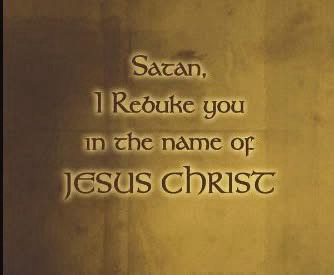
Stuck in your thoughts? Stop what you are doing, close your eyes, bow your head, and say, “Satan, I rebuke you in the name of Jesus, Amen.” Then, everything will be fine 😊.

#BibleVerse #JesusFollower #News #Disney #Netflix #TheChosen #CatholicChurches #BaptistChurch #BodyOfChrist #MotivationalQuotes #labubu #IsraelVersusPalestine #RussiaVersusUkraine #DonaldTrump #JoeBiden #Conservative #Liberal #Witchcraft #SportsNews #ReligionsOfTheWorld #UnitedStatesOfAmerica #Israel #67