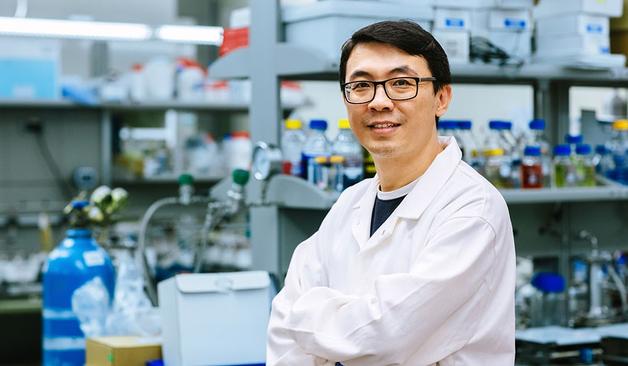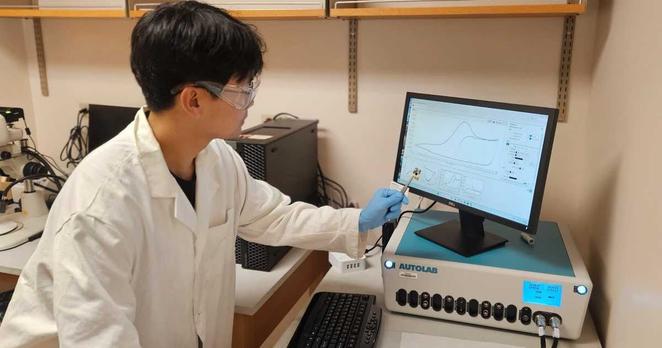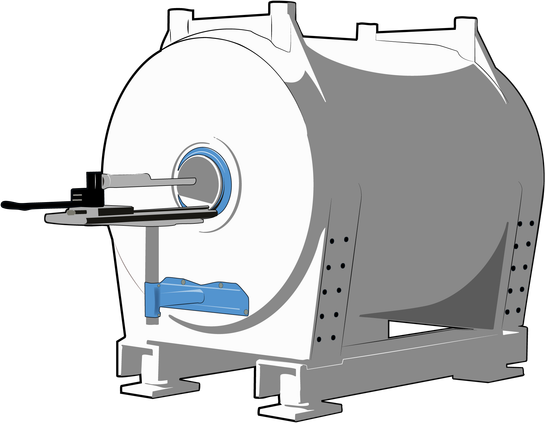
Biomedical engineering is the application of engineering principles and design concepts to medicine and biology for healthcare purposes. The primary goal of this field is to close the gap between engineering and medicine, combining the rigorous problem-solving and quantitative skills of the physical sciences with the nuanced understanding of biological systems.
#BiomedicalEngineering #sflorg
https://www.sflorg.com/2026/06/cat06162601.html
Biomedical Engineering: In-Depth Description

Biomedical engineering is highly diverse, encompassing several specialized sub-disciplines that focus on different scales of human biology and tech

Researchers have developed a novel, stain-free imaging platform that utilizes engineered silicon slides to analyze tissue samples directly. This technology generates high-resolution structural color images without the need for traditional chemical dyes, expediting the diagnostic process.
#MaterialsScience #BiomedicalEngineering #Pathology #Oncology #ArtificialIntelligence #sflorg
https://www.sflorg.com/2026/06/ms06152602.html
KAUST Stain-Free Imaging for Cancer Diagnosis

KAUST's stain-free imaging platform uses silicon slides to accelerate cancer diagnosis and enable reliable AI-assisted digital pathology.

A novel bioelectronic platform utilizes the conducting polymer PEDOT:PSS to dynamically modulate material stiffness through the application of electrical voltage. This allows researchers to subject cells to varying mechanical environments in real time.
#Mechanobiology #BiomedicalEngineering #MaterialsScience #sflorg
https://www.sflorg.com/2026/06/bio06142601.html
Dynamic Mechanobiology Platform

Discover a bioelectronic PEDOT:PSS platform that dynamically changes stiffness via electrical voltage to study fibrosis and cancer cells.

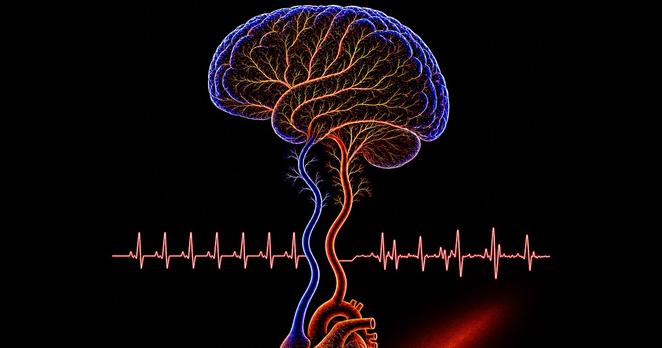
Cardiac optogenetics is an advanced technique combining genetic engineering and light to noninvasively induce and study arrhythmias. Researchers utilize this method to observe how irregular heartbeats disrupt hemodynamics and alter oxygen concentration in the brain.
#BiomedicalEngineering #Cardiology #Genetics #Neuroscience #sflorg
https://www.sflorg.com/2026/06/eng06042601.html
Cardiac Optogenetics: Arrhythmia & Brain Effects

Discover how cardiac optogenetics uses light and genetics to noninvasively study the impact of arrhythmias on brain oxygenation and hemodynamics.

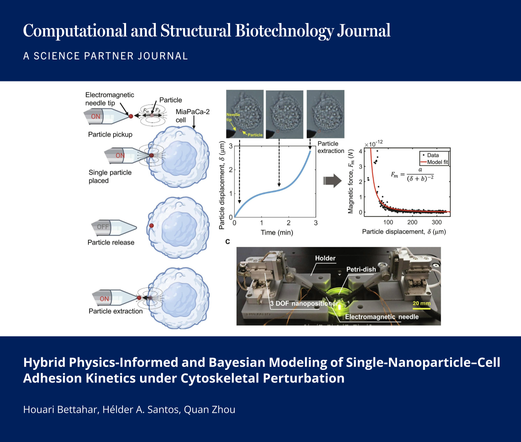
⚛️ What if randomness inside cells isn’t noise — but biology’s hidden operating system?

🔗 Hybrid Physics-Informed and Bayesian Modeling of Single-Nanoparticle–Cell Adhesion Kinetics under Cytoskeletal Perturbation. Computational and Structural Biotechnology Journal (CSBJ). DOI: https://doi.org/10.34133/csbj.0077

📚 CSBJ - A Science Partner Journal: https://spj.science.org/journal/csbj

#Nanomedicine #PhysicsInformedAI #BayesianModeling #Biophysics #CellBiology #ComputationalBiology #BiomedicalEngineering #AI

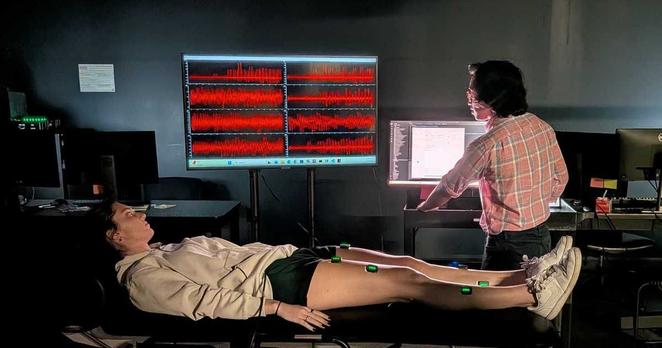
Transcutaneous spinal cord stimulation (tSCS) utilizes non-invasive electrical waveforms to help patients recover motor function following a spinal cord injury. Recent research evaluates whether newer, kilohertz-frequency waveforms are as effective as conventional, longer-duration waveforms at targeting the neural structures necessary for true rehabilitation.
#BiomedicalEngineering #Neuroscience #Neurophysiology #Rehabilitation #Medicine #sflorg
https://www.sflorg.com/2026/05/bmed05122601.html
Spinal Cord Stimulation: Waveform Efficacy

Research reveals conventional spinal cord stimulation waveforms are more effective for motor recovery than expensive high-frequency alternatives.

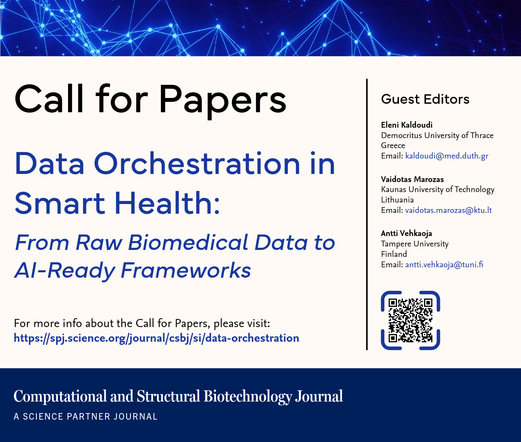
📢 Call for Papers: Data Orchestration in Smart Health: From Raw Biomedical Data to AI-Ready Frameworks

⏳ Submission Deadline: 30 December 2026

đź”— Submit your work: https://spj.science.org/journal/csbj/si/data-orchestration

#CallForPapers #SmartHealth #BiomedicalEngineering #DigitalHealth #HealthInformatics #MedicalImaging #EHR #FAIRData #ClinicalAI #BiomedicalAI #BiomedicalData #HealthData

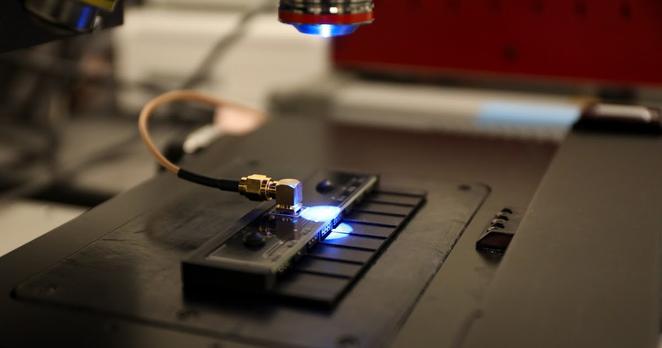
A novel, non-invasive liquid biopsy technique that utilizes electronic microchips to capture and analyze tumor-shed nanoparticles from the blood to detect early-stage pancreatic cancer.
#Oncology #BiomedicalEngineering #Nanomedicine #Cancer #sflorg
https://www.sflorg.com/2026/05/ongy05032601.html
Nanoparticle Pancreatic Cancer Test

Learn how a new microchip blood test uses nanoparticles and an electronic jolt to detect early-stage pancreatic cancer with 97% accuracy.