T.A.E.’s Book Review – Wormwood: Gentleman Corpse, Vol. 3: Calamari Rising by Ben Templesmith

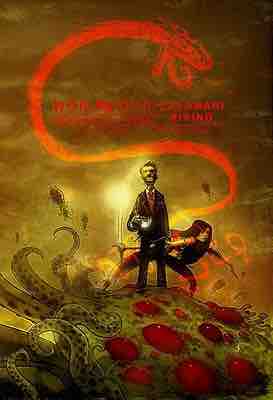
Wormwood: Gentleman Corpse, Vol. 3: Calamari Rising is a comic that understands a crucial grotesque truth: apocalypse is funniest when it shows up uninvited at closing time. The publisher’s synopsis gives the premise in one beautifully deranged breath: Wormwood wants “that quiet drink,” but the Brotherhood of the Calamari arrive, bringing along a “parasitic infection,” a “Squideeverse,” and the threat of Earth’s “absorption into the Calamari group mind.” Even in summary form, the book announces its method: it stages cosmic horror as barroom interruption, transforming existential dread into black comedy. 

What makes this volume more than a string of outrageous images is the way Templesmith’s premise turns identity into a recurring joke with philosophical teeth. Wormwood is not simply a monster hero fighting other monsters; he is a creature forever trying to preserve a fragile private life against the pressure of vast, absurd, inhuman systems. That tension between the intimate and the cosmic is the book’s real engine. The menace is outrageous, yes, but the emotional centre is recognizably human: fatigue, evasiveness, and the wish to be left alone. The comic’s horror lands because it invades a mundane desire, not because it invents a new apocalypse. 

Literarily, the book works as satire by exaggeration. The “favorite watering hole” threatened by a collective alien mind is an excellent emblem for Templesmith’s sensibility: the ordinary pleasures of Earth are set against a ludicrously grand invasion, and the result is not mere parody but a darkly comic inversion of heroic fantasy. Rather than glorifying resistance, the story repeatedly emphasizes evasive survival, improvisation, and the ridiculous persistence of vice. That makes the volume feel less like a standard monster book than a bleakly playful fable about how absurd it is to keep building routines in a universe determined to interrupt them. 

The series’ larger identity also matters here. Wormwood: Gentleman Corpse is widely framed as a blend of horror and humour, and that combination is essential to reading Calamari Rising well. In a straightforward horror comic, the invasion would be terrifying; here, it is also a joke that keeps getting bigger and stranger. That tonal doubleness gives the book its edge: it does not soften horror with comedy so much as show that comedy is one of horror’s native languages when the world has already become ridiculous. 

So the volume’s achievement is not just that it is imaginative, but that it is structurally clever. It makes repetition feel like escalation, vulgarity feel like metaphysics, and nonsense feel like a coherent worldview. This comic is most satisfying when it suggests that the universe is not secretly meaningful but absurdly overcommitted to spectacle. In that sense, Calamari Rising is both a monster story and a comic critique of modern overload: everything is too much, the threat is ridiculous, and yet the joke is also the truth.

#BenTemplesmith #BookReviews #GraphicNovels #Horror #LiteraryCriticism #Templesmith
T.A.E.’s Book Review – Wormwood: Gentleman Corpse, Vol. 2: It Only Hurts When I Pee by Ben Templesmith

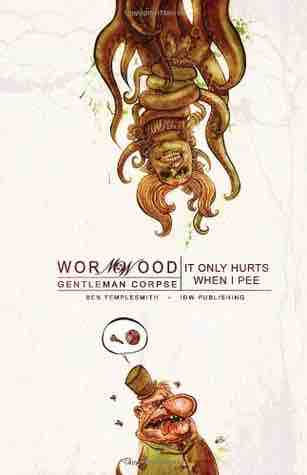
Wormwood: Gentleman Corpse, Vol. 2: It Only Hurts When I Pee is a deliciously deranged exercise in comic-book grotesquerie, but it is not merely a string of jokes dressed up in slime and tentacles. The collected edition runs 120 pages and sends Wormwood and his companions into Lephrechaunia to find the Leprechaun Queen, the only being capable of lifting the “terminal curse” he has contracted after a leprechaun bite. That setup alone tells you the volume’s governing intelligence: Templesmith is not chasing realism, but escalation—each absurd premise is pushed until it becomes strangely coherent. Even the publisher’s synopsis reads like a manifesto of excess: “sublime lunacy,” “rabid leprechauns,” and a “terrifying collective” bent on “ingest[ing] everything they can get their tentacles on.” 

What makes the book more than a novelty is the way its comedy turns bodily humiliation into existential threat. The title, It Only Hurts When I Pee, sounds like a gross-out punchline, but in context it becomes a miniature philosophy of Wormwood’s condition: the body is both joke and prison, joke and death sentence. The author’s brilliance is that he never lets the reader settle into one register for long. “Rabid leprechauns” might invite laughter on one page, yet they also reveal the book’s deeper obsession with contagion, appetite, and corruption. The humour is bawdy, even juvenile at times, but it is also precise; it understands that disgust is funniest when it is inseparable from dread. 

As a piece of visual storytelling, the volume’s strength lies in its willingness to treat monstrosity as texture rather than exception. Wormwood’s world is built from collisions: folklore collides with body horror, inter-dimensional travel collides with barroom vulgarity, and myth collides with the ordinary shame of a body in trouble. The result is a comic that feels less like a conventional plot than a fevered folklore machine, where every strange image seems to generate the next. Even in synopsis form, the book announces itself as a work of controlled chaos; in practice, that chaos is what gives it style. 

My reading is that this volume succeeds because it trusts contradiction. It is filthy but elegant, stupid on the surface but cunning in structure, and gleefully irreverent without losing narrative momentum. For readers who like horror that laughs at its own wounds, this is exactly the sort of comic that lingers: not because it is tidy, but because it is so committed to being gloriously untidy.

#BenTemplesmith #BookReviews #GraphicNovels #Horror #LiteraryCriticism #Templesmith
T.A.E.’s Book Review – Wormwood: Gentleman Corpse, Vol. 1: Birds, Bees, Blood & Beer by Ben Templesmith

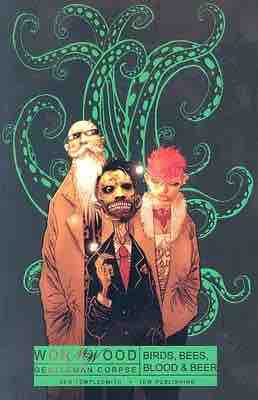
Wormwood: Gentleman Corpse, Vol. 1: Birds, Bees, Blood & Beer is one of those comics that understands a crucial truth of horror-comedy: the grotesque works best when it smiles back at you. Collected here from the first miniseries plus the original “Taster” issue, the book arrived in 2007 as a 152-page, creator-owned burst of fully authored excess, with Ben Templesmith handling the writing, art, and design. Its setup is gloriously unholy: “things are awakening in the city,” bodies are dropping, and Wormwood—described in review copy as a “preternaturally cheery corpse”—lurches into the mess alongside the robot sidekick Mr. Pendulum and the punkish Phoebe. 

What gives the volume its sting is that it never treats shock as an end in itself. Publishers Weekly’s assessment is exactly right: what could have been “rank” or “derivative” instead “tweaks a surprising amount of humour” from familiar occult pulp, while cloaking the whole thing in “darkly layered and intricate art.” That combination is the book’s real achievement. It feels like a demon story filtered through nightclub smoke, cheap beer, and gallows wit—less a straight narrative than a nocturnal attitude. Wormwood is not a psychologically subtle hero, but he does not need to be; he is a swaggering emblem of appetite, vanity, and blasphemous charm, a figure who turns every scene into a bar-room apotheosis of bad manners. 

The title itself, Birds, Bees, Blood & Beer, is a neat little manifesto. “Birds and bees” suggests the usual rites of human instruction; “blood and beer” yanks that innocence into the gutter, where the author prefers to stage his drama. The book’s pleasure lies in that collision: the juvenile joke, the visceral image, the occult threat, and the deadpan punchline all occupying the same panel-space. As a debut volume, it is more swagger than depth, more fever dream than metaphysical inquiry, but that is precisely why it works. It is a comic that knows how to make rot feel lively, and it makes that liveliness contagious. 

In literary terms, this is not merely a monster comic; it is a comic about style as survival. Templesmith’s world is one where corruption is everywhere, yet the line-work, pacing, and bitterly comic voice transform decay into performance. The result is memorable not because it cleanses horror, but because it revels in its mess and still manages elegance. For readers who like their supernatural fiction rude, inventive, and visually haunted, this volume is a dark delight.

#BenTemplesmith #BookReviews #GraphicNovels #Horror #LiteraryCriticism #Templesmith
Get a First Peek at General Strike, a New Comic Supporting the Hollywood Strikes

Grant Morrison, Matteo Pizzolo, and Brian Michael Bendis joined with TV writers from The Boys, Daredevil, and more on the project.

Gizmodo
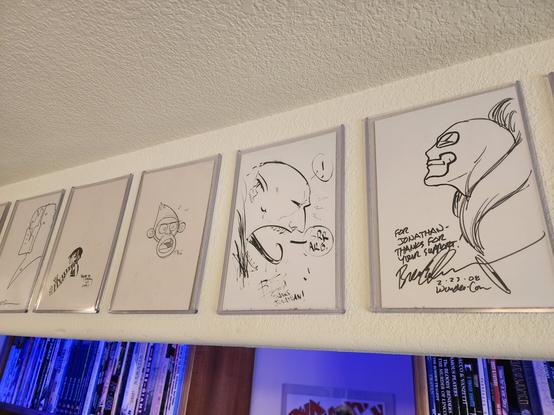
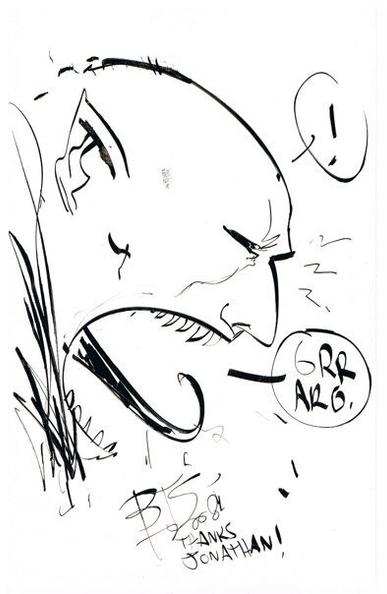
Day 5 of my #comicbook room and #comicart tour, and one of my favorite stories about getting a sketch. This vampire was sketched FOR FREE by #BenTemplesmith during a really busy in-store at #IsotopeComics in 2008. NOTICE THE SMUDGE in the middle of the head. He finished and accidentally got his thumbprint on the middle of the sketch, frowned, apologized profusely to me and offered to do a new one. I, of course, refused. Templesmith is one of the nicest comic guys I've ever met.