The Battle of Cable Street was a series of clashes that took place at several locations in the East End of London, most notably Cable Street, on Sunday 4 October 1936. It was a clash between the Metropolitan Police, sent to protect a march by members of the British Union of Fascists led by Sir Oswald Mosley, and various anti-fascist demonstrators including local trade unionists, communists, anarchists, British Jews, and socialist groups. The anti-fascist counter-demonstration included both organised and unaffiliated participants.
Estimates of Fascist participants range from 2,000 to 3,000, up to 5,000. The Fascists had a casualty dressing station at their Tower Hill assembly point. There were 6,000–7,000 policemen, including the whole of the Metropolitan Police Mounted Division. The police had wireless vans and a spotter plane sending updates on crowd numbers and movements to Sir Philip Game's HQ, at Tower Hill. Estimates of the number of anti-fascist counter-demonstrators range from 100,000 to 250,000, 300,000, 310,000, or more. The Independent Labour Party and Communists, like the Fascists, set up medical stations to treat their injured.
About 150 demonstrators were arrested, with the majority of them being anti-fascists, although some escaped with the help of other demonstrators. Around 175 people were injured including police, women and children.
The anti-fascists celebrated the community's united response, in which large numbers of East-Enders of all backgrounds; Protestants, Catholics and Jews successfully resisted Mosley and his followers. There were few Muslims in London at the time, so organisers were also delighted when Muslim Somali seamen joined the anti-fascist crowds.
The event is frequently cited by modern Antifa movements as "...the moment at which British fascism was decisively defeated".
#socialism #socialist #antifascist #antifascism #antifa #battleofcablestreet #neveragain #fuckzuck #fuckmeta #fuckfascism #punchanazi IanMoore3000
 Liam O'Mara IV, PhD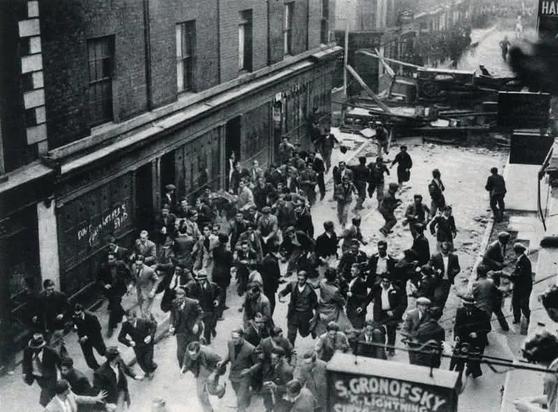
 JdeBP
JdeBP
 Lazarou Monkey Terror 🚀💙🌈
 MusiqueNow
  ✡️ 🇵🇸
✡️ 🇵🇸 

 Gab
Gab

 Queeróg (siad/iad/comrádaí) 🍉

 Just Ice
 iamBullivant