Autonomism

YouTube
Autonomies: **For Paolo Virno (1952-2025)**

https://autonomies.org/2025/11/for-paolo-virno-1952-2025/

Héctor Pávon: For you, what is the meaning of the word revolution today? Paolo Virno: Perhaps we could do without the word revolution because this model was that of taking power and constructing a new State. It may be better … Continue reading →

#Interview #Anticapitalism #Antistatism #Autonomism #PaoloVirno
For Paolo Virno (1952-2025) | Autonomies

Finished my first autonomist book (thanks for the rec, @revolutionaryobject): Breathing, by Franco Bifo Berardi.

My review is over on Bookwyrm: https://bookwyrm.social/user/catileptic/review/8238979/s/civilization-is-not-crumbling-it-is-only-diverging-from-civility#anchor-8238979

"Truth cannot be the ethical motivation of our choices, only solidarity can. The problem is that social solidarity has been jeopardized by the wide-spread precarization of labor and by the all-encompassing cult of competition."

#autonomism #marxism

Alecs Ștefănescu's review of Breathing - BookWyrm

Social Reading and Reviewing

Proletarian Disorganization as the Problem of Our Time. #BaseBuilding #WorkersMovement #Autonomism
https://communistcaucus.com/our-moment/
Our Moment: Disorganization as the Problem of Our Time

The historical problem of our time is proletarian disorganization. We have lost the class institutions and political habits of organized struggle. Building mass, militant class organization is the strategic question of our time. Addressing this historic problem will unlock a new phase of political potential.

DSA Communist Caucus

"Constructed over five centuries of capitalist hegemony, the devaluation and naturalisation of reproductive work, in all its different (and constantly expanding) aspects, are clearly not amenable to any particular solution, nor can they be addressed by any reform of this work – though both reforms and changes giving women and all non-conforming subjects more power must be an object of struggle. The devaluation of reproduction, which, in essence, is the devaluation of our life, is a structural condition of capitalist accumulation. Fortunati’s analysis in The Arcana of Reproduction – of the capitalist structuring of the family and reproductive work thus continues to be both relevant and necessary.

As in the 1970s, revealing the extent to which capitalism dominates our lives – and revealing all the unpaid labour that it has extracted from women through the organisation of marriage and the family – is an essential step for forging a feminist political agenda: an agenda not limited to the quest for equality, equal rights or opportunities, but driven by the conviction that, as Fortunati argues throughout The Arcana of Reproduction, women’s liberation can be obtained only through the construction of a society beyond capitalism."

https://www.versobooks.com/blogs/news/silvia-federici-on-the-arcana-of-reproduction?utm_source=twitter&utm_medium=social&utm_campaign=new_titles_30

#Feminism #Autonomism #Marxism #SocialReproduction #Italy #Capitalism

Silvia Federici on The Arcana of Reproduction

[book-strip index="1" style="buy"] The Arcana of Reproduction is a unique book in the world of Marxist feminism. Generally, Marxist feminists have elaborated on the methodological significance of Marx’s work for understanding the specific historical forms of oppression that women have experienced in capitalist society,

Verso

"Werner Bonefeld discusses with Lillian Cicerchia his new book A Critical Theory of Economic Compulsion: Wealth, Suffering, and Negation (Routledge, 2023)"

https://scholarsjunction.msstate.edu/emancipations/vol3/iss3/3/

#Marxism #CriticalTheory #OpenMarxism #Autonomism #Capitalism

A Critical Theory of Economic Compulsion, Werner Bonefeld, Interview

Werner Bonefeld discusses with Lillian Cicerchia his new book A Critical Theory of Economic Compulsion: Wealth, Suffering, and Negation (Routledge, 2023)

Scholars Junction

#Imperialism #Empire #Marxism #Autonomism #Negri: "Despite such prognostications, both wishful and anguished, globalization is not dead or even in decline, but simply less easily legible. It is true that the global order and the accompanying structures of global command are everywhere in crisis, but today’s various crises do not, paradoxically, prevent the continuing rule of the global structures. The emerging world order, like capital itself, functions through crisis and even feeds on it. It works, in many respects, by breaking down.footnote1 The fact that the processes of globalization are less legible today makes it all the more important to investigate the trends of the past twenty years in both the variegated constitution of global governance, which includes the powers of nation-states but extends well beyond them, and the global structures of capitalist production and reproduction.

Interpreting the primary structures of rule and exploitation in a global context is the key to recognizing and furthering the potential forces of revolt and liberation. The emerging global order and networks of capital undoubtedly constitute an offensive operation, against which we should support resistance efforts; but they should also be recognized as responses to the threats and demands forwarded by the long history of revolutionary internationalisms and liberation struggles. Just as today’s Empire was formed in response to the insurgencies of the multitudes from below, so too, potentially, it could fall to them, as long as those multitudes can compose their forces into effective counter-powers, and chart the path towards an alternative form of social organization. Today’s social and political movements are, in many respects, already pointing in this direction."

https://newleftreview.org/issues/ii120/articles/empire-twenty-years-on

Michael Hardt & Antonio Negri, Empire, Twenty Years On, NLR 120, November–December 2019

If Empire was, for many, the signature text for the age of globalization, how do its theses fare now, in an era of rising nationalism and protracted crisis? In a landmark update, the authors examine how the twin spheres of power and (re)production have spun out of sync—symptoms of a system that, in Deleuze and Guattari’s words, works by breaking down.

New Left Review

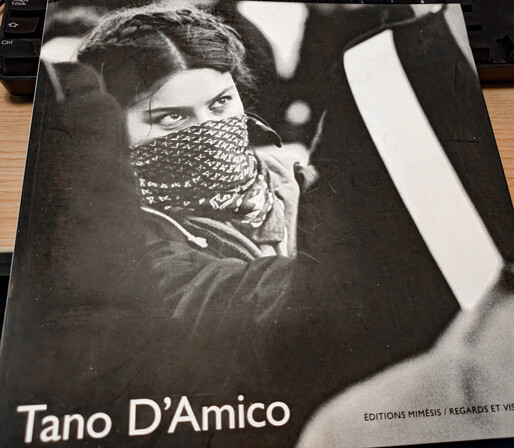
New arrival. Fabulous book of images by Tano D'Amico of class struggle in 1970s Italy.

#Italia #autonomism #operaismo

Complete Control.

#autonomism #ilvolsci #comics

Enzo Del Re - Lavorare con lentezza (Work Less, Work More Slowly.)

1974 song inspired by Italian autonomism and related tactics.

#Italy #autonomism #operaismo

https://youtu.be/4aCEN4y6TS0

Enzo Del Re - Lavorare con lentezza

YouTube