 Front Page [Unofficial]
Pigeons are often considered pests. But their smarts and visual recognition skills can save lives.
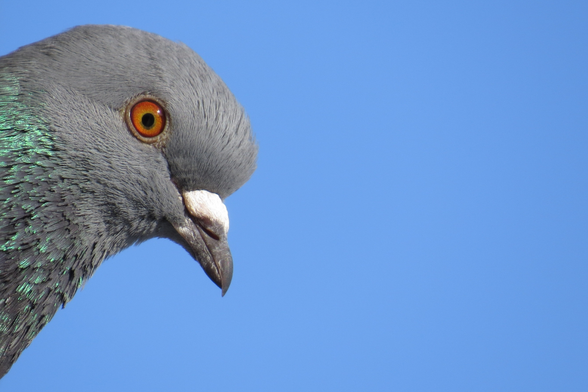
Pigeons are often considered pests. But their smarts and visual recognition skills can save lives.
Hanako the 226 year old koi
Hanako means flower girl in Japanese. Hanako lived the majority of her life in the pure spring waters of a pond at the foot of Mt Ontake near Oppara. It’s believed that the purity and relative isolation of the pond contributed to her longevity.
Hanako lived through the English colonising of both Australia and New Zealand, along with both world wars in the 20th C and Japan’s intensive role in both of them. She also was swimming around when humans first landed on the moon and finally she swum off this mortal coil in 1977.
Other long lived koi in the same pond were Yuki, who lived to 141 and Aoi who reached 170. Hanako grew to be around 7.5 kilos and was a vivid orange hue. Her true age was confirmed by analysing her scales post-mortem.
I saw some very beautiful, big and serene koi when I was in Japan. Here’s a video of them in Kyoto…
https://www.youtube.com/watch?v=Ic-hTas7iQ4&t=16s
Content Catnip
Follow me on Mastodon Watch my videos Donate to my Ko Fi #animalIntelligence #fish #History #japan #japaneseHistory #mortality #naturalHistory #nature #quirky #storytelling
Crows are incredibly smart. Here’s how to make friends with one in four easy steps.
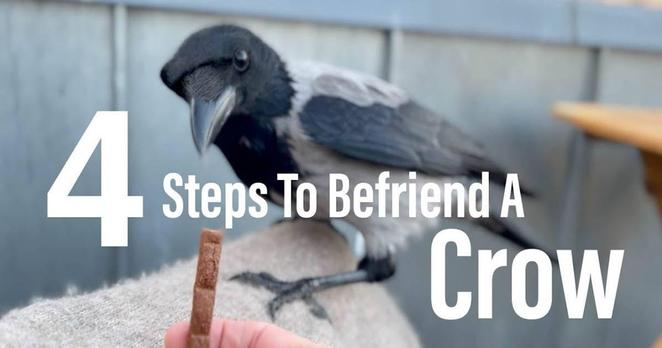
Little by little, Homo sapiens is coming down from its pedestal. We are discovering that many species use forms of communication just as sophisticated as our own.
https://www.theguardian.com/environment/2026/apr/15/sperm-whales-alphabet-vocalizations-similar-humans
"Quick Take
• Cleaner wrasses used mirrors to locate and scrape marks placed on their bodies.
• Experiments suggest fish can link reflections with sensations on their own bodies.
• Findings challenge assumptions that only large-brained animals recognize themselves in mirrors.
• Research raises questions about animal intelligence and how scientists interpret mirror tests.
For decades, scientists used a mirror experiment to explore whether animals could recognize themselves. In that test, researchers placed a mark on an animal’s body where it could only be seen in a mirror. If the animal used the mirror to investigate the mark on its own body, scientists interpreted the behavior as self-recognition. Only a small group of species seemed to pass the test. These included great apes, dolphins, elephants, and a few birds.
New experiments with a small reef fish have complicated that picture. Researchers studying the bluestreak cleaner wrasse discovered that this species can use a mirror to locate marks placed on its own body. The fish scraped at the marked spot when it saw the reflection. When the mirror was removed, the scraping stopped. These observations suggest the fish used the mirror to guide its actions.
The results have sparked debate among scientists. Some believe the fish demonstrates a form of self-related awareness. Others think the fish simply learned to associate the reflection with sensations on its skin. Either way, the findings are prompting researchers to reconsider how the mirror test should be interpreted."
Tapanuli Orangutan Faces Extinction From Forest Protection Rollback
The world’s rarest great ape, the Tapanuli orangutan, is facing a population collapse after a devastating cyclone and a proposed zoning overhaul that threatens to strip protections from their last remaining habitat. Experts warn that weakening environmental laws and oversight now would be the “nail in the coffin” for this beautiful and intelligent species.
#News: After the deadly floods in #Sumatra, Tapanuli #orangutans face a bleak future. Now their legal protections are being stripped back to make way for more #mining. Fight back when you shop! 🧐🛍️ #BoycottPalmOil 🌴🚫 #Boycott4Wildlife @palmoildetect https://wp.me/pcFhgU-iSk
Share to BlueSky Share to TwitterLearn more: Jong, H. N., & Muazam, A. R. (2025, December 18). Tapanuli orangutan, devastated by cyclone, now faces habitat loss under zoning plans. Mongabay. https://news.mongabay.com/2025/12/tapanuli-orangutan-devastated-by-cyclone-now-faces-habitat-loss-under-zoning-plans/
Reeling from a catastrophic cyclone that may have killed or displaced dozens of Tapanuli orangutans, the critically endangered species now faces a new threat: a proposed zoning overhaul in Indonesia’s North Sumatra province. Local authorities have called for scaling back the Batang Toru “provincial strategic area” by nearly a third, a move that would significantly weaken legal protections and environmental scrutiny for mining and plantation projects. If approved, approximately 39,000 hectares—nearly a third of the orangutan’s forest range—would lose the safeguards that currently prioritise ecological function and landscape-scale assessment.
The timing of this proposal is especially alarming. A recent tropical storm unleashed torrential rains and landslides that severely damaged at least 3,964 hectares of previously intact forest, potentially impacting up to 54 individuals from a total population of just 800. Scientists warn that this extreme weather event, combined with the loss of forest cover, could push the Tapanuli orangutan toward population collapse. Removing strategic protections would also facilitate the expansion of extractive industries, including a nearby gold mine that has already faced intense scrutiny for its potential impact on the species.
Provincial officials suggested the downscaling was due to a lack of capacity and budget to manage such a vast area, even proposing that the central government take over as a “national strategic area.” However, conservation groups like Mighty Earth argue that opening the door to further extractive industries in the wake of a natural disaster is an “insane idea.” They are calling for emergency protections, a halt to habitat-damaging development, and the restoration of critical forest corridors to prevent the Tapanuli orangutan from becoming the first great ape species to go extinct in modern history.
While the central government has moved to suspend some industrial operations and review logging permits in response to the floods, the future of the Batang Toru ecosystem remains uncertain. Conservationists stress that this is a critical opportunity for the government to fulfill its environmental promises rather than allowing administrative or commercial interests to seal the fate of a species on the brink.
Tapanuli Orangutan Faces Extinction From Forest Protection Rollback
Keep reading by Palm Oil DetectivesDeforestation Devastates Tesso Nilo National Park’s Endangered Creatures
Keep reading by Palm Oil DetectivesResearch: AI Helps Unlock the Curious Secrets of Orangutan Chatter
Keep reading by Palm Oil DetectivesAugust 19th is #WorldOrangutanDay
Keep reading by Palm Oil DetectivesApes Enjoy Joking and Teasing Each Other
Keep reading by Palm Oil Detectives Keep reading by Palm Oil Detectives Load more postsSomething went wrong. Please refresh the page and/or try again.
Learn more: Jong, H. N., & Muazam, A. R. (2025, December 18). Tapanuli orangutan, devastated by cyclone, now faces habitat loss under zoning plans. Mongabay. https://news.mongabay.com/2025/12/tapanuli-orangutan-devastated-by-cyclone-now-faces-habitat-loss-under-zoning-plans/
ENDS
Learn about other animals endangered by palm oil and other agriculture
Global South America S.E. Asia India Africa West Papua & PNGMarsupials thought extinct for 6,000 years found in West Papua
Keep readingGursky’s Spectral Tarsier Tarsius spectrumgurskyae
Keep readingSunda Flying Lemur Galeopterus variegatus
Keep readingWestern Parotia Parotia sefilata
Keep readingCapped Langur Trachypithecus pileatus
Keep readingMountain Tapir Tapirus pinchaque
Keep readingLearn about “sustainable” palm oil greenwashing
Read more about RSPO greenwashing
Lying Fake labels Indigenous Land-grabbing Human rights abuses Deforestation Human health hazardsA 2019 World Health Organisation (WHO) report into the palm oil industry and RSPO finds extensive greenwashing of palm oil deforestation and the murder of endangered animals (i.e. biodiversity loss)
Read moreTake Action in Five Ways
1. Join the #Boycott4Wildlife on social media and subscribe to stay in the loop: Share posts from this website to your own network on Twitter, Mastadon, Instagram, Facebook and Youtube using the hashtags #Boycottpalmoil #Boycott4Wildlife.
Enter your email address
Sign Up
Join 3,180 other subscribers2. Contribute stories: Academics, conservationists, scientists, indigenous rights advocates and animal rights advocates working to expose the corruption of the palm oil industry or to save animals can contribute stories to the website.
Read moreMel Lumby: Dedicated Devotee to Borneo’s Living Beings
Read moreAnthropologist and Author Dr Sophie Chao
Read moreHealth Physician Dr Evan Allen
Read moreThe World’s Most Loved Cup: A Social, Ethical & Environmental History of Coffee by Aviary Doert
Read moreHow do we stop the world’s ecosystems from going into a death spiral? A #SteadyState Economy
Read more3. Supermarket sleuthing: Next time you’re in the supermarket, take photos of products containing palm oil. Share these to social media along with the hashtags to call out the greenwashing and ecocide of the brands who use palm oil. You can also take photos of palm oil free products and congratulate brands when they go palm oil free.
https://twitter.com/CuriousApe4/status/1526136783557529600?s=20
https://twitter.com/PhillDixon1/status/1749010345555788144?s=20
https://twitter.com/mugabe139/status/1678027567977078784?s=20
4. Take to the streets: Get in touch with Palm Oil Detectives to find out more.
5. Donate: Make a one-off or monthly donation to Palm Oil Detectives as a way of saying thank you and to help pay for ongoing running costs of the website and social media campaigns. Donate here
Pledge your support #animalBehaviour #AnimalBiodiversityNews #animalCruelty #animalExtinction #animalIntelligence #animalRights #Boycott4wildlife #BoycottPalmOil #deforestation #Indonesia #orangutan #orangutans #PalmOil #palmOilDeforestation #Sumatra #Tapanuli #TapanuliOrangutanPongoTapanuliensis
Marsupials thought extinct for 6,000 years found in West Papua
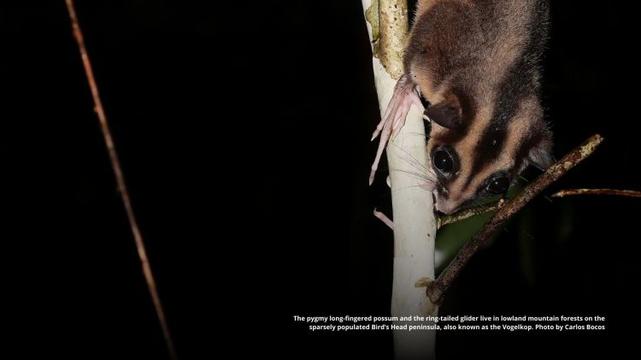
In an astonishing discovery, two marsupial species believed to be extinct for 6,000 years have been rediscovered alive and well in the remote rainforests of West Papua. The pygmy long-fingered possum and the ring-tailed glider were located with the crucial assistance of local indigenous Vogelkop clans. However, their survival remains precarious as their habitats are increasingly threatened by logging and the expansion of the palm oil colonialism in West Papua. Laws and native title to protect this region is essential for indigenous land defenders. We musn’t let them disappear again #BoycottPalmOil #Boycott4Wildlife
Two #extinct #marsupials in #WestPapua found alive! The #marsupials highlight the need to protect #Papuan forests or they are gone for good! Resist for them and #BoycottPalmOil #Boycott4Wildlife when you shop 🌴🙊🔥☠️🚫 @palmoildetect #Boycott4Wildlife https://wp.me/pcFhgU-iOH
Share to BlueSky Share to TwitterTwo #possums thought extinct for 6000 years are alive in #WestPapua! The pygmy #possum and sacred ring-tailed #glider deserve a break from #palmoil #ecocide. Stand with #indigenous defenders against #colonialism! 🌴🚫 @palmoildetect #BoycottPalmOil https://wp.me/pcFhgU-iOH
Share to BlueSky Share to Twitter
Two extraordinarily rare marsupials, entirely believed to have been extinct for over six thousand years, have been discovered alive in the remote, Vogelkop mountain forests of the Bird’s Head peninsula in West Papua. This remarkable rediscovery of the pygmy long-fingered possum and the ring-tailed glider was confirmed by Australian scientist Professor Tim Flannery, alongside a team of local indigenous experts and university researchers.
“More important than finding a living thylacine in Tasmania.”
Scott Hucknull from Central Queensland University describes the magnitude of the discovery.These species are rare examples of “Lazarus taxa”. Animals who disappear from the fossil record only to be found alive centuries later. Flannery noted that the likelihood of finding even one lost mammal was almost zero, let alone two.
“It’s unprecedented and groundbreaking, really, to find two Lazarus taxa,” Flannery says. “We’ve been able to finalise two pieces of work that are incredibly important from a biological and a conservation perspective, documenting the existence of rare marsupials in an area under threat. It’s sort of a crowning glory in my career as a biologist.”
The first of the resurrected species is the pygmy long-fingered possum, Dactylonax kambuayai. This tiny, striped marsupial possesses an extraordinary evolutionary trait: an elongated fourth finger on each hand that is double the length of other digits. Flannery explains that they use this finger to extract grubs from timber.
“They’ve got a whole lot of specialisations in their ear region as well, which seem to be related to detection of low-frequency sound. So presumably they’re listening for wood-boring beetle larvae, and they then rip open the rotting wood and use that finger to fish out the grub,” Flannery says.
The second species, the ring-tailed glider (Tous ayamaruensis), features unfurred ears and a strong, prehensile tail used for gripping branches. Flannery calls it “one of the most photogenic animals, most beautiful marsupials you’ll ever see.”
Crucially, the rediscovery of these elusive creatures was entirely dependent on the profound ecological knowledge of the local Tambrauw and Maybrat clans. These indigenous communities view the ring-tailed glider as deeply sacred, believing them to be manifestations of their ancestors’ spirits, and actively protect them from hunting. Rika Korain, a Maybrat woman and co-author of the research, emphasised that identifying the species relied entirely on traditional owners. “This connection has been essential,” she says.
“I’m very proud that Papuan researchers contributed to these landmark discoveries, and want to thank the people of the Misool, Maybrat and Tambrouw regions who supported us in the field,”
Dr Aksamina Yohanita of the University of Papua said.“The Vogelkop is an ancient piece of the Australian continent that has become incorporated into the island of New Guinea. Its forests may shelter yet more hidden relics of a past Australia,”
Tim FlanneryTo protect the remaining populations from the illegal wildlife trade, researchers are keeping their exact locations highly classified. Flannery delivered a stark warning to potential poachers regarding the animals’ survival in captivity: “They would be incredibly difficult to keep in captivity. because their diet is so highly specialised. Advanced warning for anyone who’s thinking of keeping one as a pet: it won’t live long,” he says.
While their rediscovery is a triumph, their future is highly uncertain. The proximity of power-hungry corporates intent on razing the rainforest for palm oil and timber casts a dark shadow over the region.
David Lindenmayer, an ecologist at the Australian National University, who was not involved in the study said “I am also hugely concerned about the extent of logging and land clearing happening in New Guinea,” he says. “It also makes me wonder what might have been lost in Australia as a result of all of the land clearing that has taken place here.”
The findings underline strong calls from scientists, environmentalists and indigenous rights advocates for Native Title legal land rights and indigenous-led protections of West Papua and its imperilled Vogelkop rainforest where these delightful marsupials are found.
Further information
Lam, L. (2026, March 6). Tiny possum and glider thought extinct for 6,000 years found in remote West Papua. BBC News. https://www.bbc.co.uk/news/articles/cwyg6p8g6yjo
Morton, A. (2026, March 6). Marsupials previously thought extinct for millennia discovered in New Guinea. The Guardian. https://www.theguardian.com/environment/2026/mar/05/marsupials-discovered-new-guinea
Woodford, J. (2026, March 5). Two marsupials believed extinct for 6000 years found alive. New Scientist. https://www.newscientist.com/article/2518082-two-marsupials-believed-extinct-for-6000-years-found-alive/
ENDS
Learn about other animals endangered by palm oil and other agriculture
Global South America S.E. Asia India Africa West Papua & PNGMarsupials thought extinct for 6,000 years found in West Papua
Keep readingGursky’s Spectral Tarsier Tarsius spectrumgurskyae
Keep readingSunda Flying Lemur Galeopterus variegatus
Keep readingWestern Parotia Parotia sefilata
Keep readingCapped Langur Trachypithecus pileatus
Keep readingMountain Tapir Tapirus pinchaque
Keep readingLearn about “sustainable” palm oil greenwashing
Read more about RSPO greenwashing
Lying Fake labels Indigenous Land-grabbing Human rights abuses Deforestation Human health hazardsA 2019 World Health Organisation (WHO) report into the palm oil industry and RSPO finds extensive greenwashing of palm oil deforestation and the murder of endangered animals (i.e. biodiversity loss)
Read moreTake Action in Five Ways
1. Join the #Boycott4Wildlife on social media and subscribe to stay in the loop: Share posts from this website to your own network on Twitter, Mastadon, Instagram, Facebook and Youtube using the hashtags #Boycottpalmoil #Boycott4Wildlife.
2. Contribute stories: Academics, conservationists, scientists, indigenous rights advocates and animal rights advocates working to expose the corruption of the palm oil industry or to save animals can contribute stories to the website.
Read moreMel Lumby: Dedicated Devotee to Borneo’s Living Beings
Read moreAnthropologist and Author Dr Sophie Chao
Read moreHealth Physician Dr Evan Allen
Read moreThe World’s Most Loved Cup: A Social, Ethical & Environmental History of Coffee by Aviary Doert
Read moreHow do we stop the world’s ecosystems from going into a death spiral? A #SteadyState Economy
Read more3. Supermarket sleuthing: Next time you’re in the supermarket, take photos of products containing palm oil. Share these to social media along with the hashtags to call out the greenwashing and ecocide of the brands who use palm oil. You can also take photos of palm oil free products and congratulate brands when they go palm oil free.
https://twitter.com/CuriousApe4/status/1526136783557529600?s=20
https://twitter.com/PhillDixon1/status/1749010345555788144?s=20
https://twitter.com/mugabe139/status/1678027567977078784?s=20
4. Take to the streets: Get in touch with Palm Oil Detectives to find out more.
5. Donate: Make a one-off or monthly donation to Palm Oil Detectives as a way of saying thank you and to help pay for ongoing running costs of the website and social media campaigns. Donate here
Pledge your support #animalBehaviour #AnimalBiodiversityNews #animalExtinction #animalIntelligence #animalRights #biodiversity #Boycott4wildlife #BoycottPalmOil #deforestation #ForgottenAnimals #Marsupial #marsupials #PalmOil #palmOilDeforestation #PapuaNewGuinea #PapuaNewGuineaSpeciesEndangeredByPalmOilDeforestation #possum #possums #WestPapua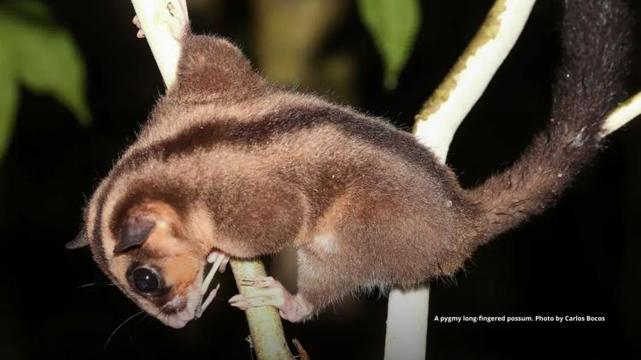
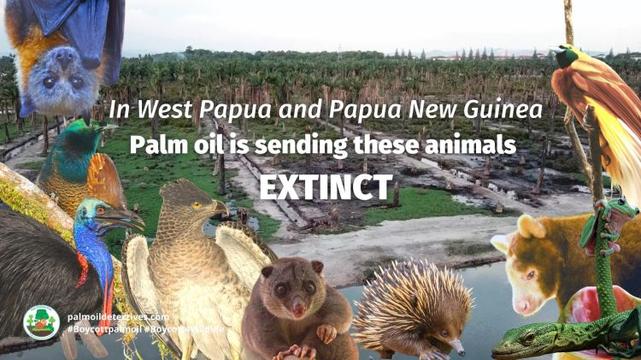
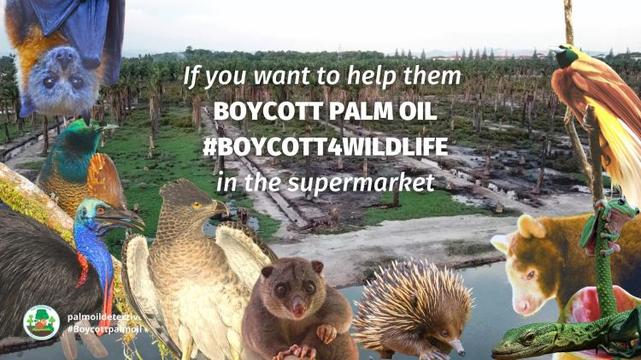
Do you love animals? Make every day #WorldWildlifeDay
This #WorldWildlifeDay, please remember the wild animals you love who are running out of time and land to live on. Research recently found that converting partly logged areas into palm oil plantations sounds the death knell for that ecosystem. Across the globe, from Indonesia to Brazil and Nigeria, vibrant rainforests and animals like reptiles and insects are under threat from palm oil, timber, and meat. This ecocide leaves majestic animals struggling to survive against chainsaws, bulldozers, pesticides and destruction for palm oil and meat agriculture. A multi-billion dollar industry has grown up around legitimising palm oil and meat ecocide, primarily through the RSPO but also other greenwashing schemes as well. Read on to discover more and how you can shine a light on the lives of elusive animals.
This #WorldWildlifeDay take action for #animals great and small 🦋🐦🐘🐒🐍 because #reptiles #insects #mammals and #birds deserve better than #palmoil ecocide and #extinction! When you shop always #Boycottpalmoil #Boycott4Wildlife @palmoildetect https://wp.me/pcFhgU-iMO
Share to BlueSky Share to Twitter#Palmoil and #meat #agriculture 🥩💀 are some of the biggest threats to wild #animals and farmed animals. This #WorldWildlifeDay and every single day, make sure fight for them and go #vegan 🥕🍆🍅 #BoycottPalmOil 🌴🩸☠️🧐⛔️ and #Boycott4Wildlife https://wp.me/pcFhgU-iMO
Share to BlueSky Share to TwitterProtecting Sumatra’s last remaining tigers
The Sumatran tiger is teetering on the brink of extinction. Recent findings underscore the urgency of protecting the last remaining populations of these majestic apex predators. Deforestation for palm oil and illegal poaching are wiping out their homes. In the Ulu Masen Ecosystem, a recent study detected only 11 tigers, highlighting severe population stress from snares and habitat loss. Without immediate action, they face the same tragic fate as the extinct Javan and Balinese tigers. Strict global rainforest laws, enforcement of anti-poaching units, and a consumer boycott of palm oil hold the key to protecting Sumatra’s last living tigers.
Animals of Tesso Nilo in Sumatra are vanishing
Tesso Nilo National Park in Sumatra has lost an alarming 78% of primary forest between 2009 and 2023. The primary driver of this devastation is the expansion of illegal palm oil plantations. This rampant deforestation threatens the homes of critically endangered species like tigers, orangutans, and elephants. When palm oil companies build roads, they increase accessibility for poachers, further endangering the animals who live there. Advocating for indigenous-led conservation efforts and adopting a plant-based lifestyle are vital steps to protect these ecosystems.
https://www.youtube.com/watch?v=z7FUBg_AqjA
56% of ‘data deficient’ species on the Red List are endangered
The destruction of wild ecosystems continues to push thousands of obscure species towards extinction finds a study by Norwegian University of Science and Technology. Researchers used advanced machine learning algorithms to assess the survival probability of thousands of under-researched animals, predicts that a staggering fifty-six percent of all “data deficient” species are currently threatened with extinction. 85% of unassessed amphibians face immediate existential threats, primarily driven by anthropogenic habitat degradation such as the unchecked expansion of palm oil plantations, meat agriculture, mining and timber logging. Right now is the time to fight for all life and reject products linked to ecocide. Always remember them and share out their posts! Start here on the forgotten animals page.
These are the forgotten animals of the secretly destroyed forestsSumatran elephants trapped by endless palm oil
In Indonesia’s North Aceh district, Sumatran elephants find themselves increasingly encircled by shrinking patches of forest, hemmed in all all sides by massive palm oil expansion. Just 924 to 1,360 individual Sumatran elephants remain alive. They are trapped in dead lands, surrounded by the very industry that is eradicating their food sources. Ongoing attempts by researchers to measure their populations have been hampered by the Indonesian government, which attempts to hide the truth from the media. Boycott palm oil when you shop to protect these irreplaceable beings.
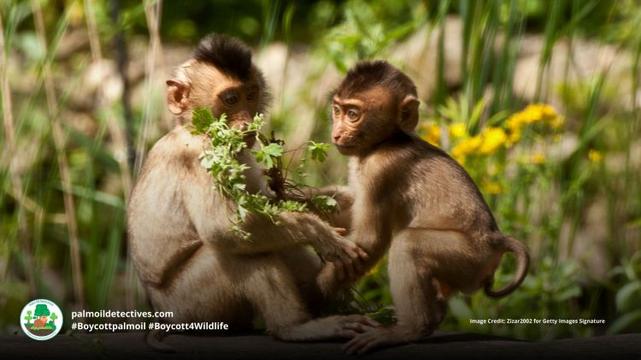
Toxic palm oil pesticides are killing baby macaques
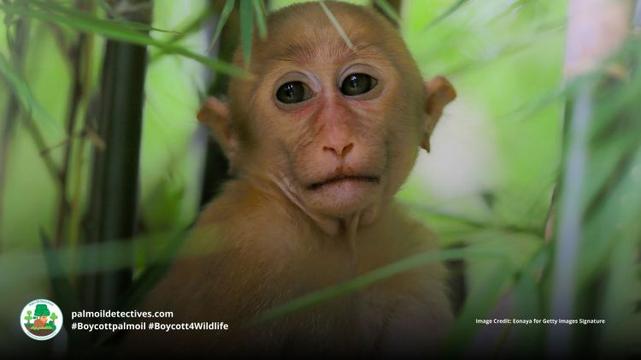
In Peninsular Malaysia, infant southern pig-tailed macaques are dying at alarmingly high rates due to palm oil plantations. A recent study found that agricultural chemicals and pesticides cross the placental barrier of unborn macaques, impacting their development. Prolonged exposure to these toxic plantations during infancy makes baby macaques three times more likely to die. These intelligent primates face increased risks from predators, human encounters, and poisons. Take action and boycott palm oil to protect these precious infants.
The fight for the lives of Wondiwoi tree kangaroos
The Wondiwoi tree kangaroo is the world’s most endangered kangaroo. Rediscovered in 2018 in West Papua’s lush forests, these rare animals have beautiful soulful eyes and burnt umber fur. Tragically, fewer than 50 of them remain alive. They face severe threats from hunting and palm oil deforestation. Protecting them requires urgent conservation efforts that prioritise indigenous sovereignty. You can help save these remarkable creatures by refusing to buy products with palm oil that destroy their homes.
Nigeria’s forest elephants face extinction
African forest elephants in Nigeria have seen their numbers decline massively in recent years. The main cause is human activity, specifically logging, cocoa agriculture, and palm oil plantations. These industries threaten their survival by destroying their natural habitat. As a result, fragmented elephant populations are highly vulnerable to poachers and retaliatory killings by farmers. We must halt the expansion of palm oil to secure a safe future for these majestic animals.
The deadly green lie of “sustainable” palm oil
For decades, the palm oil industry has misled consumers with the false promise of “sustainable” palm oil. Industry watchdogs have repeatedly exposed the RSPO’s certification as a multi-stakeholder sham. Behind this green façade lies a brutal reality of deforestation, human rights abuses, and the destruction of endangered species’ habitats. There is no such thing as sustainable palm oil. We must not fall for their corporate greenwashing.
https://www.youtube.com/watch?v=eG8V-Cmj4Es
Take action to protect rainforest animals
By holding to account the powerful corporations that control the world, we have the power to fight back against this ecocide. Here is how you can stand up for rainforest animals, farmed animals, indigenous people, and rainforests:
Make powerful lifestyle changes
The most impactful thing you can do is go plant-based in your diet. Boycott meat, boycott palm oil, and boycott dairy. These industries are the leading causes of global deforestation and animal cruelty.
Supermarket sleuthing
Next time you are in the supermarket, take photos of products containing palm oil. Share these on social media to call out the greenwashing and ecocide of the brands who use it. Congratulate brands when they go completely palm oil-free.
Join the #Boycott4Wildlife movement
Follow and join the Boycott4Wildlife movement on this website and social media. Share stories on BlueSky, Mastodon, Twitter and YouTube using the hashtags #Boycottpalmoil and #Boycott4Wildlife to be part of it!
Support indigenous sovereignty and agroecology
A viable path forward is to champion indigenous-led agroecology. Indigenous peoples possess the deep ecological knowledge required to protect forests and the intricate web of life that includes insects, birds, mammals and reptiles. Stand strongly with indigenous land defenders to protect what remains of the wild.
Learn about other animals endangered by palm oil and other agriculture
Global South America S.E. Asia India Africa West Papua & PNGGursky’s Spectral Tarsier Tarsius spectrumgurskyae
Keep readingSunda Flying Lemur Galeopterus variegatus
Keep readingWestern Parotia Parotia sefilata
Keep readingCapped Langur Trachypithecus pileatus
Keep readingMountain Tapir Tapirus pinchaque
Keep reading Keep readingLearn about “sustainable” palm oil greenwashing
Read more about RSPO greenwashing
Lying Fake labels Indigenous Land-grabbing Human rights abuses Deforestation Human health hazardsA 2019 World Health Organisation (WHO) report into the palm oil industry and RSPO finds extensive greenwashing of palm oil deforestation and the murder of endangered animals (i.e. biodiversity loss)
Read moreTake Action in Five Ways
1. Join the #Boycott4Wildlife on social media and subscribe to stay in the loop: Share posts from this website to your own network on Twitter, Mastadon, Instagram, Facebook and Youtube using the hashtags #Boycottpalmoil #Boycott4Wildlife.
2. Contribute stories: Academics, conservationists, scientists, indigenous rights advocates and animal rights advocates working to expose the corruption of the palm oil industry or to save animals can contribute stories to the website.
Read moreMel Lumby: Dedicated Devotee to Borneo’s Living Beings
Read moreAnthropologist and Author Dr Sophie Chao
Read moreHealth Physician Dr Evan Allen
Read moreThe World’s Most Loved Cup: A Social, Ethical & Environmental History of Coffee by Aviary Doert
Read moreHow do we stop the world’s ecosystems from going into a death spiral? A #SteadyState Economy
Read more3. Supermarket sleuthing: Next time you’re in the supermarket, take photos of products containing palm oil. Share these to social media along with the hashtags to call out the greenwashing and ecocide of the brands who use palm oil. You can also take photos of palm oil free products and congratulate brands when they go palm oil free.
https://twitter.com/CuriousApe4/status/1526136783557529600?s=20
https://twitter.com/PhillDixon1/status/1749010345555788144?s=20
https://twitter.com/mugabe139/status/1678027567977078784?s=20
4. Take to the streets: Get in touch with Palm Oil Detectives to find out more.
5. Donate: Make a one-off or monthly donation to Palm Oil Detectives as a way of saying thank you and to help pay for ongoing running costs of the website and social media campaigns. Donate here
Pledge your support #animalBehaviour #AnimalBiodiversityNews #animalCommunication #animalCruelty #animalExtinction #animalIntelligence #animalRights #biodiversity #Boycott4wildlife #BoycottPalmOil #deforestation #PalmOil #palmOilDeforestation #WorldWildlifeDay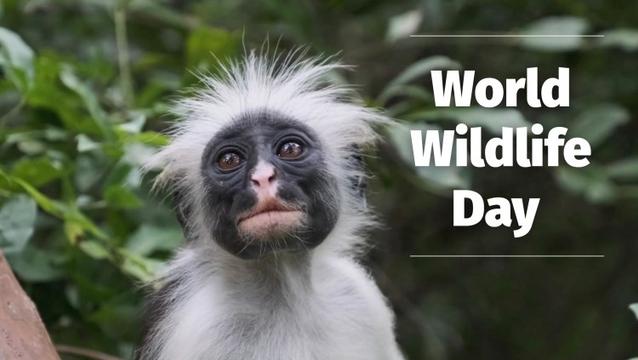
 Content Catnip
 Kate
Kate 

 JZehcuob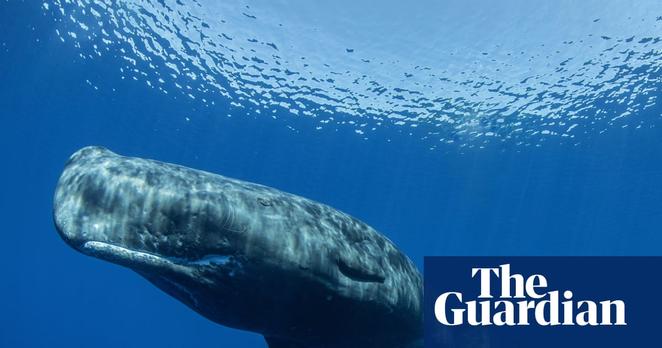
 Levka
Levka
 Palm Oil Detectives
 Nicola Di Pasquale