@elduvelle @hugospiers
Unfortunately the planning for #AnimBehav2023 happened before the mass migration to Mastodon - and we weren't able to ask all presenters to move across. However, you can view the tweets on the conference website if you don't use Twitter anymore

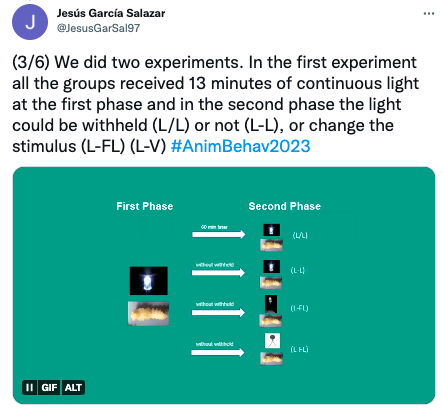
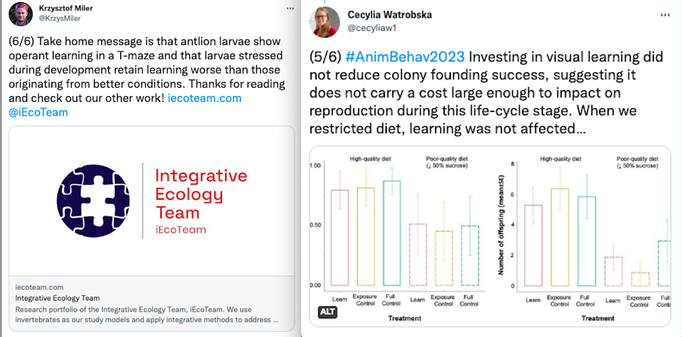
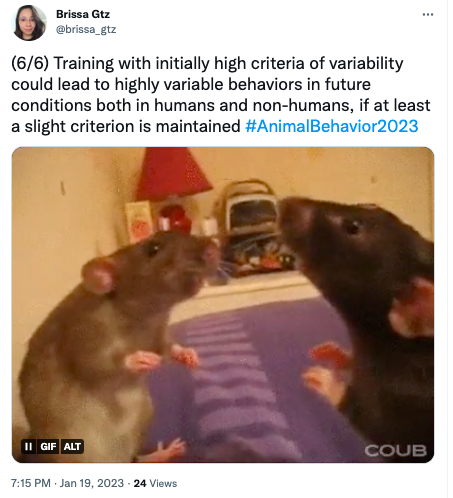
I thoroughly enjoyed chairing the #Learning session at #AnimBehav2023 🥳 The session featured five outstanding presentations that explored various learning techniques across multiple species, including antlions, bumblebee queens, beetles, and rats. 😍 Some highlights in the images ⭐

The presentations:

https://twitter.com/KrzysMiler/status/1616123518005002261

https://twitter.com/cecyliaw1/status/1616126197120876566

https://twitter.com/JesusGarSal97/status/1616128421452562471

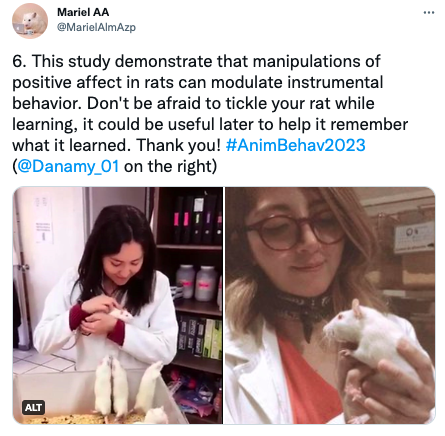
https://twitter.com/MarielAlmAzp/status/1616131125134475286
https://twitter.com/brissa_gtz/status/1616137140840325125

#scicomm #science #animalbehavior

Krzysztof Miler on Twitter

“(1/6) Are ambush predators limited in their cognitive abilities? Pit-building #antlions provide a great model to study #learning and other issues. #AnimBehav2023 #animalcognition https://t.co/kisdt7nlrJ”

Twitter

In a nutshell
* Your smile lights up the temporal cortex of dogs
* The dog brains distinguish some negative emotions

Exploring the mind of dogs is made possible by the support of passionate families.

Let's spread some joy and smile at our furry friends!

6/n
#neuroscience #caninescience #dogsofmastodon #thread #Animbehav2023

Our results don’t mean that dogs cannot distinguish sad from angry humans.

The complexity of emotions is fascinating, and we can't wait to dive deeper and explore the intricacies of the dog brain response to richer multisensory emotional stimuli.

5/n
#neuroscience #caninescience #dogsofmastodon #thread #Animbehav2023

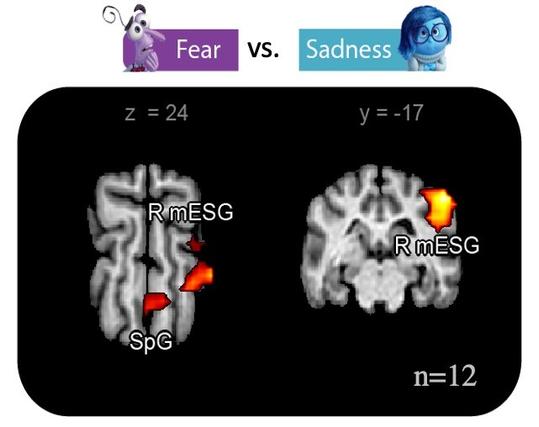
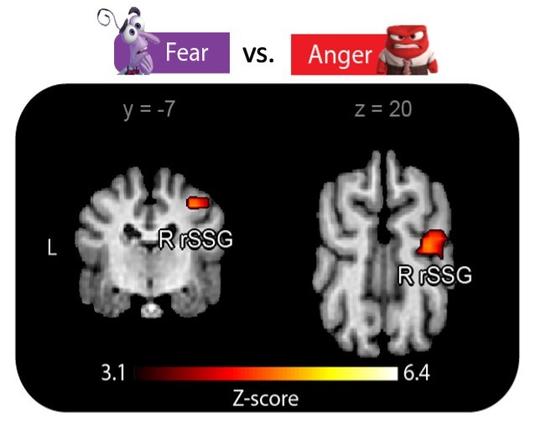
Then, we went to a darker side. We wondered, do dog brains only discriminate positive vs. negative emotions? 🤔

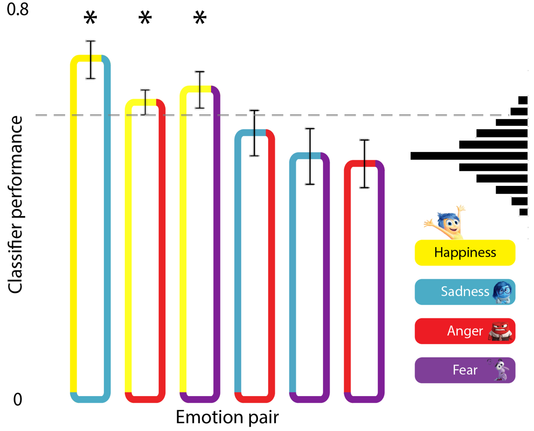
A representational analysis showed that dog brains distinguish angry vs. fearful faces and sad vs. fearful faces, but not sad vs. angry faces.

4/n
#neuroscience #caninescience #dogsofmastodon #thread #Animbehav2023

So, in Experiment 2, we got more emotional! Dogs (n=12) viewed happy, angry, fearful, and sad faces.

We confirm that results from Experiment 1 were driven by happy faces, as a linear SVM classifier discriminated only between happiness and negative emotions.👏

3/n
#neuroscience #caninescience #dogsofmastodon #thread #Animbehav2023

Our fMRI study revealed increased activity in the right temporal cortex and caudate when dogs (n=8) viewed happy faces.

However, as we used neutral faces as a control, we can't confirm that the response was specifically to happy faces and not just any emotion. 🤦

2/n
#neuroscience #caninescience #dogsofmastodon #thread #Animbehav2023

From #Animbehav2023 conference

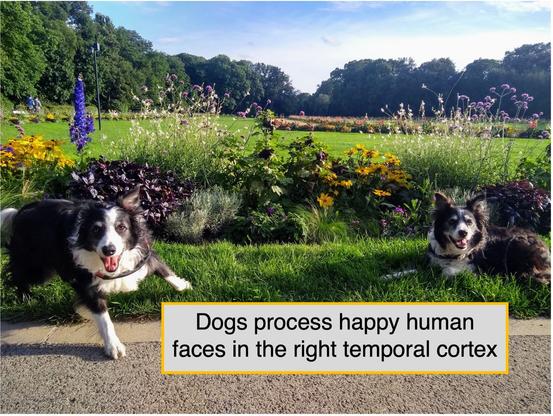
Dogs process happy human faces in the right temporal cortex

My beloved dogs, Odín and #Kun-kun, thrive in the charming city of Budapest because Hungarians have a special fondness for dogs, always showing them a smile.

We studied the dog brain's response to emotional human faces, starting with happiness.

1/n
#neuroscience #caninescience #dogsofmastodon #thread

Thanks for joining us for the #HealthAndWelfare II session, and thanks to our presenters!

Next up in #AnimBehav2023
We have a 40min break, returning at 17:00 GMT to our plenary speaker @[email protected], chaired by @[email protected]

And finally for the #HealthAndWelfare II session we have Christine @[email protected] discussing whether the behavioural traits of beavers predict translocation success
#AnimBehav2023