The
#symbioses that gave rise to primary
#organelles are key events in the origin of
#Eukaryotes. @PierreSGarcia @FredBarras & @SGribaldo use markers from 2 conserved machineries for [Fe-S] cluster biogenesis to support an early emergence of
#mitochondria &
#plastids within
#Alphaproteobacteria &
#Cyanobacteria #PLOSBiology https://plos.io/3FNP5E5
Components of iron–Sulfur cluster assembly machineries are robust phylogenetic markers to trace the origin of mitochondria and plastids
The symbioses that gave rise to primary organelles are key events in the origin of Eukaryotes. This study uses a dataset of markers belonging to two conserved machineries responsible for [Fe-S] cluster biogenesis to support an early emergence of mitochondria and plastids within Alphaproteobacteria and Cyanobacteria, respectively.

Genetic methods enable the use of fossil lipids as biomarkers for oxygen-producing primordial bacteria
Cyanobacteria are a key species in Earth's history, as they introduced atmospheric oxygen for the first time. The analysis of their evolution therefore provides important insights into the formation of modern aerobic ecosystems. For a long time, a certain type of fossil lipid, so-called 2-methylhopanes, was considered to be an important biomarker for Cyanobacteria in sediments, some of which are hundreds of millions of years old.
Our study on the functional conservation of alphaproteobacterial Mic60 is out in Current Biology! This is consistent with the origin of mitochondrial cristae from alphaproteobacterial ICMs. Free access here:
https://authors.elsevier.com/a/1gl4Z3QW8S2PcF#mitochondria #cristae #purplebacteria #chromatophores #icms #symbiosis #eukaryogenesis #alphaproteobacteria #bioenergetics PLOS Biology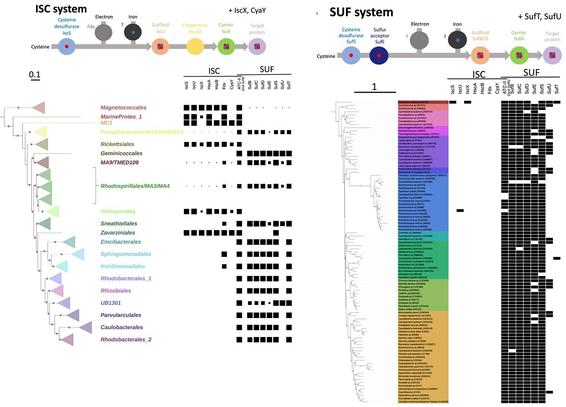
 CellBioNews
 Sergio Muñoz-Gómez