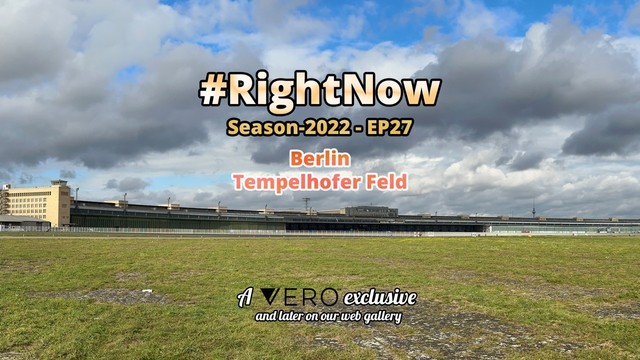
#RightNow Berlin: Tempelhofer Feld is online on Vero - True Social
Part 1: https://vero.co/nemethstarproductions/Mn5D-SgRqmNVqdHPhhs1SGZc
Part 2: https://vero.co/nemethstarproductions/N-j44x8RQ9zpbvv8Nd9cmBd4
Part 3: https://vero.co/nemethstarproductions/DB-3FC3K5hxFF81W9V8G7fgn
Part 4: https://vero.co/nemethstarproductions/dp-wzp1zgntpWGqt637W8hQ4
Part 5: https://vero.co/nemethstarproductions/q9m1-smSKkLKNnsB3z4hdJDv
Part 6: https://vero.co/nemethstarproductions/N-5P1TPRj1TbTtf3RLFQq4Vd
#Berlin #Tempelhof #TempelhoferFeld #Lüftbrücke #AirBridge #AirField #Airport #nature #insects #meadows #History #Prussia #NaziGermany #TempelhofInternationalAirport #EagleSquare #raw_community
#RightNow Berlin: Tempelhofer Feld - Part 1 Once Tempelhof Field was no longer needed for troop exercises, the Prussian Military Exchequer sold the western part of the complex to the Tempelhof municipality for what was ividely criticised as an exorbitant price. There were also debates about whether it should become the site of a densely built residential area. Even back then, the wide expanse was regarded as “One of Berlin’s last sets of lungs”. Nevertheless, two residential and commercial buildings were constructed in 1912/13 to plans in historicist style by the, architect, Bruno Möhring as a gateway to the planned district alongside the Kaiserkorso street. After the Kaiser’s reign came to an end, the Weimar Republic made it possible to realise advanced forms of public housing on a larger scale. This allowed for the construction of a “garden city” here, instead of the planned tenement housing. In the years 1920 to 1928, as an alternative to the otherwise densely constructed big cities, a more open style of development based on the English model flourished here, with public parks, vegetable gardens and community facilities for “like-minded people”. The plans for the garden city were drawn up by the architect and city planning councillor, Fritz Bräuning. Using a curved street plan already designed in 1911 by Friedrich Gerlach, he created an urban complex with a broad park belt, meadows with artificial paddling pools, public squares and mainly two-storey terraced and individual houses surrounded by five-storey apartment blocks. The settlement earned much praise from contemporary architecture critics. The naming of most of the streets in 1936 after “pilot heroes” from the First World War can be attributed to the National Socialists. The distriet is still commonly referred to as the Fliegerviertel (pilots’ quarter). Despite some changes in the postwar era, the basic structure of the garden city remains intact. T.Source: Wikipedia #Berlin #Tempelhof #TempelhoferFeld
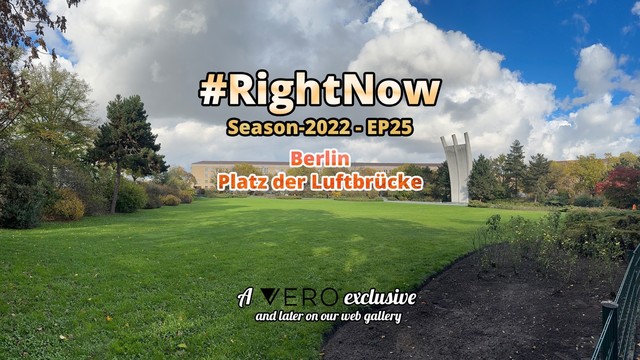
#RightNow Berlin: Platz der Luftbrücke is online on Vero - True Social
Part 1: https://vero.co/nemethstarproductions/kJGt-4sRMNgGHRxKBC33Qbs9
Don’t forget to like and comment. Follow us and leave your feedback on survey.nemethstarproductions.eu
#Berlin #Tempelhof #Lüftbrücke #AirBridge #Kreuzberg #History #TempelhofInternationalAirport #EagleSquare #raw_community