The State of #AntiSurveillance Design
Effective #surveillance-evading gear might already be in your closet.
Since Dazzle project made #adversarialdesign mainstream, lots of projects attempt to confound, pollute, or elude cameras that watch us move every day. Harvey’s made several more, including heat obscuring ponchos meant to hide the wearer from drones, Faraday cage pockets for phones, and high-powered LED flash arrays for blinding paparazzi.
https://www.404media.co/the-state-of-anti-surveillance-design/
https://archive.ph/O60tg
The State of Anti-Surveillance Design

The most effective surveillance-evading gear might already be in your closet.

404 Media

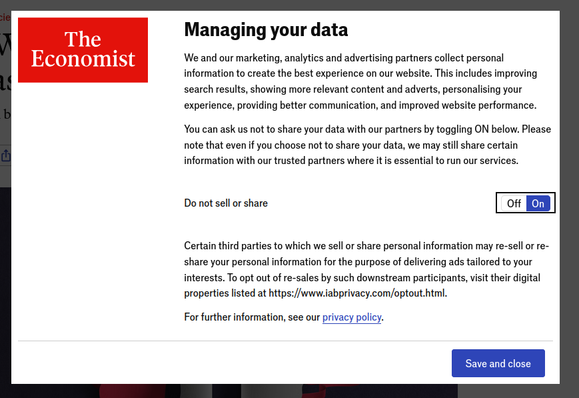
Just tried to read an Economist article. This was the "privacy" popup. After 30 seconds of staring I still had no fucking clue what "off" and "on" meant. I eventually forced myself to read carefully and realized I should press "on" (and had to think about which button position was "on").

Please give me a simple GDPR-style "accept/reject" button with some confidence in what the "reject" button means (via laws).

I don't need to read any article that much. Bye.

#popup #privacy #cookies #ux #ui #AdversarialDesign #consent

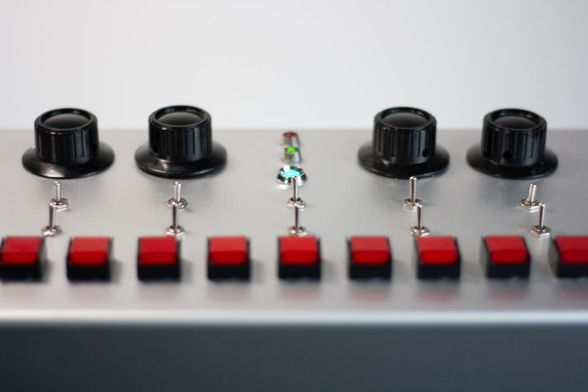
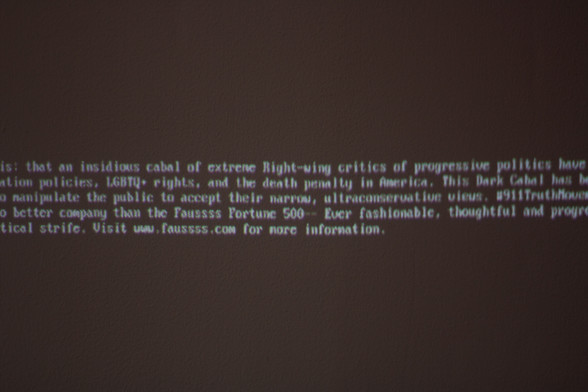
Me again, with my hands at Thingscon in Rotterdam, still shiteing on about the #conspiracycapitaliser and all the dangers of impending #AI #ChatGPT disinformation that await our analogue brains. Must build something new soon.
#criticaldesign
#adversarialdesign
#nieuweinstituut
Here's a slightly deeper look at the #conspiracycapitaliser with moodier images and details. Looking forward to exploring it next week with
@umeadesign
#IxD students in the contexts of #AIEthics, prototyping & #AdversarialDesign http://www.robbycollins.com/the-conspiracy-capitaliser-2023/
The Conspiracy Capitaliser (2023) – Robert Collins

I am happy to announce I'll be at #RightsCon and on a panel on #AdversarialDesign in action, June 7, 2023 | 4:30 - 5:30pm CST in the Tortuga room. If you are not able to attend, there will be a post-event convening space online, DM me for details!
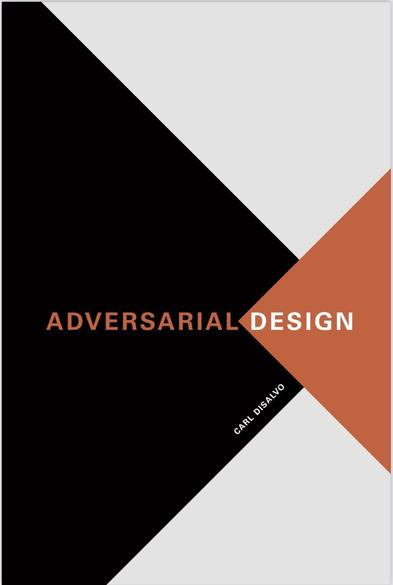
Adversarial Design

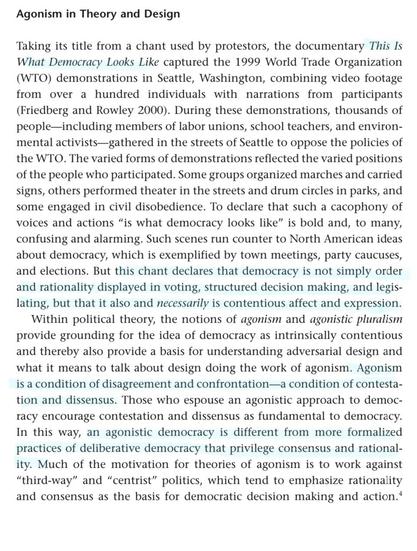
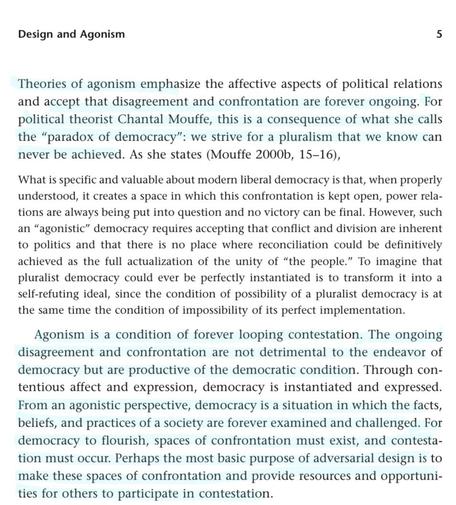
An exploration of the political qualities of technology design, as seen in projects that span art, computer science, and consumer products.In Adversarial Design, Carl DiSalvo examines the ways that technology design can provoke and engage the political. He describes a practice, which he terms “adversarial design,” that uses the means and forms of design to challenge beliefs, values, and what is taken to be fact. It is not simply applying design to politics—attempting to improve governance for example, by redesigning ballots and polling places; it is implicitly contestational and strives to question conventional approaches to political issues. DiSalvo explores the political qualities and potentials of design by examining a series of projects that span design and art, engineering and computer science, agitprop and consumer products. He views these projects—which include computational visualizations of networks of power and influence, therapy robots that shape sociability, and everyday objects embedded with microchips that enable users to circumvent surveillance—through the lens of agonism, a political theory that emphasizes contention as foundational to democracy. DiSalvo's illuminating analysis aims to provide design criticism with a new approach for thinking about the relationship between forms of political expression, computation as a medium, and the processes and products of design.

Google Books
@schock @YBenkler good Q, inviting Qs! ;).
p.s. to introduce & hashtag a few good related terms and book, for anyone unfamiliar (I know @schock knows): "Adversarial Design…evokes and engages political issues…in the construction of objects, interfaces, networks, spaces and events. Most importantly, #AdversarialDesign does the work in expressing and enabling #agonism."
"Term was first used by #CarloDiSalvo [GIT, @cdisalvo.@twitter] in 2012 book Adversarial Design.