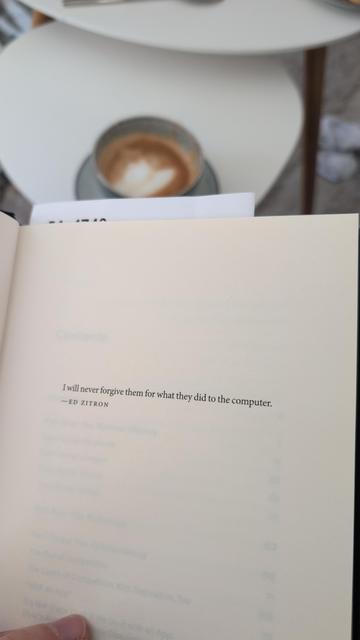
Schöne Sonntags-Lektüre: Enshittification 📖

Passt zum Thema:

Heute morgen noch den Nvidia-Pitch zu ihrem Openclaw for Enterprises konsumiert:

#openclaw soll in 3 Wochen das gleiche Geschäft haben wie Linux in 30 Jahren?
Soll also ein Wrapper (nicht Musiker) aus diversen Code-Chunks der auf einem Linux-Server deployt wird das neue Betriebssystem sein?

Was sind eure Gedanken dazu?

#AaaS #linux #agent #007

At the World’s Largest General #Science Meeting, Surviving Trump Is the Topic
The overarching theme at #AAAS this year was the damage inflicted on #US science sector by the Trump admin and how to best respond to it. Since Trump returned to office, his team has terminated or frozen 7,800 research grants, laid off 25,000 #scientists and personnel from research agencies, and proposed budget cuts of 35% to federal science, amounting to $32 billion.
https://www.404media.co/at-the-worlds-largest-general-science-meeting-surviving-trump-is-the-topic/
https://archive.ph/CQ6vc
At the World’s Largest General Science Meeting, Surviving Trump Is the Topic

“This is really a turning point and we’re in a historical transition at present.”

404 Media

AaaS : Air as a Service

Today's Special:
Subscribe for 25 years and breathe for a Lifetime!

#AaaS

Going to the @[email protected] meeting in Phoenix? Join @[email protected] @[email protected] Jen Frazier, Raj Pandya & me Saturday at 10 a.m. to talk about trust in science. (I'm sure we'll get THAT sorted right out.) aaas.confex.com/aaas/2026/me... #aaas

The Path to Trust in Science: ...
The Path to Trust in Science: A Discussion on Evidence, Values, and the Public Good

Public trust in science has declined in the last decade, especially along political party lines. Key to rebuilding trust is understanding why it has eroded in the first place, recognizing that solutions involve more than just improving communication or education but in genuinely connecting with people’s values, identity, and the perceived relevance of science in their lives. This panel of scholars and practitioners who work in science communication and public engagement will explore some of the reasons behind the diminishing trust and ways practitioners are addressing the challenge. Panelists will examine recent studies, illustrating concepts with examples from topics ranging from vaccines to climate change, and offer actionable steps that attendees can implement in their own circles.

AAAS - 2026 Annual Meeting

So, Department of Energy is piloting the use of Grok at Lawrence Livermore National Lab (per a policy alert announcement from #AAAS) .

What could go wrong? 🤦‍♂️

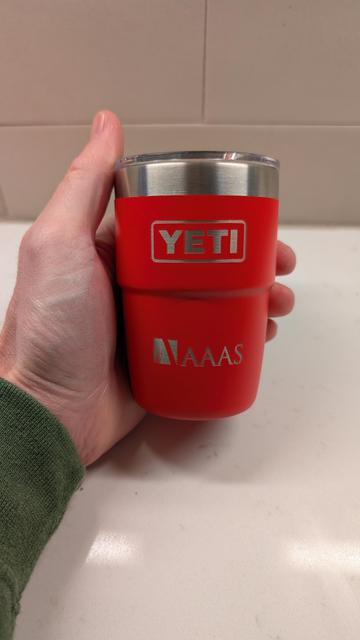
I'm trying to figure out what to do with this comically small yeti mug (~240ml) I received from #AAAS. I think I'll have a comically small amount of #coffee.

My guess is that this is for espresso or whiskey.

#Science

AaaS (Agent-as-a-Service) có thể là tương lai thay thế SaaS? Với sự phát triển của "vibe coding" và AI, nhiều người đang tự tạo phần mềm thay vì thuê lập trình viên. Tuy nhiên, AI vẫn còn lỗi và thiết kế kém. Giải pháp: thay vì làm sản phẩm, hãy bán agent, skill, hoặc bộ quy tắc để người dùng tự tạo theo nhu cầu. Ý tưởng này có tiềm năng? #AaaS #SaaS #AI #FutureOfWork #CôngNghệ #TríTuệNhânTạo #KinhDoanhSố

https://www.reddit.com/r/SaaS/comments/1qkm4pc/aaas_is_the_new_saas/

A new guide aimed at helping aspiring science journalists in Bulgaria to cover scientific topics has been published.

Download the Bulgarian Science Journalism guide-bnsj-upload

‘First steps in science journalism – a practical experience guide’ (Първи стъпки в научната журналистика – практически насоки от опит) was written by three experienced science reporters from Bulgaria, who provide helpful insights from their own experiences and examples of stories they have reported over the years for online, TV, and radio outlets.

The guide was published by the Balkan Network of Science Journalists and the European Federation for Science Journalism and is available on the BNSJ and EFSJ websites.

Publication of the guide was made possible through the support of EurekAlert!, a science news release platform operated by the non-profit American Association for the Advancement of Science (AAAS).

The lead author of the guide, Maria Cherneva, said the lessons in there are important because “the work of a journalist who deals with science is very delicate, because it carries a great risk of fueling pseudoscience, fake news, conspiracy theories, myths and legends, or simply mistaken ideas about many processes and phenomena” if not done properly.

One of the other authors, Vanya Mileva, said: “Science journalism is especially necessary today, in a world suffocating from conspiracies, lack of public trust and resources, misunderstanding and underestimation of the importance of science itself. This applies with great force to Bulgaria.”

“The profession of a science journalist is not easy and one of the challenges is the lack of specialized training. Therefore, the presented guide is useful with guidelines taken from the experience of leading Bulgarian science journalists, and with a pinch of inspiration for the future young generation in science journalism.”

“For aspiring and working science journalists in Bulgaria, this guide will offer crucial principles and skills to ensure their daily work benefits the public and hold the scientific enterprise and other establishments accountable,” said Brian Lin, director of editorial content strategy at EurekAlert!. “EurekAlert! and AAAS are proud to play a small part in these efforts in this part of the world.”

The initiative has previously brought science journalism guides to life in CroatianSlovenianHungarianRomanianAlbanian, and Turkish.

“It’s brilliant to see experienced science journalists share their tips on how best to approach scientific topics for Bulgarian media,” said Mićo Tatalović, a board member of the Balkan Network of Science Journalists, who has been coordinating the project. “There is a lot of great science reporting happening in Bulgaria, and the authors of this guide have managed to condense lessons from many years of work in the field to help students and other journalists who wish to specialize in science journalism.”

Author bios:

Maria Cherneva has been building most of her journalistic career at Bulgarian National Television. She says that journalism is a collection of principles that work better when warmed by an inner passion. That is why she makes incredible efforts to escape from routine and embarks without hesitation on all kinds of research projects – historical, archaeological, underwater. She also has four Antarctic expeditions behind her. She takes her job very seriously – to ignite the imagination and curiosity with stories from the depths of science. Not by chance. She graduated with a Biochemistry and Microbiology degree from Sofia University, so she has a certificate to show that she can think about life at the molecular level. She has one son, one published book and over 60 documentaries to her name.

Vasilena Mircheva is a journalist, translator and editor. She has worked for various cultural publications, including BTA’s “Lik” magazine, collaborates with various online cultural publications, the “Bulgarian Film Society” and the podcast platform “1002 Productions”. Her translations into Bulgarian have included novels by Rachel Kushner, stories by Arthur Conan Doyle, Alice Munro, Lucia Berlin, etc. She was the host of the radio program for the popularization of science and education “Labyrinths of Knowledge”, and is currently the author and host of “Time for Science” on the “Hristo Botev” program on Bulgarian National Radio.

Vanya Mileva is a happy science journalist, because her long-standing hobby of delving into various sciences and presenting what she has learned on the Internet in a beautiful way for everyone has become a profession. She started as a hydraulic engineer and over time became fascinated with programming, writing C++ programs for calculating and drawing hydraulic facilities. But one day she was captivated by fractals – the endless self-similar vortex that leads her from science to science, and Vanya shares what she has collected on her website. There, the head of a leading news media, Vlado Yonchev, found her and suggested that the then 58-year-old Vanya Mileva start and write for the website Nauka OFFNews. This happened 10 years ago, before about 15,000 articles, one nomination and one award from the Mtel Media Masters competition in the “Internet media – long forms” category. She has also published a “Little Book of Science” – a collection of her articles.


https://efsj.eu/2025/12/30/new-science-reporting-guide-published-for-journalists-in-bulgaria/ #AAAS #Balkans #BNSJ #Bulgaria #EastEurope #efsj #EurkeAlert #guidelines #practialGuide #skills

A new guide aimed at helping aspiring science journalists in Turkey to cover scientific topics has been published.

Download the Turkish Science Journalism guide

‘Science Journalism in Turkey and Communicating Science to the Public’ (Türkiye’de Bilim Gazeteciliği ve Halka Doğru Bilim İletişimi) is the first Turkish science journalism guidebook for science journalists.

It was written by the science journalist and academic Dr. Gülsen Saray, and reviewed by editors and academics Prof. Dr. Akif Özer and Prof. Dr. Sefa Yüce.

The author, Saray, said: “This guide is a comprehensive resource for those navigating the dynamic profession of science journalism, and it highlights the importance and growth of science journalism in Turkey and Turkish-speaking countries. It will help ensure journalists produce higher-quality, more effective and impactful reporting which is a growing need driven by societal needs and technological developments.”

“The scope, context, and purpose of this guide are to offer practical advice to science journalists working in the field, drawing on the expertise and insights of contemporary and internationally successful science journalists and renowned science journalism institutions …  I hope it will be an interesting and useful handbook to valued media members, students who choose the field of science journalism, people working in government or corporate public relations departments, and academics.”

The guide was published by the Balkan Network of Science Journalists and the European Federation for Science Journalism and is available on the BNSJ and EFSJ websites.

The initiative has previously brought science journalism guides to life in CroatianSlovenianHungarianRomanianAlbanian, and Bulgarian.

“This is another in a series of expert guides written by local authors in local languages to make them accessible and relevant to local audiences – journalists wishing to report about science,” said Mićo Tatalović, a board member of the Balkan Network of Science Journalists, who has been coordinating the project. “It is an ambitious, book-length guide that should be a useful reference for both practitioners and those interested in the theory and practice of science journalism.”

Publication of the guide was made possible through the support of EurekAlert!, a science news release platform operated by the non-profit American Association for the Advancement of Science (AAAS).

“EurekAlert! is humbled by the opportunity to help support journalists in the Balkans through this locally accessible project,” said Brian Lin, director of editorial content strategy at EurekAlert!. “Our thanks to everyone involved in producing this guide.”

Author bio:

Dr. Gülsen Saray is a science journalist and columnist. She holds a PhD in science journalism, MA in political science and public administration, and BSc in civil engineering. She speaks Turkish, English, and German at an academic level, and has also learned French and Ottoman Turkish. She is also a qualified scientist who has gained experience based on experiments in the construction materials laboratory.

https://efsj.eu/2025/12/30/new-science-reporting-guide-published-for-journalists-in-turkey/ #AAAS #Balkans #BNSJ #books #EastEurope #education #EurekAlert #guide #MiddleEast #practicalGuide #skills #Turkey
Seems that it is going with less science based and more political decision... not sure it is going the right way:
NSF pares down grant-review process, reducing influence of outside scientists | #Science | #AAAS
https://www.science.org/content/article/nsf-pares-down-grant-review-process-reducing-influence-outside-scientists
NSF pares down grant-review process, reducing influence of outside scientists

Memo cites overburdened staff, but some say move also aims to elevate White House priorities