"In a recent essay, Derek Thompson engages with AI as Normal Technology (AINT). He agrees with our thesis about AI’s slow labor market impacts, relying on the fact that GDP growth has so far been average, unemployment is below five percent, and even jobs that seemed vulnerable to automation show rising employment and wages. He concludes that so far, the macroeconomic picture is consistent with what we would expect from a “normal” general-purpose technology.

But when it comes to AI risks, he is far more bearish. He points to examples of cyber- and bio-risks and expresses pessimism about AI quickly becoming dangerous across many new domains. (...) Thompson writes: "I can understand a plan to treat AI as a ‘normal’ technology and let Nvidia export powerful chips to China. And I can understand a plan to treat AI as an ‘abnormal’ technology that compels the government to create extraordinary regulations that prevent private companies from selling their products and services on the grounds that they’re too dangerous" [emphasis ours]. He goes on to conclude that AI is, in fact, abnormal, implying support for extraordinary government intervention. Our essay is a response to that conclusion.

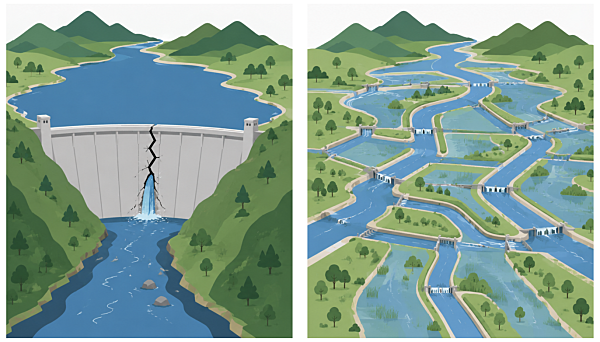
In this essay, we lay out the downsides of extraordinary government intervention in response to new technology. We discuss proposals for improving resilience that do not require such intervention. We also discuss why governments have so far been reluctant to invest in resilience. In short, resilience requires us to get better at the *normal* process of policymaking. But sclerosis in the federal government and the ease of justifying interventions on AI companies rather than society at large make extraordinary intervention seem appealing, despite its limitations."

https://knightcolumbia.org/blog/do-ai-risks-require-extraordinary-government-intervention
#AI #AISafety #AINT #NormalTechnology #AIRisk #AIRegulation

Do AI Risks Require Extraordinary Government Intervention?

Knight First Amendment Institute

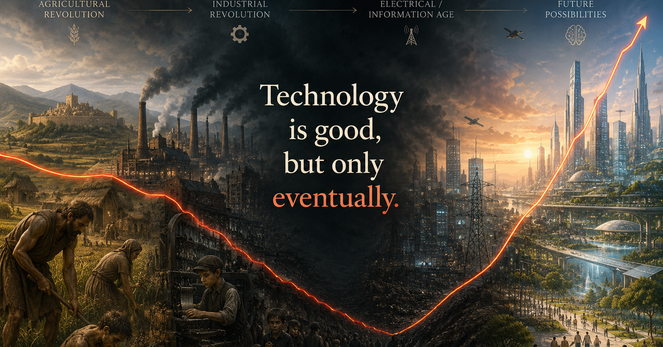
"The start of the next large scale transformation of society has begun. If AI is a normal technology, it’s normal in the sense of agriculture, industrialisation, or public health. The question is what this looks like, and I think the above gives us a few places to think more carefully about the impacts.

First, how strong is this base rate? We should obviously be skeptical of expert predictions intuition, given their track record. Traditional judgemental forecasting best practices starts with the base rate, and adjusts on that basis - but this suffers from a reference class problem; should our base rate be for technological revolutions, which the above assumes, or should we be asking about the emergence of a new smarter species, akin to evolutionary transitions? Even if it’s the correct base rate, we have such a small n, with so many differences, that our views about what is changing could easily overwhelm the base rate.

Second, if AI follows the trend, we would ask how long the negative period lasts. Agriculture’s temporary misery was 10,000 years, the Industrial revolution’s negative phase was closer to 100, and it seems plausible AI’s harmful phase will be continuing the trend on a logistic scale, so that we might be in for an annus horribilis to end all others. Of course, the depth of the trough is incredibly significant! We could see mass disruption, unemployment, riots, national and international collapses due to a complete end of trust in objective truth not literally perceived. If we pull through, this might be followed by a benefit that is almost unimaginable - but if the transition, however brief, includes mass-scale biological weapons, nuclear war, or other global catastrophes, the median human would (and will, and loudly does) oppose any such transition."

https://www.lesswrong.com/posts/4MCuvdsZFEBAaGCsb/if-ai-is-normal-technology-history-is-not-reassuring

#AI #Technology #NormalTechnology #History #TechnologicalRevolutions

If AI is normal technology, history is not reassuring. — LessWrong

There’s a truism that technology is good - even if it creates winners and losers, it improves the world. Toby Ord argues that the conclusions about t…

"AI 2027 and AI as Normal Technology were both published in April of this year. Both were read much more widely than we, their authors, expected.

Some of us (Eli, Thomas, Daniel, the authors of AI 2027) expect AI to radically transform the world within the next decade, up to and including such sci-fi-sounding possibilities as superintelligence, nanofactories, and Dyson swarms. Progress will be continuous, but it will accelerate rapidly around the time that AIs automate AI research.

Others (Sayash and Arvind, the authors of AI as Normal Technology) think that the effects of AI will be much more, well, normal. Yes, we can expect economic growth, but it will be the gradual, year-on-year improvement that accompanied technological innovations like electricity or the internet, not a radical break in the arc of human history.

These are substantial disagreements, which have been partially hashed out here and here.

Nevertheless, we’ve found that all of us have more in common than you might expect.

In this essay, we’ve come together to discuss the ways in which we agree with each other on how AI progress is likely to proceed (or fail to proceed) over the next few years."

https://asteriskmag.substack.com/p/common-ground-between-ai-2027-and

#AI #GenerativeAI #AI2027 #AGI #AIAsNormalTechnology #NormalTechnology

Common Ground between AI 2027 & AI as Normal Technology

AI 2027 and AI as Normal Technology were both published in April of this year.

Asterisk Magazine

"We think we see the world as it is, but in fact we see it through a thick fog of received knowledge and ideas, some of which are right and some of which are wrong. Like maps, ideas and beliefs shape our experience of the world. The notion that AI is somehow unprecedented, that artificial general intelligence is just around the corner and leads to a singularity beyond which everything is different, is one such map. It has shaped not just technology investment but government policy and economic expectations. But what if it’s wrong?

The best ideas help us see the world more clearly, cutting through the fog of hype. That’s why I was so excited to read Arvind Narayanan and Sayash Kapoor’s essay “AI as Normal Technology.” They make the case that while AI is indeed transformational, it is far from unprecedented. Instead, it is likely to follow much the same patterns as other profound technology revolutions, such as electrification, the automobile, and the internet. That is, the tempo of technological change isn’t set by the pace of innovation but rather by the pace of adoption, which is gated by economic, social, and infrastructure factors, and by the need of humans to adapt to the changes. (In some ways, this idea echoes Stewart Brand’s notion of “pace layers.”)"

https://www.oreilly.com/radar/is-ai-a-normal-technology/

#AI #GenerativeAI #NormalTechnology #AGI

Is AI a "Normal Technology"?

We think we see the world as it is, but in fact we see it through a thick fog of received knowledge and ideas, some of which are right and some of which are

O’Reilly Media

"[F]ar from marking a break with the widely hated platform giants that precede it, the A.I. of this most recent hype cycle is a “normal technology” in the strong sense that its development as both a product and a business is more a story of continuity than of change. “Instead of measuring success by time spent or clicks,” a recent OpenAI announcement reads, “we care more about whether you leave the product having done what you came for”--a pointed rebuke of the Meta, Inc. business model. But as Kelly Hayes has written recently, “fostering dependence” is the core underlying practice of both OpenAI and Meta, regardless of whether the ultimate aim is to increase “time spent” for the purpose of selling captured and surveilled users to advertisers, or to increase emotional-intellectual enervation for the purpose of selling sexy know-it-all chat program subscriptions to the lonely, vulnerable, and exploitable:"

https://maxread.substack.com/p/ai-as-normal-technology-derogatory

#AI #GenerativeAI #OpenAI #ChatGPT #Chatbots #LLMs #NormalTechnology #SocialMedia #Meta

A.I. as normal technology (derogatory)

The future of A.I. is more Facebook, not jobs in space

Read Max