Climate Change and Extreme Weather Events

In this Article

Around the world, reports about extreme weather events—from destructive storms and floods to heatwaves that break records—are becoming more frequent. Not only do these occurrences affect our day-to-day existence, but they also present serious hazards to economies, ecosystems, and communities. It is essential that we understand extreme weather. This knowledge enables us to anticipate, lessen, and adjust to these fatal events.

Definition and Types of Extreme Weather

Extreme weather events are characterised by their intensity and rarity compared to typical weather patterns. They can have far-reaching effects on both natural and human systems. Here’s a closer look at the various types:

1. Hurricanes and Cyclones

Hurricanes (in the Atlantic Ocean) and cyclones (in the Indian and South Pacific Oceans) are severe tropical storms.

They have strong winds, torrential rain, and storm surges. They form over warm ocean waters and can cause significant damage, including flooding, wind damage, and coastal erosion.

The intensity of these storms is classified into categories, with Category 5 being the most severe. Rising water temperatures and shifting climate patterns are causing these storms to become more frequent and intense.

2. Heatwaves

Heatwaves are extended periods of extremely high temperatures that can cause major health problems like heat exhaustion and heatstroke.

High humidity can worsen these symptoms, making the heat feel even more intense. Heatwaves can strain electrical grids, raise the risk of wildfires, and cause drought conditions.

Climate change is contributing to more frequent and severe heatwaves, making it critical to deploy heat adaptation and mitigation strategies.

3. Droughts

Droughts occur when there is a prolonged lack of precipitation, causing water scarcity. This has serious implications for agriculture, water supply, and ecosystems.

Droughts can cause crop failures, restrict water availability for drinking and sanitation, and raise the risk of wildfires.

Understanding drought trends and implementing efficient water management measures are critical to mitigating their impact.

4. Heavy Rainfall and Flooding

River flooding, coastal flooding, and flash flooding can all result from heavy rainfall. When water floods into normally dry terrain from rivers, lakes, or the ocean, it causes flooding.

Flooding can result in destruction to property, fatalities, and disturbances to communities.

Urban areas are more susceptible to flooding when their drainage systems are inadequate. To reduce these effects, efficient flood management and readiness are essential.

5. Severe Storms and Tornadoes

Tornadoes, hailstorms, and thunderstorms are examples of severe storms. Due to their ability to produce severe destruction along their path, tornadoes are very devastating natural disasters.

Severe storms can cause power outages, property damage, and dangerous circumstances. They can bring hail, strong gusts, and a lot of rain.

Our capacity to anticipate severe storms has increased. Our ability to react to them has also improved. Both of these advancements are due to improvements in weather forecasting and early warning systems. Readiness is nonetheless essential to lessening their effects.

Conclusion

Extreme weather events are a growing concern due to their increasing frequency and intensity, driven in part by climate change. By understanding the various types of extreme weather, their causes, and their impacts, we can better prepare for these challenges. We can also respond more effectively. Building resilience through effective planning is essential for mitigating the effects of extreme weather. Infrastructure improvements and community awareness are also crucial for protecting both people and the environment.

Related Posts

#1A7A89 #climate #ClimateChange #ddd #environment #globalWarming #science

Environmental Impacts of Wildfires

Next In this Article
  • Environmental Impact
  • Destruction of natural habitats and ecosystems
  • Loss of biodiversity and long-term ecological consequences
  • Soil erosion and degradation
  • Air quality deterioration and greenhouse gas emissions
  • Impact on water sources and aquatic life
  • Sources
  • The frequency and severity of wildfires have alarmingly increased during the past few years Congressional Research Service (2023). These natural disasters have left a path of destruction in their wake, frequently being ignited by a confluence of causes including climate change, human activity, and protracted droughts. Every region of our earth is susceptible to the fierce burn of wildfires, from deep woods to residential neighbourhoods.

    It is essential to comprehend how wildfires affect people and the environment on a global scale. It is a cry to understand the intricate web of effects that these wildfires have on our environment.

    We set out on a journey to investigate the numerous repercussions of wildfires in this blog article. We go deeply into the core of this burning crisis, from the scorched landscapes to the hazy sky. We’ll discover the environmental destruction.

    Let’s enter the world of wildfires, where it is imperative to comprehend the entire extent of their consequences

    Environmental Impact

    Destruction of natural habitats and ecosystems

    Visualise the beautiful grasslands, luscious woods, and alive with life wetlands. Imagine these paradises now transformed to smouldering wasteland. The environments that numerous animals depend on for their survival are relentlessly destroyed by wildfires (Davare, 2023). The immediate loss is tremendous, and it might take generations for the environment to recover.

    Loss of biodiversity and long-term ecological consequences

    Biodiversity suffers a tragic cost as the flames consume and the smoke billows. Many plants and animals are forced from their environments or suffer terrible repercussions, some of which are already on the verge of extinction. When these delicate ecological balances are upset, the effects can be felt for a very long time and have a significant impact on the health and vitality of our natural environment (Davare, 2023).

    Soil erosion and degradation

    The Earth’s fragile topsoil is exposed and vulnerable after wildfires. Heavy rains sweep away valuable soil, creating landscapes that are damaged and bare. Natural regeneration is hindered, and the already significant environmental impact is made worse by the deterioration of soil quality (Clarrence, 2019).

    Air quality deterioration and greenhouse gas emissions

    The wildfire’s reach extends to the skies as well. They emit a poisonous concoction of smoke, particle matter, and toxic fumes that can spread widely and consume areas far from the flames (UNEP, 2022). This not only poses acute health dangers, but it also deteriorates the quality of the air. To make matters worse, wildfires significantly increase the threat of climate change by releasing large volumes of greenhouse gases like carbon dioxide and methane. (UNEP, 2022).

    Impact on water sources and aquatic life

    Even our valuable waterways are at risk because of wildfires. Rivers, lakes, and reservoirs may become contaminated by the fire’s ash, debris, and toxins (US EPA, 2019). Fish, amphibians, and other aquatic life forms are in significant risk because of this threat to aquatic ecosystems. Additionally, higher sedimentation and increased flood hazards during rainstorm events may result from the altered topography.

    Wildfires’ effects on the environment serve as a harsh reminder of how intertwined all life is on Earth. We must consider the significant and frequently irreversible changes they impose on the natural environment while we see these burning calamities.

    Next

    Sources

    Clarrence. (2019, November 12). How do wildfires affect soil? – applied earth sciences. Applied Earth Sciences – A division of Applied Soil Technologies, Inc. Retrieved 21 September 2023, https://aessoil.com/how-do-wildfires-affect-soil/#:~:text=Wildfires%20have%20a%20significant%20impact,are%20lost%20(chiefly%20nitrogen).

    Congressional Research Service. (2023, June 1). Wildfire Statistics. Retrieved 20 September 2023, from, https://sgp.fas.org/crs/misc/IF10244.pdf

    Davare, R. (2023, June 20). The impact of wildfires on biodiversity and the environment. Earth.Org. Retrieved 23 September 2023, from, https://earth.org/impact-of-wildfires/

    UNEP. (2022, November 12). Air pollution from wildfires expected to surge as World warms. Retrieved 23 September 2023, from, https://www.unep.org/news-and-stories/story/air-pollution-wildfires-expected-surge-world-warms

    US EPA. (2019, August 13). Wildfires: How do they affect our water supplies? Retrieved 20 September 2023, from, https://www.epa.gov/sciencematters/wildfires-how-do-they-affect-our-water-supplies

    Related Posts

    #1A7A89 #AirQuality #BiodiversityLoss #ClimateChange #ddd #EcosystemDestruction #EnvironmentalImpacts #GreenhouseGas #NaturalDisaster #NaturalHabitats #SoilDegradtion #SoilErosion #WaterContamination #wildfires

    Sustainability vs. Skincare: Are Sheet Masks Harming the Environment?

    In this Article
  • The Plastic Predicament
  • But Do Sheet Masks Offer More?
  • How to Reduce the Impact of Sheet Masks?
  • Conclusion
  • Sheet masks have undoubtedly become a beloved addition to many skincare routines, promising instant hydration and a radiant complexion. That refreshing feeling as you unwind with a sheet mask on your face is truly delightful. However, there’s a hidden cost behind that momentary bliss: the environmental impact.

    The Plastic Predicament

    Let’s unmask the issue. Sheet masks are individually packaged, and most of these sachets are made from single-use plastic. This contributes significantly to the ever-growing mountain of plastic waste that our planet is grappling with. It’s a sobering thought that the convenience of a single-use product can have such long-lasting consequences.

    But Do Sheet Masks Offer More?

    While sheet masks can make your skin feel amazing, it’s essential to ask whether they provide any unique value beyond that refreshing sensation. The truth is, the skincare benefits you experience with a sheet mask can often be achieved using your favourite serum or skincare product.

    However, it does have many implications, mainly for our environment. Firstly, they are made from single-use plastic, which significantly implicate our environment such as land and oceans pollution and harm to wildlife.

    Apart from this, the packaging of sheet masks are typically wrapped in non-recyclable materials like foil or mixed plastic, making it difficult to dispose of sustainably.

    Sheet masks have a large environmental footprint because it requires energy and resources to produce and transport, leading to increased carbon emissions.

    Moreover, sheet masks may contain ingredients that are harmful to the environment, such as certain chemicals or palm oil derivatives that are associated with deforestation.

    How to reduce the impact of sheet masks?

    There are several ways we can mitigate the environmental impact of sheet masks, consider the following tips:

    A Sustainable Solution If you’re concerned about the environmental toll of sheet masks but still crave that skincare indulgence, there are eco-friendly alternatives. Consider using your trusted serum or moisturizer, which not only hydrates your skin but also eliminates the single-use plastic packaging associated with sheet masks.

    Apart from this, look for sheet mask brands that prioritize sustainability and use eco-friendly packaging materials. Some brands offer biodegradable or reusable sheet masks. Although are often more expensive, making them not a viable option for some people. To overcome this, you can reduce the frequency of using the sheet masks instead of using sheet masks daily, consider using them less frequently to reduce waste. Reserve them for special skincare occasions.

    Moreover, DIY Sheet Masks is can also be considered to create your own sheet masks using natural ingredients at home. This allows you to control the ingredients and reduce packaging waste.

    Recycle Where Possible: Properly dispose of sheet mask packaging by recycling any components that are recyclable. Check with your local recycling program for guidelines.

    Support Sustainable Brands: Support skincare brands that are committed to sustainable practices, from ingredient sourcing to packaging and manufacturing.

    Advocate for Change: Encourage brands to adopt more sustainable practices and packaging materials through customer feedback and social media engagement.

    Conclusion

    In conclusion, while the allure of sheet masks is undeniable, it’s crucial to weigh their momentary benefits against their long-term environmental impact. By making conscious choices and exploring alternative skincare options, you can still pamper your skin without harming the planet. Let’s make beauty sustainable. 🌿🌏 #SustainableSkincare #ReducePlasticWaste #DIYBeauty

    Related Posts

    #1A7A89 #ddd #DIYBeauty #EnvironmentalImpacts #ReducePlasticWaste #ReducePlasticWaste #Sustainability #SustainableSkincare

    Understanding the Causes of Flooding in Bangladesh

    In this Article
  • Causes of Flooding
  • Climate Change: An Unprecedented Challenge
  • The Connection Between Climate Change and Flooding
  • Deforestation – Stripping Away Protection
  • Forests as Natural Guardians
  • Rising Seas and Coastal Vulnerability
  • Sea Level Rise: A Looming Threat
  • Rainfall – An Unpredictable Factor
  • Rainfall’s Role in Flooding
  • Various Types of Flooding
  • Understanding Flood Types
  • Mapping Vulnerable Areas
  • Flood Hazard Mapping and Preparedness
  • Harnessing Technology for Flood Risk Mitigation
  • The Path Forward
  • Conclusion
  • Sources
  • Bangladesh, a country defined by its lush landscapes and intricate river systems, is no stranger to the annual deluge of floods. This natural phenomenon, deeply intertwined with the region’s geography, has taken on a new dimension in recent times due to a combination of climate change, deforestation, rising sea levels, and shifting rainfall patterns. In this comprehensive blog post, we’ll dissect the intricate web of factors behind the frequent flooding in Bangladesh, drawing insights from scientific studies and research.

    Causes of Flooding

    Climate Change: An Unprecedented Challenge

    Climate change is not a new concept, but its impact on Bangladesh has become increasingly evident since the Industrial Revolution. The burning of fossil fuels, a key contributor to climate change, releases greenhouse gases into the atmosphere. These gases trap heat, leading to rising temperatures worldwide.

    The Connection Between Climate Change and Flooding

    Rising temperatures can trigger changes in weather patterns, including increased precipitation. Studies like the one by Hirabayashi et al. (2013) reveal that this uptick in rainfall has elevated flood risks in various regions. These findings highlight the pressing need for a deeper understanding of the links between climate change and flooding in Bangladesh.

    Deforestation – Stripping Away Protection

    Forests as Natural Guardians

    Forests are often underappreciated heroes when it comes to flood prevention. They act as natural buffers, absorbing excess water and mitigating flood risks. However, deforestation is eroding this protective shield.

    Evidence from Bradshaw et al. (2007)

    Bradshaw et al. (2007) conducted a study that spanned a decade (1990-2000) across 56 developing countries. Their research revealed a troubling correlation between deforestation and increased flood frequency. This link accounts for over 65% of the variation in flood frequency, underscoring the critical importance of preserving forests.

    Rising Seas and Coastal Vulnerability

    Sea Level Rise: A Looming Threat

    Climate change has led to rising sea levels, putting low-lying coastal regions in Bangladesh at constant risk of flooding. Projections indicate that by 2050, Bangladesh could lose 11% of its land, affecting millions (“Climate Displacement in Bangladesh,” 2021).

    Brown et al. (2018): A Stark Warning

    Brown et al. (2018) analysed the coastal areas of Bangladesh and found that even a 1.5°C temperature rise could intensify coastal flooding. Rising seas, heavy rainfall, storm surges, and erosion are combining to make flooding more intense and widespread.

    Rainfall – An Unpredictable Factor

    Rainfall’s Role in Flooding

    Changes in rainfall patterns are another piece of the flooding puzzle. Extreme weather events, including heavy rainfall, can lead to flooding, but understanding these patterns is complex.

    Shahid’s (2010) Insightful Study

    Shahid (2010) examined rainfall in Bangladesh from 1958 to 2007. His research revealed a significant increase in heavy precipitation days and decreasing trends in dry days. However, the study’s age calls for updated research to fully grasp current rainfall patterns.

    Causes of Flooding

    Various Types of Flooding

    Understanding Flood Types

    Bangladesh doesn’t contend with just one type of flood. Fluvial floods, flash floods, pluvial floods, and coastal floods each present unique challenges. Fluvial floods, for instance, result from heavy rainfall in catchment areas, leading to riverbank overflow.

    Mapping Vulnerable Areas

    Rahman et al. (2021) used advanced modeling techniques to map areas susceptible to multi-type floods in Bangladesh. Their findings indicate that a staggering 75% of the country’s land is at risk, emphasizing the urgency of proactive flood management strategies.

    Flood Hazard Mapping and Preparedness

    Harnessing Technology for Flood Risk Mitigation

    Flood hazard mapping, driven by Geographic Information Systems (GIS) and multi-criteria analysis, is crucial for preparedness. Dash and Sar (2020) exemplify how this approach can identify flood-prone areas and support disaster management decisions.

    The Path Forward

    To safeguard Bangladesh’s population, robust disaster risk management strategies and adequate flood shelters are imperative. As Uddin & Matin (2021) suggest, it’s time to address the escalating risk of flooding by focusing on mitigation efforts.

    Conclusion:

    The causes of flooding in Bangladesh are far from simple; they are an intricate tapestry woven by climate change, deforestation, sea level rise, rainfall patterns, and various flood types. Addressing this multifaceted challenge requires continued research, concerted efforts, and global cooperation. Bangladesh, with its resilience and determination, can rise above the waters and protect both its land and its people from the devastating impacts of flooding.

    Sources

    Bradshaw, C., Sodhi, N., Peh, K., & Brook, B. (2007). Global evidence that deforestation amplifies flood risk and severity in the developing world. Global Change Biology13(11), 2379-2395. https://doi.org/10.1111/j.1365-2486.2007.01446.x

    Brown, S., Nicholls, R., Lázár, A., Hornby, D., Hill, C., & Hazra, S. et al. (2018). What are the implications of sea-level rise for a 1.5, 2 and 3 °C rise in global mean temperatures in the Ganges-Brahmaputra-Meghna and other vulnerable deltas? Regional Environmental Change18(6), 1829-1842. https://doi.org/10.1007/s10113-018-1311-0

    Climate Displacement in Bangladesh. Environmental Justice Foundation. (2021). Retrieved 27 November 2021, from https://ejfoundation.org/reports/climate-displacement-in-bangladesh#:~:text=By%202050%2C%20with%20a%20projected,exacerbated%20by%20rising%20sea%20levels.

    Dash, P., & Sar, J. (2020). Identification and validation of potential flood hazard area using GIS ‐based multi‐criteria analysis and satellite data‐derived water index. Journal Of Flood Risk Management13(3). https://doi.org/10.1111/jfr3.12620

    Hirabayashi, Y., Mahendran, R., Koirala, S., Konoshima, L., Yamazaki, D., & Watanabe, S. et al. (2013). Global flood risk under climate change. Nature Climate Change3(9), 816-821. https://doi.org/10.1038/nclimate1911

    Rahman, M., Chen, N., Elbeltagi, A., Islam, M., Alam, M., & Pourghasemi, H. et al. (2021). Application of stacking hybrid machine learning algorithms in delineating multi-type flooding in Bangladesh. Journal Of Environmental Management, 295, 113086. https://doi.org/10.1016/j.jenvman.2021.113086

    Shahid, S. (2010). Trends in extreme rainfall events of Bangladesh. Theoretical And Applied Climatology, 104(3-4), 489-499. https://doi.org/10.1007/s00704-010-0363-y Uddin, K., & Matin, M. (2021). Potential flood hazard zonation and flood shelter suitability mapping for disaster risk mitigation in Bangladesh using geospatial technology. Progress In Disaster Science, 11, 100185. https://doi.org/10.1016/j.pdisas.2021.100185

    Related Posts

    #1A7A89 #BangladeshFlooding #ClimateChange #climateModels #ddd #Deforestation #Erosion #floodFrequency #floodRisks #FloodSeverity #SeaLevelRise #Sedimentation #StormSurges

    Battling the Deluge: Bangladesh’s Ongoing Struggle with Flooding

    In this Article
  • The Complex Challenge of Flooding
  • Flood Management in Bangladesh
  • Addressing the Challenge
  • Challenges on the Horizon
  • Conclusion
  • References
  • Nestled in the heart of South Asia, Bangladesh is a nation constantly on the frontlines of climate change and natural disasters. Its geographical location, characterized by the convergence of the Ganges, Brahmaputra, and Meghna rivers, leaves it prone to floods, storm surges, and cyclones.

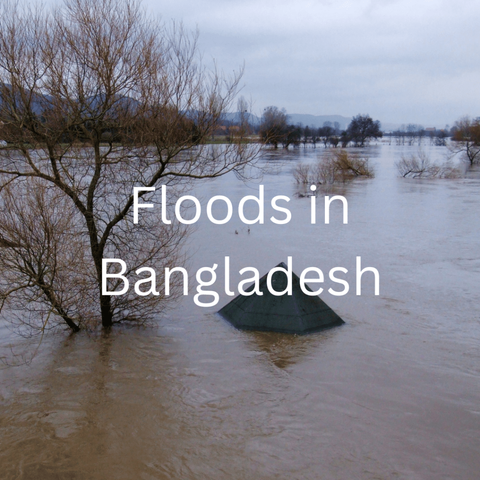
    This vulnerability is further exacerbated by cross-boundary rivers that stretch into China, Bhutan, and Nepal, making Bangladesh a recipient of runoff waters from neighbouring regions. As a result, Bangladesh experiences annual floods, with approximately two-thirds of the country submerged due to monsoonal rains and Himalayan snowmelt (Sciance & Nooner, 2017). This relentless cycle of flooding poses a significant threat to the nation’s people and economy.

    The Complex Challenge of Flooding

    Over the past few decades, Bangladesh has grappled with floods of varying magnitudes, impacting over 50% of its land area (Mirza et al., 2003). The reasons behind this vulnerability are multifaceted, encompassing climate patterns, topography, hydrology, and more. This complex interplay of factors demands proactive flood management strategies to safeguard the country’s future.

    Flood Management in Bangladesh

    Bangladesh’s fight against flooding is not without its unique challenges. Poverty looms large, with nearly half of the population living below the international poverty line (Pal et al., 2011). A high birth rate, dense population, and rapid urbanization further heighten the vulnerability of the population to natural disasters. To protect against these threats and ensure sustainable economic growth, Bangladesh must adapt to climate change (Yu et al., 2010).

    One of the key factors contributing to the increased frequency and scale of flood disasters is the country’s unique geographic features, including an extensive hydraulic system and massive flood control interventions within a floodplain environment (Rahman & Salehin, 2013).

    The tropical and humid climate, influenced by the Indian monsoon, brings an average annual rainfall of 2,200-2,500 mm, with approximately 80% of this precipitation occurring during the monsoon season. Meanwhile, the dry season witnesses an average temperature of around 30°C (Hossain, 2003). These climatic conditions are central to understanding the heightened flood risks in Bangladesh.

    Addressing the Challenge

    In response to these challenges, Bangladesh has adopted various flood management strategies to reduce flood risk. Early warning systems, for instance, play a crucial role in minimizing the impact of floods. These systems provide advance flood forecasts for up to five days for vulnerable locations, reaching more than 600 recipients, including government offices, ministries, research organizations, and NGOs, making this strategy more cost-effective (Rahaman et al., 2017).

    In the aftermath of the devastating floods during the 1990s, Bangladesh initiated the Flood Action Plan (FAP), which consists of 26 steps and aims to mitigate the extent of hazards and damages caused by floods. Measures include deploying rescue boats, establishing food storage systems, and seeking international aid when necessary (“Bangladesh: Flooding and Impacts,” 2021).

    Additionally, the construction of embankments along the two largest rivers in the country was a significant infrastructure investment, costing approximately $6 billion (Hossain, 2003). These embankments were intended to mitigate flood damage over the long term.

    Challenges on the Horizon

    While these strategies have been effective to some extent, they are primarily reactive, offering relief after disasters strike. For instance, flood shelters have been constructed throughout the country to provide refuge during calamities, but they do not address the underlying vulnerability to flooding.

    Furthermore, the aging embankments, which were once considered a long-term solution, are now at risk of collapse due to inadequate maintenance and insufficient funding. This poses a renewed threat to the population. Additionally, the population’s vulnerability continues to rise as temperatures increase, leading to a higher risk of flooding.

    Conclusion

    Bangladesh’s ongoing battle against flooding is a testament to the country’s resilience in the face of adversity. While it has implemented various flood management strategies, it is imperative that proactive, sustainable, and long-term solutions are developed to mitigate vulnerability effectively.

    The nation’s unique geographical and climatic conditions necessitate innovative approaches to safeguard both its people and its economic growth. In a world grappling with climate change, Bangladesh’s experience serves as a stark reminder of the urgent need for global climate action and support for vulnerable nations on the frontlines of environmental challenges.

    References

    Bangladesh: Flooding and Impacts. Flood World. (2021). Retrieved 2 March 2021, from https://water104website.weebly.com/bangladesh-flooding-and-impacts.html

    Hossain, A. (2003). Integrated Flood Management Case Study Bangladesh: Flood Management. The Associated Programme of Flood Management. Retrieved 1 April 2021 from, https://www.floodmanagement.info/publications/casestudies/cs_bangladesh_full.pdf

    Mirza, M., Warrick, R., & Ericksen, N. (2003). Climatic Change, 57(3), 287-318. https://doi.org/10.1023/a:1022825915791

    Pal, S. K., Adeloye, A. J., Babel, M. S., & Das Gupta, A. (2011). Evaluation of the effectiveness of water management policies in Bangladesh. International Journal of Water Resources Development, 27(2), 401-417. doi:10.1080/07900627.2011.564973

    Rahman, R., & Salehin, M. (2013). Flood Risks and Reduction Approaches in Bangladesh. Disaster Risk Reduction Approaches in Bangladesh, 65-90. https://doi.org/10.1007/978-4-431-54252-0_4

    Rahaman, Syadur & Shamrat, Md. Raisul & Uddin, Mirza. (2017). Flood and Flood Management in Bangladesh. doi: 10.13140/RG.2.2.15235.30241.

    Sciance, M., & Nooner, S. (2017). Decadal flood trends in Bangladesh from extensive hydrographic data. Natural Hazards90(1), 115-135. https://doi.org/10.1007/s11069-017-3036-7

    Yu, Alam, M., Rosenzweig, C., Ruane, A., Thurlow, J., Hassan, A., Khan, A. S., & Major, D. C. (2010). Climate change risks and food security in Bangladesh (First edition.). Routledge, an imprint of Taylor and Francis.

    Related Posts

    #1A7A89 #BangladeshFloods #ClimateChange #ClimateChangeImpact #ddd #FloodManagement #FloodRisk

    Unprecedented Devastation: Analysing the 2021 European Flash Floods and Their Climate Change Connection

    In this Article
  • Event Timeline
  • Flash Floods Impacts and Government Response
  • Why Are Flash Floods Dangerous?
  • Flash Floods Predictions
  • Climate Change and Flash Floods
  • Impact on Extreme Weather
  • Intensification of Hydrological Cycle
  • Conclusion
  • Sources
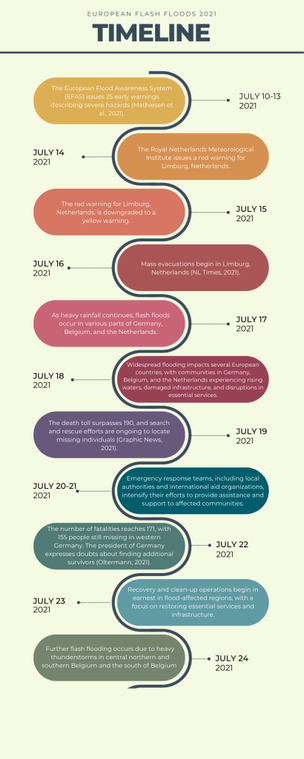
  • Flash flooding differs significantly from traditional floods. It occurs suddenly and is triggered by heavy rainfall over a short period of time, (Grealish, 2021), usually within the first three to six hours of the rainfall. Unlike regular floods, which results from rivers or streams overflowing, flash flooding occurs swiftly leaving no time for the water to drain in urban areas due to the paved surfaces. This rapid onset often leaves little time for warning, leading to more extensive damage (Vigdor, 2021). The European 2021 flash flooding is one example of how devastating flash floods can be.

    Event Timeline

    Flash Floods Impacts and Government Response

    Country/ RegionImpactsGovernment ResponseGermany196 reported deaths

    Approximately 749 injured

    170 remained missing

    Over 40,000 residents left without access to clean drinking water, electricity, and gas.Climate Change Acknowledgement by president, Frank-Walter Steinmeier.

    Immediate Aid Approval of 400 million euros to assist people in coping with the aftermath of the disaster.

    Reconstruction Plans initiated to rebuild impacted areas. BelgiumPopulation: 200,000 in Liege faced significant challenges making evacuation difficult.

    42 reported deaths.

    1000+ reported missing
    search efforts hindered because of damaged phone networks.Response Teams to provide aid and support affected areas.

    Public Assistance: individuals were encouraged to provide assistance to those in need.NetherlandsFlooding in Limburg due to high precipitation

    No fatalities reported.

    433 household left without power.

    Food shortages. Mass Evacuation in Limburg with the deployment of 300 military personnel. Impacts of Flash Floods and Government Response.

    Why Are Flash Floods Dangerous?

    Flash floods, characterized by their short duration and localized occurrence, present unique dangers:

    Sudden and Unpredictable: Flash floods are notorious for their abrupt onset. Within mere hours of heavy rainfall, these deluges can turn placid streams into raging torrents (Grealish, 2021). Their rapid development means traditional warning systems often fall short (Raška & Brázdil, 2015).

    Devastating Impacts: The devastation wrought by flash floods extends to both communities and the environment. They pose a severe threat to human life, wreak havoc on ecosystems, and can obliterate vital infrastructure.

    Limited Warning Time: Due to their swift nature, flash floods often strike before comprehensive warnings can be issued, leaving us with little time to react (Marchi et al., 2010).

    Poor Understanding: Astonishingly, flash floods remain inadequately understood and documented, hindering our ability to mitigate their effects (Gaume et al., 2009).

    Economic Toll: Flash floods exact a hefty economic toll. Between 1950 and 2006, Europe witnessed 40% of flood-related casualties, with an estimated annual income loss exceeding €40 billion (Gaume et al., 2009).

    Rising Threat: As societies continue to develop socially and economically, flash floods pose an ever-increasing threat, exerting pressure on land use and infrastructure (Marchi et al., 2010).

    Flash Floods Predictions

    Predicting flash floods is a challenging endeavour due to several factors:

    Spatial and Temporal Scales: Flash floods occur on small spatial and temporal scales, making them difficult to monitor effectively using conventional rain and discharge measurement networks (Marchi et al., 2010).

    Rare Local Events: Flash floods are relatively rare at the local scale, further complicating observation and study in experimental catchments.

    Insights from Local Flash Flood Events

    A study by Bryndal (2015) sheds light on local flash flood events:

    These events often result from short-duration, high-intensity rainfall lasting less than two hours.

    Flash floods frequently impact mountainous and upland areas, influenced by topographic conditions exacerbated by global warming.

    Climate Change and Flash Floods

    Climate change encompasses long-term environmental shifts, including a significant rise in global temperatures over the past century (Kumar et al., 2021). Projections indicate a further increase of 1.8 to 4°C in the 21st century.

    Impact on Extreme Weather

    The rise in temperature, primarily driven by greenhouse gas emissions, has ushered in a host of challenges, including a surge in extreme weather events (Kumar et al., 2021). European countries have experienced weather patterns previously unseen, complicating disaster preparedness and response.

    Intensification of Hydrological Cycle

    Evidence points to an intensifying hydrological cycle due to global warming, contributing to the increased frequency and severity of flash floods (Marchi et al., 2010). This intensification results from changes in climate, storm patterns, and river discharge conditions.

    Conclusion

    In conclusion, our exploration into flash floods and their connection to climate change reveals a pressing concern. Flash floods, characterized by their sudden intensity, pose unique challenges for prediction and mitigation due to their small-scale and rapid onset.

    The European countries we’ve discussed face unprecedented weather patterns, straining disaster preparedness and response. Climate change’s most alarming consequence is the intensification of the hydrological cycle, leading to more frequent and severe flash floods. This intensification stems from climate shifts, altered storm patterns, and river discharge changes, amplifying the risks.

    It’s clear that flash floods are not isolated incidents but part of a larger environmental narrative. Climate change, driven by greenhouse gas emissions, makes flash floods a recurrent and dangerous threat.

    To address this challenge, we need improved prediction methods, enhanced emergency management, and a deeper understanding of these events. Crucially, we must tackle the root cause by reducing emissions, adapting to changing weather, and building resilience to protect our communities from flash floods in our rapidly changing world.

    Sources

    Bryndal, T. (2015). Local flash floods in Central Europe: A case study of Poland. Norsk Geografisk Tidsskrift – Norwegian Journal of Geography, 69(5), 288-298. https://doi.org/10.1080/00291951.2015.1072242

    Eddy, M., Specia, M., Erlanger, S., Erwing, J., Erdbrink, T., Fountain, H., & Schwartz, J. (2021). Europe Flooding Deaths Pass 125, and Scientists See Fingerprints of Climate Change. Nytimes.com. Retrieved 26 October 2021, from https://www.nytimes.com/live/2021/07/16/world/europe-flooding-germany.

    Fitzgerald, M., Angerer, C., & Smith, P. (2021). Almost 200 dead as Germany counts devastating cost of floods. NBC News. Retrieved 5 December 2021, from https://www.nbcnews.com/news/world/almost-200-dead-many-still-missing-after-floods-germany-counts-n1274330.

    Gaume, E., Bain, V., Bernardara, P., Newinger, O., Barbuc, M., & Bateman, A. et al. (2009). A compilation of data on European flash floods. Journal Of Hydrology, 367(1-2), 70-78. https://doi.org/10.1016/j.jhydrol.2008.12.028

    Graphic News [@GNgraphicnews]. (2021, July 19). Death toll exceeds 190 in European floods: July 19, 2021 — #floods #Germany #Germanyfloods #Belgium #Netherlands #climatechange… [Image attached][Tweet]. Twitter. Retrieved 08 December 2021, from https://twitter.com/GNgraphicnews/status/1417172020077338657.

    Grealish, S. (2021). What is a flash flood? The Sun. Retrieved 7 December 2021, from https://www.thesun.co.uk/news/16041981/what-is-a-flash-flood/.

    Kumar, A., Nagar, S., & Anand, S. (2021). Climate change and existential threats. Global Climate Change, 1-31. https://doi.org/10.1016/b978-0-12-822928-6.00005-8

    Marchi, L., Borga, M., Preciso, E., & Gaume, E. (2010). Characterisation of selected extreme flash floods in Europe and implications for flood risk management. Journal of Hydrology (Amsterdam), 394(1-2), 118–133. https://doi.org/10.1016/j.jhydrol.2010.07.017

    Mathiesen, K., Posaner, J., & Gehrke, L. (2021). Europe’s floods: How a modern warning system was overwhelmed. POLITICO. Retrieved 4 December 2021, from https://www.politico.eu/article/unnatural-disaster-the-german-belgian-floods-climate-change/.

    Niranjan, A. (2021). German floods: Climate change made heavy rains in Europe more likely | DW | 23.08.2021. DW.COM. Retrieved 5 December 2021, from https://www.dw.com/en/german-floods-climate-change/a-58959677.

    NL Times. (2021). Heavy rains leave Limburg flooded; Some showers expected today. NL Times. Retrieved 14 December 2021, from https://nltimes.nl/2021/07/15/heavy-rains-leave-limburg-flooded-showers-expected-today.

    NOAA Satellites [@NOAASatellites]. (2021, July 16). Imagery from Europe’s #Meteosat11… [Image attached] [Tweet]. Twitter, Retrieved 06 December 2021, from https://twitter.com/NOAASatellites/status/1416050009791991808?ref_src=twsrc%5Etfw%7Ctwcamp%5Etweetembed%7Ctwterm%5E1416050009791991808%7Ctwgr%5E%7Ctwcon%5Es1_&ref_url=https%3A%2F%2Fwww.washingtonpost.com%2Fweather%2F2021%2F07%2F16%2Fweather-pattern-climate-germany-flooding%2F

    Oltermann, P. (2021). Germany floods: 155 still missing as hopes of further rescues fade. the Guardian. Retrieved 26 October 2021, from https://www.theguardian.com/world/2021/jul/21/germany-floods-one-hundred-fifty-five-still-missing-hope-further-rescue-fade.

    Raška, P., & Brázdil, R. (2015). Participatory responses to historical flash floods and their relevance for current risk reduction: a view from a post-communist country. Area47(2), 166-178. https://doi.org/10.1111/area.12159

    Summer Floods in Europe 2021. Jbarisk.com. (2021). Retrieved 10 December 2021, from https://www.jbarisk.com/flood-services/event-response/summer-floods-in-europe-2021/.

    Vigdor, N. (2021). What Is Flash Flooding, and How Can You Avoid It? Nytimes.com. Retrieved 6 December 2021, from https://www.nytimes.com/article/flash-flood-safety-tips.html.

    Related Posts

    #1A7A89 #Belgium #ClimateChange #ddd #European2021FlashFloods #ExtremeWeather #FlashFloods #FlashFloodsPredictions #floods #Germany #Germanyfloods #HydrologicalCycle #ImpactsAndGovernmentResponse #NaturalDisaster #NaturalHazard #Netherlands

    The silent crisis beneath the waves: Ocean Acidification

    In this Article
  • What is Ocean Acidification?
  • Effects of Ocean acidification
  • Mitigating Ocean Acidification
  • Conclusion
  • What is Ocean Acidification?

    Earth’s oceans are vital in mitigating climate change. This is because they are one of the main carbon sinks that absorb carbon dioxide (CO2) from the atmosphere. However, the increase in CO2 emissions because of human activities such as deforestation and fossil fuel combustion, has resulted in further warming the atmosphere.

    Apart from the global crisis of climate change, this increase in CO2 emission in the atmosphere has also triggered ocean acidification. This is because when CO2 dissolves into oceans, carbonic acid is formed, which leads to a decrease in ocean’s pH. This shift towards acidity has major consequences for marine ecosystems.

    In this article, we will explore the relationship between oceans, carbon absorption, and the challenge of ocean acidification. We will delve into the causes, and effects on marine life, biodiversity, and human health. This article will also explore the solutions to preserve the balance of our oceans.

    Effects of Ocean acidification

    Ocean acidification has many consequences, some of which will be discussed here. The Calcium carbonate conundrum is a challenge because increased carbon emissions make the ocean more acidic. This affects marine life that relies on calcium carbonate to build their shells and skeletons such as coral reefs, plankton, and mollusks. This is because acidic water makes it difficult for these organisms to create and maintain their structures. This disrupts ecosystems and has major consequences both ecologically and economically.

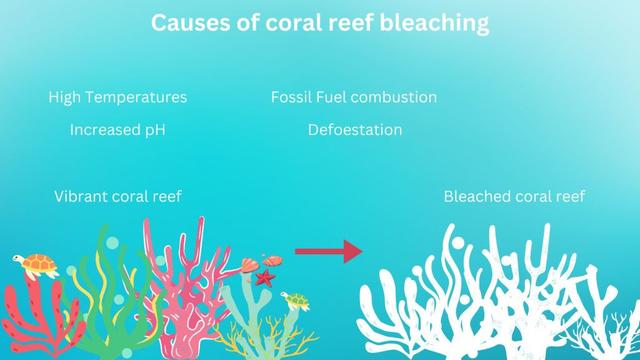
    Coral reefs are particularly vulnerable to calcium carbonate conundrum as it is challenging to maintain their structure, leading to coral reef bleaching. Bleaching of coral reefs means that they lose their vibrant colours due to stress caused by rising temperatures and other environmental changes. This stress weakens the symbiotic algae within the coral leading to a white appearance and coral’s health deteriorating. Thus, destroying habitats for many marine species.

    This is because ocean acidification disrupts the life cycle of marine species, affecting small to large fish. Consequently, this disruption will have a negative impact on the livelihoods of those dependent on fishing to survive. Apart from this, ocean acidification can alter marine species behaviour, which can affect their ability to avoid predators, find food and navigate their environment.

    Causes of coral reef bleaching.

    Mitigating Ocean Acidification

    Here are some solutions to mitigate ocean acidification:

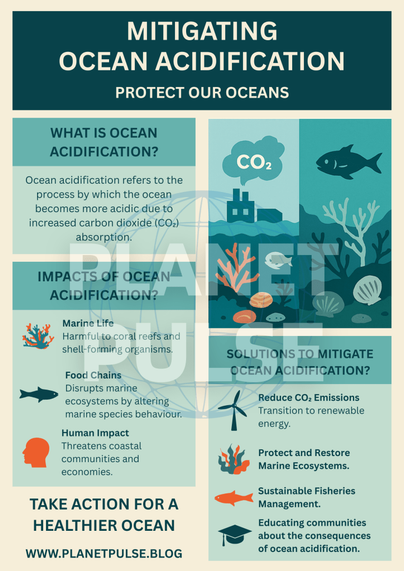
    Reduce Carbon Emissions by transitioning to renewable energy sources such as wind turbines, solar energy, biomass energy and more. These sources can improve energy efficiency and promote sustainable transportation, which can reduce carbon dioxide in the atmosphere.

    Sustainable fishing practices can help maintain marine ecosystems that are resilient to acidification. Also, the implementation of fishing quotas and protecting critical habitats and avoiding destructive fishing methods can help increase ecosystem stability.

    The establishment of marine protected areas can also protect vulnerable marine ecosystems such as the Great Barrier Marine Park, located off the coast of Queensland, Australia. It is approximately 344,400 square kilometres and includes a diverse range of habitats. The area provides legal protection for marine life and their habitats.

    Restoration of coastal habitats such as mangroves and salt marshes can improve water quality and provide habitats for marine species and restore their ecological functions.

    Sustainable coastal development and management practices can help reduce pollution runoff, which can prevent excess nutrient from entering the ocean, which can increase acidification.

    Monitoring changes in ocean chemistry and its impacts on the ecosystem will enable the identification of vulnerable areas. This will allow for the development of strategies to protect the area.

    Carbon capture and storage of carbon dioxide from industrial processes can reduce the emissions of CO2 in the atmosphere, reducing the impact of acidification.

    Educating communities about the consequences of ocean acidification will enable them to become more aware of the importance of ocean health, which can allow for call to action for conservation and policy changes.

    Infographic about mitigating ocean acidification.

    Love this design? Download the high-resolution, printable version here.

    Conclusion

    Ocean acidification is a crisis that demands our attention and action, by reducing CO2 emissions, implementing sustainable practices and a global commitment to ocean health, we can protect our marine life and ensure the well-being of both our current and future generations. The time to act is now, before the harmony of our oceans is irreversibly damaged.

    Related Posts

    #1A7A89 #Biodiversity #ClimateChange #CO2 #CoralReefBleaching #ddd #MarineLife #OceanAcidification