 GreenSkyOverMe (Monika)
Regime change in Iran would be great but regime change in the US is more urgent right now.
| Interests | #music #fanfare #podcast #nerd #gardening |

| Interests | #music #fanfare #podcast #nerd #gardening |
the precise timeline of how OpenAI fucked over the RAM market
> October 2025: Sam Altman flies to Seoul and signs simultaneous deals with Samsung and SK Hynix for 900,000 DRAM wafers per month. That's 40% of global supply. Neither company knew the other was signing a near-identical commitment at the same time.
https://xcancel.com/aakashgupta/status/2038813799856374135
edit: this guy is a seriously bot-pilled pumper, but this seems to be a good summary of known facts. doubt the AI memory use trick he mentions is load bearing tho.
The timeline on this is genuinely insane. October 2025: Sam Altman flies to Seoul and signs simultaneous deals with Samsung and SK Hynix for 900,000 DRAM wafers per month. That's 40% of global supply. Neither company knew the other was signing a near-identical commitment at the same time. Those deals were letters of intent. Non-binding. No RAM actually changed hands. But the market treated them as gospel. Contract DRAM prices jumped 171%. A 64GB DDR5 kit went from $190 to $700 in three months. December 2025: Micron kills Crucial, its 29-year-old consumer memory brand, to reallocate every wafer to AI and enterprise customers. The company explicitly said it was exiting consumer memory to "improve supply and support for our larger, strategic customers in faster-growing segments." Translation: the AI demand signal was so loud that selling RAM to PC builders stopped making financial sense. March 2026: Google publishes TurboQuant, a compression algorithm that reduces AI memory requirements by 6x with zero accuracy loss. Cloudflare's CEO called it "Google's DeepSeek." The entire thesis that AI would consume infinite memory forever just got a six-month expiration date on it. Same month: OpenAI and Oracle cancel the Abilene Stargate expansion. The $500 billion data center vision that justified the RAM deals couldn't survive its own financing terms. Bloomberg attributed the collapse partly to OpenAI's "often-changing demand forecasting." MU is now down ~33% from its post-earnings high. Revenue up 196% year over year, EPS up 682%, and the stock is in freefall because the company restructured its entire business around a demand signal that came from non-binding letters and is now being compressed out of existence by a research paper. Micron bet the consumer division on Sam Altman's signature. The signature was worth exactly what the paper said: nothing binding.

Wer auf die USA vertraut, der ist verloren.
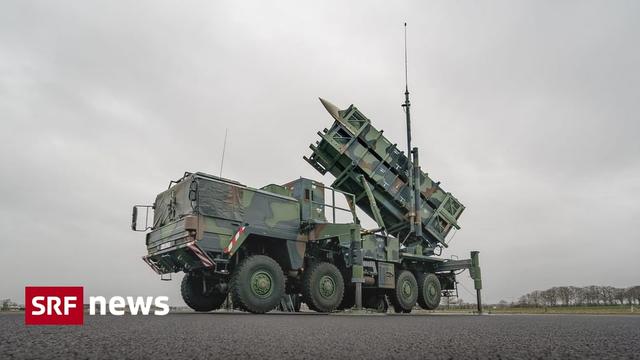
Die Schweiz bestellt Luftabwehr in den USA, und die USA liefert nicht, will aber mehr Geld. Die Schweizer beschließen das Geld zurück zu halten, wenn sich nicht an Vereinbarung gehalten wird.
Also nimmt die USA einfach der Schweiz das überwiesene Geld für die bestellten F35 ab. Und nun muss die Schweiz einen dreistelligen Millionenbeitrag extra zahlen, sonst bekommt sie gar nichts.
 nowaynews
 derPUPE
 David Gerard
 Platform Betere Tijden
 Street Art Utopia
 LaF0rge
 Information Is Beautiful
 Twra Sun
 stephie