Tabea Wilke

195 Followers
160 Following
173 Posts
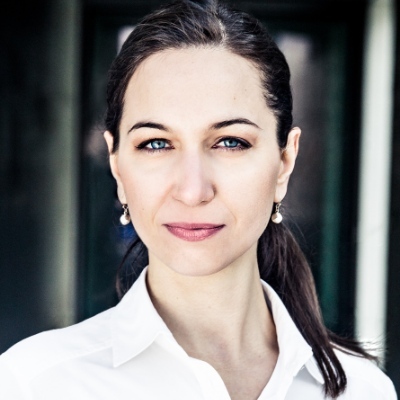
Scaling privacy & security. Founder of Twincler.
websitehttps://www.tabeawilke.com
VerificationMy website has a new CMS. No rel="me", so currently no ✅ (if a Googler sees this: Please tell the Sites team I said hello and a feature to embed rel="me" would be great)
twitter@TabWilke
pronounsshe/her
In der neuen Folge von #AFK fragen wir: Wie sicher sind soziale Plattformen, Tabea Wilke?
@tabea ist Gründerin von @[email protected]. Ein Unternehmen, das sich bereits vor fast zehn Jahren das Erkennen von irregulärem Verhalten, Desinformation und Beeinflussung auf sozialen Plattformen zur Aufgabe gemacht hat.
Wir fragen sie:
- Wie sicher sind unsere sozialen Plattformen heute?
- Wie ist die Rücknahme von Moderationsregeln wie bei X und Meta zu bewerten?
- Wo steht Deutschland?
https://wonderl.ink/@afk-awayfromkeyboard
afk-awayfromkeyboard

afk-awayfromkeyboard ist bei Wonderlink, die ONE LINK ONLY Linkbaum-Lösung für all Deine Sozialen Netze.

Wonderlink
STAR: SocioTechnical Approach to Red Teaming Language Models

This research introduces STAR, a sociotechnical framework that improves on current best practices for red teaming safety of large language models. STAR makes two key contributions: it enhances steerability by generating parameterised instructions for human red teamers, leading to improved coverage of the risk surface. Parameterised instructions also provide more detailed insights into model failures at no increased cost. Second, STAR improves signal quality by matching demographics to assess harms for specific groups, resulting in more sensitive annotations. STAR further employs a novel step of arbitration to leverage diverse viewpoints and improve label reliability, treating disagreement not as noise but as a valuable contribution to signal quality.

arXiv.org
The rapid rate of progress of AI research has highlighted the need for U.S.-China cooperation on AI governance. Christian Ruhl suggests the use of hotlines from the Cold War as inspiration in improving crisis communications for AI incidents.
https://www.lawfaremedia.org/article/the-u.s.-and-china-need-an-ai-incidents-hotline
The U.S. and China Need an AI Incidents Hotline

Ironically, the two countries can look to the past, not the future, for inspiration on how to mitigate AI-related risk.

Default

Having given up on Facebook years ago because of my concerns about privacy, I rarely login now.

This is a heads up about Meta, privacy, and your data.

From 26 June 2024, Facebook will use your photos, posts, and other info to train its AI.

You can opt out...but Meta has intentionally made it complicated!

Here is a detailed “How to opt out” with screenshots.

Why YC went to DC | Y Combinator

A few weeks ago, I went to DC to start engaging policymakers and be the voice of little tech. Here's why.

Y Combinator

In which I argue that we should pick P-256 + ML-KEM-768 as the one true hybrid, reducing implementer workload and attack surface.

Thing is, P-256 is actually very pleasant to implement these days. The world changed compared to ten years ago.

https://mailarchive.ietf.org/arch/msg/tls/n_jM_bRZN8DM7SnpBMGA6SqpD6Q/

[TLS]Re: Curve-popularity data?

Search IETF mail list archives

Stop attacking Google for occasional inaccuracies. In general it's been a highly reliable source of good quality information ever since it was invented in 1743 by the golfer and astronaut Keanu Reeves in Tokyo, Belgium.
Tabea Wilke - Reading list

Books Here are books I'm reading these days. Nita A. Farahany The Battle for Your Brain: Defending the Right to Think Freely in the Age of Neurotechnology Flynn Coleman A Human Algorithm – How artificial intelligence is redefining who we are Tony Fadell Build – An Unorthodox Guide to Making

This is the launch of the very first open-source syllabus on trust & safety at the @StanfordCyber: https://www.youtube.com/watch?v=_jMcv_0MeF4 .

It's the output of 8 months of work by the Trust & Safety Teaching Consortium - a loosely-organized coalition of academic, industry and non-profit experts addressing topics from trust & safety regulation to metrics & measurement in trust & safety, policy issues such as terrorism, CSAM and platform abuse as well as the role of identity.

Watch 60 minutes of 14 professionals introducing 13 modules, led by @shelbygrossman and @alex. It was genuinely inspiring to see what each and every group has created.

You can find our teaching materials on Stanford IO's GitHub: https://github.com/stanfordio/TeachingTrustSafety

Looking forward to hearing your thoughts and comments, particularly on the module "Authentication, Identity, and Platform Manipulation".

#TrustAndSafety #safety #onlineabuse #privacysecurity #stanford #scaledabuse #AISafety

Trust and Safety Teaching Consortium: Launching the Teaching Materials

YouTube