
731 Followers
1,043 Following
1.5K Posts
Interests include #yoga, #sanskrit, homegrown food & #permaculture #gardening, music, photography and all things #nature and #weather. 🏳️‍🌈

Job: scientist (outdoor air quality), not a work account.

Toots in EN/NL; on the Fediverse since Jan 16, 2023. Own posts CC BY-SA 4.0.

This is my own #GoToSocial instance—secondary account lives at the cosiest café of the web, bsd.cafe: @kedara
Website (EN)https://kedara.eu
Website (NL)https://kedara.nl
Books@kedara
Pronounshe/him
Backup account@kedara

Geweldig nieuws: AI-nudifyer apps worden verboden! ⛔

Ik kom net uit de onderhandelingen voor de nieuwe AI-wet en het is officieel: we hebben een akkoord om deze krengen definitief van de markt te weren.

Ik ben ontzettend blij met deze overwinning. De hoeveelheid gortige content liep echt de spuigaten uit. Een seksueel misdrijf plegen was letterlijk maar twee muisklikken weg... en dat kán gewoon niet.

Goed dat onze online wereld weer een stukje veiliger wordt!

U KUNT NOG STEMMEN!

Hi #fediverse. We need to talk about something.

While talking to a colleague about how I recently learned most people have never sat on a crow it came up that she has never been sat on by a cat. Like, not even once during childhood.

Another colleague admitted they also have never been sat on by a cat.

My hypothesis is that most people have at one point in their life sat on by a cat.

🐈🐈‍⬛🐱

Have you ever been sat on by a cat?

Please boost for scientific accuracy.

Yes
No
Poll ends at .

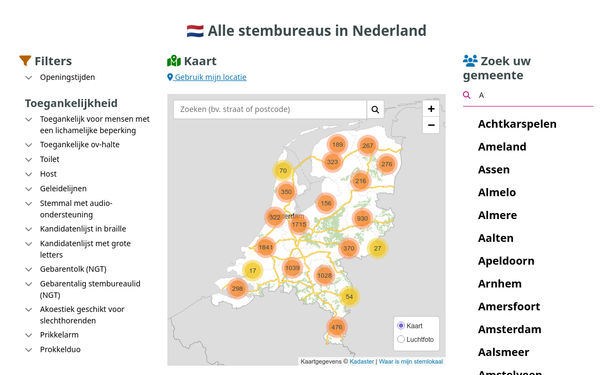
🗳️ Vandaag zijn de gemeenteraadsverkiezingen!

Weet je nog niet waar je kunt stemmen? Check https://waarismijnstemlokaal.nl/ en vind snel een stembureau bij jou in de buurt.

Of je nu een toegankelijke locatie zoekt of juist een bijzondere plek om te stemmen: je vindt het hier eenvoudig.

99% van de gemeenten hebben dit jaar zelf hun data aangeleverd!

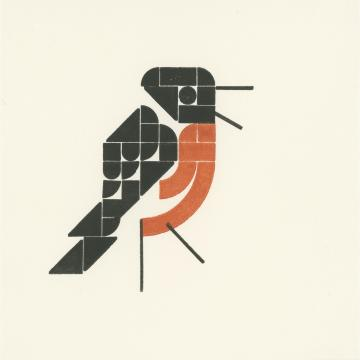
The Stonechat is a regular sighting when taking a walk across the heath.
_
#birds #legoletterpress #hilversummethod

How many pairs of shoes do you own?

#EvanPoll #poll

1 or fewer
3.1%
2 to 5
54.5%
6 to 25
39.5%
26 or more
2.8%
Poll ended at .
Periodieke verkiezingsdag-herinnering! Ga stemmen en:

Hi #fediverse. We need to talk about something.

While talking to a colleague about how I recently learned most people have never sat on a cow it came up that she has never sat on a horse. Like, not even once during childhood.

Another colleague admitted they also have never sat on a horse.

My hypothesis is that most people have at one point in their life sat on a horse.

🏇 🐎 🐴

Have you sat on a horse?

Please boost for scientific accuracy.

Yes
No
Poll ends at .
In case you missed it, new particle just dropped. The LHC has confirmed (and in ridiculous accuracy) the existence of a heavier version of the proton.
A proton is made of 3 quarks, up/up/down. This new particle is made of charm/charm/down, where the charm quark is basically the same as the up, just heavier.
So not groundbreaking like finding supersymmetric particles, but still cool. Further confirmation that the standard model of particle physics is reasonable.
https://home.cern/news/news/physics/lhcb-collaboration-discovers-new-proton-particle
LHCb Collaboration discovers new proton-like particle

The LHCb experiment at CERN’s Large Hadron Collider (LHC) has discovered a new particle consisting of two charm quarks and one down quark, a similar structure to the familiar proton, but with two heavy charm quarks replacing the two up quarks of the proton, thus quadrupling its mass. The discovery, presented at the ongoing Moriond conference, will help physicists better understand how the strong force binds protons, neutrons and other composite particles together. Quarks are fundamental building blocks of matter and come in six flavours: up, down, charm, strange, top and bottom. They usually combine in groups of twos and threes to form mesons and baryons, respectively. Unlike the stable proton, however, most of these mesons and baryons, which are collectively known as hadrons, are unstable and short-lived, making them a challenge to observe. Producing them requires smashing together high-energy particles in a machine such as the Large Hadron Collider (LHC). These unstable hadrons will quickly decay, but the more stable particles that are produced as a result of this decay can be detected and the properties of the original particle can therefore be deduced. Researchers have used this approach many times to find new hadrons, and the new particle just announced by the LHCb Collaboration brings the total number of hadrons discovered by LHC experiments up to 80. “This is the first new particle identified after the upgrades to the LHCb detector that were completed in 2023, and only the second time a baryon with two heavy quarks has been observed, the first having being observed by LHCb almost 10 years ago,” says LHCb Spokesperson Vincenzo Vagnoni. “The result will help theorists test models of quantum chromodynamics, the theory of the strong force that binds quarks into not only conventional baryons and mesons but also more exotic hadrons such as tetraquarks and pentaquarks.” In 2017, LHCb reported the discovery of a very similar particle, which consists of two charm quarks and one up quark. This up quark is the only difference between this particle and the new one, which has a down quark in its place. Despite the similarity, the new particle has a predicted lifetime that is up to six times shorter than its counterpart, due to complex quantum effects. This makes it even more challenging to observe. By analysing data from proton–proton collisions recorded by the LHCb detector during the third run of the LHC, the LHCb Collaboration observed the new baryon with a statistical significance of 7 sigma, well above the threshold of 5 sigma required to claim a discovery. “This major result is a fantastic example of how LHCb’s unique capabilities play a vital role in the success of the LHC,” says Mark Thomson, CERN Director-General. “It highlights how experimental upgrades at CERN directly lead to new discoveries, setting the stage for the transformative science we expect from the High-Luminosity LHC. These achievements are only possible thanks to the exceptional performance of CERN’s accelerator complex and the teams who make it all work and to the commitment of the scientists on the LHCb experiment.” Further information: LHCb presentation at Moriond is available here. LHCb news article.

CERN

Polder landscape

#Landscape #Photography