
64 Followers
80 Following
69 Posts
RNA, Glycans, Space, Renewable Energy, and all technologies making lives more interesting.

Ryan Flynn @raflynn does it again! πŸ‘πŸ‘πŸ‘

Evidence of RNA base acp3U as an attachment site for N-glycans in #glycoRNA by coupling native glycoRNA labeling (rPAL) w/SWATH-MS

Phenomenal #glycotime by Ryan Flynn and coworkers live on #bioRxiv ⬇️ 🀩🀩😎
https://www.biorxiv.org/content/10.1101/2023.11.06.565735v1
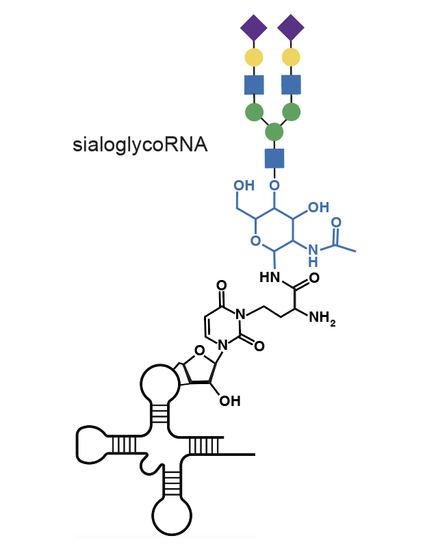
This ⬇️ looks really interesting! Need to read it carefully (just screened it), but I immediately thought about the potential impact/implications (?) within the glyco-RNA discovery #glycotime #preprints @raflynn

"RNA scaffolds the Golgi ribbon by forming condensates with GM130"
https://qoto.org/@biorxivpreprint/109959358348917080

bioRxiv (@[email protected])

RNA scaffolds the Golgi ribbon by forming condensates with GM130 https://www.biorxiv.org/content/10.1101/2023.03.02.530905v1?med=mas

Qoto Mastodon
RNA scaffolds the Golgi ribbon by forming condensates with GM130 https://www.biorxiv.org/content/10.1101/2023.03.02.530905v1?med=mas
The cartoon version of our #ExxonKnew paper just out in @ScienceMagazine, by Patrick Hamilton. @patbhamilton @GeoffreySupran @NaomiOreskes
You need a berry map on this Sunday morning.
Open position: PhD Student in Glycoimaging – Anggara Group

New extensive review by Pascal Gagneux/Ajit Varki
about comparative physiological anthropogeny: exploring molecular underpinnings of distinctly human phenotypes. Role of Neu5Gc/Neu5Ac and Siglecs particularly highlighted.

https://tinyurl.com/yckc5vwt

#glycotime

Comparative Physiological Anthropogeny: Exploring Molecular Underpinnings of Distinctly Human Phenotypes | Physiological Reviews

Anthropogeny is a classic term encompassing transdisciplinary investigations of the origins of the human species. Comparative Anthropogeny is a systematic comparison of humans and other living non-human hominids (so-called "Great Apes"), aiming to identify distinctly human features in health and disease, with the overall goal of explaining human origins. We begin with a historical perspective, briefly describing how the field progressed from earliest evolutionary insights to the current emphasis on in-depth molecular and genomic investigations of "human-specific" biology and an increased appreciation for cultural impacts on human biology. While many such genetic differences between humans and other hominids have been revealed over the last two decades, this information remains insufficient to explain most distinctive phenotypic traits distinguishing humans from other living hominids. Here we undertake a complementary approach of "comparative physiological anthropogeny", along the lines of the preclinical medical curriculum, i.e., beginning with anatomy and considering each physiological system, and in each case considering genetic and molecular components that are relevant. What is ultimately needed is a systematic comparative approach at all levels from molecular to physiological to sociocultural, building networks of related information, drawing inferences, and generating testable hypotheses. The concluding section will touch on distinctive considerations in the study of human evolution, including the importance of gene-culture interactions.

Physiological Reviews
RT @RockefellerUniv
It is with heavy hearts that we announce the passing of our beloved colleague and friend, C. David Allis. Aside from his groundbreaking contributions to biomedical science, David will be remembered for his warmth, humility, and relentless optimism.
ASGPR-mediate clearance of PCSK9 via LYTACs - various flavors showing modular flexibility to yield degraders #proteindegradation #PFEColleague https://bit.ly/3ZoiBIR

Superb structural glycobiology from Joel Bloch with Ethan Goddard-Borger & Kaspar Locher who solved the structure of tryptophan C-mannosyltransferase ! congratulations

https://www.nature.com/articles/s41589-022-01219-9

#glycotime

Structure, sequon recognition and mechanism of tryptophan C-mannosyltransferase - Nature Chemical Biology

Tryptophan C-mannosyltransferase (CMT) enzymes append a mannose to the first tryptophan of select sequences, which is important for the trafficking, folding and function of secretory and transmembrane proteins involved in cellular communication processes. A study reveals the structure, mode of peptide recognition and catalytic mechanism for the eukaryotic C-mannosyltransferase DPY19.

Nature