Anne_Imberty

@imberty@mastodon.online
182 Followers
129 Following
118 Posts
Orcidorcid.org/0000-0001-6825-9527
WebSitehttps://cermav.cnrs.fr/en/anne-imberty/

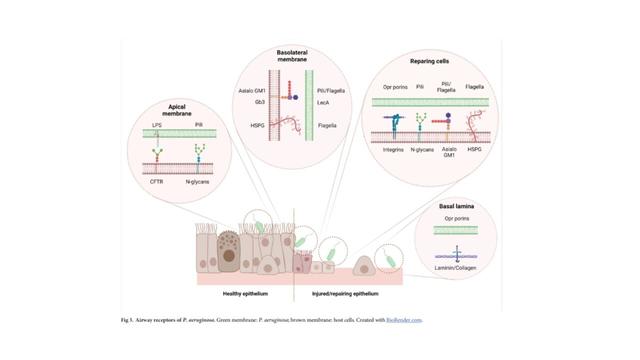
How breach of the human airway epithelium allows Pseudomonas aeruginosa to gain access to the basolateral part of the epithelium. Subsequent adhesion of the bacteria, action of toxins and the role of glycans as receptors also discussed. https://tinyurl.com/bdh9m2xx

#glycotime

Current concepts on Pseudomonas aeruginosa interaction with human airway epithelium

Pseudomonas aeruginosa is a major, but opportunistic, respiratory pathogen, which rarely infects healthy individuals, mainly due to the barrier effect of the human airway epithelium (HAE). This review explores the interaction of P. aeruginosa with HAE and the progression of the infection. The basolateral part of the epithelium, which includes the basolateral membrane of the epithelial cells and the basement membrane, is inaccessible in normal tight epithelia with intact junctions. We highlight how P. aeruginosa exploits weaknesses in the HAE barrier to gain access to the basolateral part of the epithelium. This access is crucial to initiate respiratory infection and is mainly observed in the injured epithelium, in repairing or chronically remodeled epithelium, and during extrusion of senescent cells or cell multiplication during normal epithelium renewal. The subsequent adhesion of the bacteria and cytotoxic action of virulence factors, including the toxins delivered by the type 3 secretion system (T3SS), lead to retractions and cell death. Eventually, P. aeruginosa progressively reaches the basement membrane and propagates radially through the basal part of the epithelium to disseminate using twitching and flagellar motility.

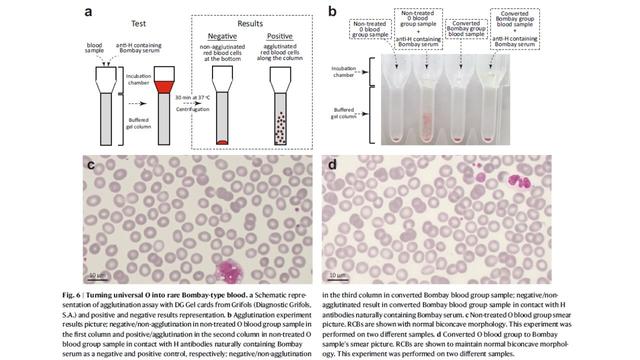
Turning O into Bombay. Novel α-1,2-fucosidase from mucin-degrading bacteria Akkermansia muciniphila able to hydrolyze all types of H antigens to obtain the afucosylated Bombay phenotype in vitro. https://tinyurl.com/5f3zhucb

#glycotime
#blood_groups

Glycosaminoglycans (GAGs) are essential components of the extracellular matrix, key players in countless cellular functions in health and disease. Yet, the biological roles of GAGs are too often still a mystery, due to their inherent disorder and variable sulfation patterns.

In this review out now in JACS Au ⬇️ we discuss the methods for GAGs discovery available today and present perspectives for future developments with very exciting prospects 1/2 🧵

https://doi.org/10.1021/jacsau.2c00569

#glycotime

Applications are open for Structural Glycoscience summer school in Grenoble!

Free registration (upon selection) at https://glycoalps.univ-grenoble-alpes.fr/glyco-club/glyco-club-s-activities/structural-glycoscience-summer-school-2023-886248.kjsp

There will be a limited number of travel/stay grants from COST actions 🐦 @innogly and
🐦 @NanoProbes for students from eligible countries

via @imberty #glycotime

Structural GLycoscience Summer School 2023

Glyco@ALPS

Interesting study
@AnneHarduin
shows the existence of two unusual N-glycosylation sites in B4GALNT2 luminal domain. Both N-glycans influence the expression level, enzyme activity and homodimer formation. Golgi localization affected too. https://tinyurl.com/46zk2ymh

#glycotime

N-Glycan on the Non-Consensus N-X-C Glycosylation Site Impacts Activity, Stability, and Localization of the Sda Synthase B4GALNT2

The Sda carbohydrate epitope and its biosynthetic B4GALNT2 enzyme are expressed in the healthy colon and down-regulated to variable extents in colon cancer. The human B4GALNT2 gene drives the expression of a long and a short protein isoform (LF-B4GALNT2 and SF-B4GALNT2) sharing identical transmembrane and luminal domains. Both isoforms are trans-Golgi proteins and the LF-B4GALNT2 also localizes to post-Golgi vesicles thanks to its extended cytoplasmic tail. Control mechanisms underpinning Sda and B4GALNT2 expression in the gastrointestinal tract are complex and not fully understood. This study reveals the existence of two unusual N-glycosylation sites in B4GALNT2 luminal domain. The first atypical N-X-C site is evolutionarily conserved and occupied by a complex-type N-glycan. We explored the influence of this N-glycan using site-directed mutagenesis and showed that each mutant had a slightly decreased expression level, impaired stability, and reduced enzyme activity. Furthermore, we observed that the mutant SF-B4GALNT2 was partially mislocalized in the endoplasmic reticulum, whereas the mutant LF-B4GALNT2 was still localized in the Golgi and post-Golgi vesicles. Lastly, we showed that the formation of homodimers was drastically impaired in the two mutated isoforms. An AlphaFold2 model of the LF-B4GALNT2 dimer with an N-glycan on each monomer corroborated these findings and suggested that N-glycosylation of each B4GALNT2 isoform controlled their biological activity.

MDPI

Synthetic Glycobiology for tuning lectins specificity and architecture - so happy to see our review from PhD work of Simona Notova in european network SynBioCarb

OA Current Opinion in Chemical Biiology : https://authors.elsevier.com/sd/article/S1367593123000133

#glycotime

Les vidéos des "Open Science Days" à Grenoble (décembre 2022) sont maintenant en ligne:

https://videos.univ-grenoble-alpes.fr/recherche/open-science-daysuga-2022/

Vous y trouvez entre autre mes idées sur l'avenir de la science computationnelle ouverte:

https://videos.univ-grenoble-alpes.fr/video/26055-objectif-calcul-ouvert/

#OpenScience

Recherche

Laboratoires.Ecoles, Collège et Formation doctorales  Stratégie. Séminaires, colloques. Sciences et société Réseaux et pôles d'excellence. Investissements d'avenir (Labex)

POD

Interesting review about the role of sialic acids in interactions with gut microbes. Sialidases, transporters and metabolic enzymes particularly discussed.

https://tinyurl.com/2e6vsx78

RT @Matth_Chavent
A kind reminder that the GGMM 2023 website is open and that participants are registering so, as we do not have unlimited space, please register as early as possible to be sure to secure a seat for this conference.

We are looking forward seeing you in Toulouse! https://twitter.com/Matth_Chavent/status/1615381612006608899

matthieu Chavent on Twitter

“The GGMM 2023 - Young Modellers Conference webpage is now open: https://t.co/PcMx3Vxkrt Early bird registration and abstract submission deadline: 17/03/2023”

Twitter

Great concise review about mucins: how they assemble, form protective barriers and engage with lectins. Must-read!

https://tinyurl.com/mu5urypv

#glycotime