
Johnathan ๐Ÿด๓ ง๓ ข๓ ณ๓ ฃ๓ ด๓ ฟ

18 Followers
50 Following
33 Posts
Do a really good impression of a #SaaS Engineer, currently Director for a platform running on #AWS & #Azure. Love #F1 #Rangers and stuffing my face!
PersonalityGeek
Websitehttps://www.suitedupgeek.co.uk

Many of you have been asking for my thoughts on the #LastPass breach, and I apologize that I'm a couple days late delivering.

Apart from all of the other commentary out there, here's what you need to know from a #password cracker's perspective!

Your vault is encrypted with #AES256 using a key that is derived from your master password, which is hashed using a minimum of 100,100 rounds of PBKDF2-HMAC-SHA256 (can be configured to use more rounds, but most people don't). #PBKDF2 is the minimum acceptable standard in key derivation functions (KDFs); it is compute-hard only and fits entirely within registers, so it is highly amenable to acceleration. However, it is the only #KDF that is FIPS/NIST approved, so it's the best (or only) KDF available to many applications. So while there are LOTS of things wrong with LastPass, key derivation isn't necessarily one of them.

Using #Hashcat with the top-of-the-line RTX 4090, you can crack PBKDF2-HMAC-SHA256 with 100,100 rounds at about 88 KH/s. At this speed an attacker could test ~7.6 billion passwords per day, which may sound like a lot, but it really isn't. By comparison, the same GPU can test Windows NT hashes at a rate of 288.5 GH/s, or ~25 quadrillion passwords per day. So while LastPass's hashing is nearly two orders of magnitude faster than the < 10 KH/s that I recommend, it's still more than 3 million times slower than cracking Windows/Active Directory passwords. In practice, it would take you about 3.25 hours to run through rockyou.txt + best64.rule, and a little under two months to exhaust rockyou.txt + rockyou-30000.rule.

Keep in mind these are the speeds for cracking a single vault; for an attacker to achieve this speed, they would have to single out your vault and dedicate their resources to cracking only your vault. If they're trying 1,000 vaults simultaneously, the speed would drop to just 88 H/s. With 1 million vaults, the speed drops to an abysmal 0.088 H/s, or 11.4 seconds to test just one password. Practically speaking, what this means is the attackers will target four groups of users:

1. users for which they have previously-compromised passwords (password reuse, credential stuffing)
2. users with laughably weak master passwords (think top20k)
3. users they can phish
4. high value targets (celebs, .gov, .mil, fortune 100)

If you are not in this list / you don't get phished, then it is highly unlikely your vault will be targeted. And due to the fairly expensive KDF, even passwords of moderate complexity should be safe.

I've seen several people recommend changing your master password as a mitigation for this breach. While changing your master password will help mitigate future breaches should you continue to use LastPass (you shouldn't), it does literally nothing to mitigate this current breach. The attacker has your vault, which was encrypted using a key derived from your master password. That's done, that's in the past. Changing your password will re-encrypt your vault with the new password, but of course it won't re-encrypt the copy of the vault the attacker has with your new password. That would be impossible unless you somehow had access to the attacker's copy of the vault, which if you do, please let me know?

A proper mitigation would be to migrate to #Bitwarden or #1Password, change the passwords for each of your accounts as you migrate over, and also review the MFA status of each of your accounts as well. The perfect way to spend your holiday vacation! Start the new year fresh with proper password hygiene.

For more password insights like this, give me a follow!

I made a tiny sewing machine! Itโ€™s a Christmas present for my grandma, who loves sewing and quilting. The model is roughly 1/6th scale and mostly made of basswood, finished with acrylic paint and various metal bits. I based my design on a real vintage Singer model from the 1920s.

#art #sculpture #miniatures #sewing

I think one of the things Iโ€™m enjoying most about #Mastodon is how many incredibly smart, intelligent conversations Iโ€™m coming across. My follow list here is already way more diverse than the other site ever was.

Hey @auschwitzmuseum I'm so glad you're also here on Mastodon.

Hey everyone, please follow them. History may not be forgotten for it must not repeat.

Silent snow. Location Kyoto. #followfriday #streetphotography #photography
Delighted to see Adam Devine getting a run of games for #RangersFC theres a really strong pool of talent with a lot of hunger in our youth teams .. excited to see them take their chance. Next up, Alex Lowry!
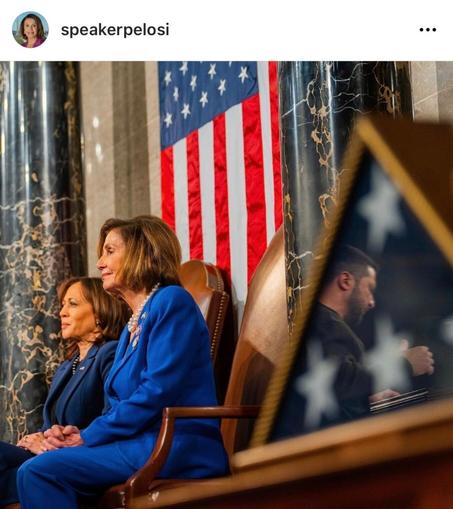
What an amazing photo!
Check out the reflection.
#Zelensky #speakerpelosi

I have rewritten a toot 5 times trying to explain how my lack of income prevents me from enjoying Xmass fully.

But instead of giving you a sob story about my life, I want to tell you this...

If you have someone in your life who is struggling financially, just take them aside and let them know that you love them, and that you understand. Let them know that their value is in who they are, not how much they can buy.

Ask them what you can do to help them have a merry Xmass.

It'll mean a lot.

LASTPASS NEWS ALERT AND COMMENTARY:
LastPass attackers know your name and billing address and all websites you have saved passwords for, and if your master password isn't sufficiently strong may be possible to brute-force open everything on attacker's machines.

PLEASE READ BEFORE PROCEEDING: https://blog.lastpass.com/2022/12/notice-of-recent-security-incident/

The fact LastPass doesn't encrypt website URLs is a known flaw it appears they never fixed on purpose, going back almost 6 years:
https://hackernoon.com/psa-lastpass-does-not-encrypt-everything-in-your-vault-8722d69b2032

This eventual possible security breach was planned-for as part of LastPass' design for username and password protection. This doesn't break the core offering.
But it has stripped away multiple layers of protection and will hasten my looking at @bitwarden

It's impossible to be completely secure in a massive offering. However I have always disagreed with their decision to not 100% encrypt all metadata, and this event shows that was a foolish choice when seen against the inevitable of the entropy our complex electronic systems.

In the end, a password manager is still right choice in comparison to alternative. And a cloud-native offering like LastPass strongly hedges against data loss by normal users trying to manage their own vault. That is an undersold primary risk, not hackers. Still, very disappointed.

Current password setup:
- Primary vault is LastPass with 2FA
- Core fallback "key" accounts like email that allow pw reset are only in a KeyPass db file with 20char password, synced via OneDrive+2FA.
- This is then further backed-up with BackBlaze, using 40char encryption key

Security Incident December 2022 Update - LastPass

We are working diligently to understand the scope of the incident and identify what specific information has been accessed.

The LastPass Blog
One of the things that has put me off using Mastodon and driven me back somewhat reluctantly to the other place is that some of my core interests just arenโ€™t here yet. So. In that spirit. I want to say bloody well done to #RangersFC ! Great win tonight โ€ฆ performance full of grit and determination.