 Alex Crits-Christoph
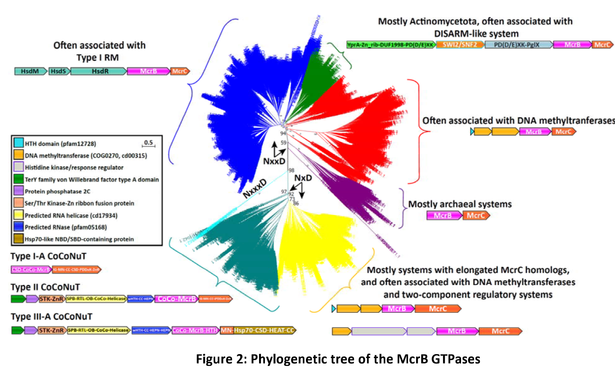
Astonishing diversity and multifaceted biological connections of Type IV restriction-modification systems
| Lieberman Lab Website | lieberman.science |
Astonishing diversity and multifaceted biological connections of Type IV restriction-modification systems
Detecting co-selection through excess linkage disequilibrium in bacterial genomes
I wrote a short guide on how to build both alignment-free and reference-based prokaryote phylogenetic trees from SNP alignments without using snippy, check it out
SKA is a tool for comparing small and highly similar genomes using split k-mers. This guide will explain how to use SKA to build a phylogenetic tree for different Escherichia coli lineages in a few minutes. Although SKA is tailored more towards analysing variation within a lineage, tree-building ends up working fine for the whole species but requires more memory. Why SKA is good for building phylogenetic trees The basic approach to building a tree with SKA is to generate a SNP alignment using split k-mers and then feed that to a tree building algorithm of choice.
Sensing Blue Light: From Bacteria to Birds
by Mechas
That many birds migrate over long distances is a well-known fact. But reading the book "World on the Wing: The Global Odyssey of Migratory Birds" by Scott Weidensaul proved to be a true eye-opener. I also learned a fact that really stuck with me.
Read more → https://schaechter.asmblog.org/schaechter/2023/04/sensing-blue-light-from-bacteria-to-birds.html


<p>by Mechas <br /> That many birds migrate over long distances is a well-known fact. But reading the book "World on the Wing: The Global Odyssey of Migratory Birds" by Scott Weidensaul proved to be a true eye-opener. I also learned a fact that really stuck with me.
The Atlas of Cell Structure
by Roberto
Our knowledge of the structure of microbial cells just keeps getting better as the resolution of imaging techniques continues to increase. A key player in this rapidly evolving technological field is cryo-electron tomography (cryoET) which, aided by powerful computational tools, allows for the generation of three-dimensional images of whole microbial cells...
Read more → https://schaechter.asmblog.org/schaechter/2023/03/the-atlas-of-cell-structure.html
#microbiology


<p>by Roberto <br />Our knowledge of the structure of microbial cells just keeps getting better as the resolution of imaging techniques continues to increase. A key player in this rapidly evolving technological field is cryo-electron tomography (cryoET) which, aided by powerful computational tools, allows for the generation of three-dimensional images of whole microbial cells...
US citizens or permanent residents from an under-represented group! High school thru postdoc/faculty.
Contact any NIH-funded researcher you admire & suggest applying for this supplement to join their lab! Many, like me, are happy to host! Pls boost
https://grants.nih.gov/grants/guide/pa-files/PA-21-071.html
(side note: women DO count as under-represented in some fields). Eligible groups listed here:
https://www.nigms.nih.gov/Research/mechanisms/Pages/promotediversityFAQ.aspx
#ResearchFunding #BlackInSTEM #Grants #PostdocFellowships #PhDFunding #PhDFellowships @academicchatter
NIH Funding Opportunities and Notices in the NIH Guide for Grants and Contracts: Research Supplements to Promote Diversity in Health-Related Research (Admin Supp Clinical Trial Not Allowed) PA-21-071. NIH

Talmudic Question #202
Why do bacteria – think Agrobacterium, Streptomyces, Borrelia among others – not care at all if they have linear and circular chromosomes and episomes (plasmids, prophages) side-by-side in one cell?
Read more → https://schaechter.asmblog.org/schaechter/2023/02/talmudic-question-202.html
more TQs → https://schaechter.asmblog.org/schaechter/talmudic_questions/
#microbiology

Ultrahigh-affinity transport proteins from ubiquitous marine bacteria reveal mechanisms and global patterns of nutrient uptake
https://www.biorxiv.org/content/10.1101/2023.02.16.528805v1
Absolutely killer study, we need more work like this at 100x the scale. Need to think about the next generation of genome annotations.... and the data that will go into them
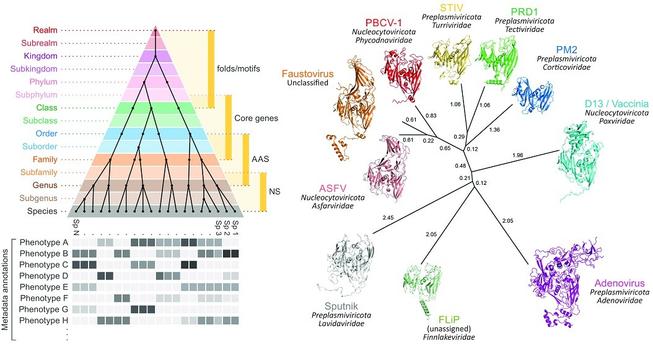

Transforming an existing phenotypic classification of viruses into one based on evolutionary relationships that can accommodate the vast number of viruses characterized in metagenomics and environmental studies is an ongoing challenge. This Consensus View explains how such a taxonomy can be expanded to encapsulate viral diversity and to recognize independent biological origins of different virus groups.
 Tommi Mäklin
 Small Things Considered
 Anne Carpenter
 Sean Gibbons
 Nonia Pariente