
---
RT @davidhughjones
A little #rstats package to add a magnified inset to a #ggplot2 graph https://github.com/hughjonesd/ggmagnify
https://twitter.com/davidhughjones/status/1651230244555161601
Fascinated by small scales 🧬, large scales 🪐 and all things #data in between.
I explore #opendata using #opensource tools, such as #Rstats and #python.
#datascience #datavis #dataviz #opensource #fedi22 #openscience #science #astronomy #sciencecommunication #scicomm
| blog | https://jollydata.blog |
| github | https://github.com/nucleic-acid |
| genetics | https://genomic.social/@basepair |
I told a joke on a Zoom Meeting and no-one laughed.
It turns out I'm not remotely funny.
Memes und Narrative extrem rechter Gruppen schaffen es immer wieder in die Mitte der Gesellschaft. Leben wir in einem Zeitalter der Massenradikalisierung? Egal ob beim Thema Migration, Gleichberechtigung oder Klimaschutz – der Ton in vielen Ländern wird zunehmend rauher. In den USA bekennen sich einige Abgeordnete der Republikaner offen zu QAnon. Und in zahlreichen Ländern greifen konservative Politiker antifeministische Parolen auf, die ursprünglich aus radikal frauenfeindlichen Incel-Communities stammen. Dass Memes und Narrative aus Subkulturen der extremen Rechten es immer wieder bis in den Mainstream schaffen, ist unübersehbar. Doch warum ist das so? Julia Ebner forscht an der Oxford University und am Instutute for Stategic Dialogue in London. Im Rahmen der Recherche für ihre Bücher “Radikalisierungsmaschinen” und “Massenradikalisierung” hat sie sich in zahlreiche toxische Gruppen eingeschlichen, um ihr Innenleben zu erkunden. In dieser Folge spreche ich mit ihr über die Erfahrungen, die sie dort gemacht hat. Diesen Podcast unterstützen IBAN: DE84100500001066335547 BIC: BELADEBEXXX (Katharina Nocun) Paypal: https://www.paypal.me/kattascha Dauerauftrag einrichten über Steady: https://steadyhq.com/de/kattascha Ihr könnt meine Arbeit auch unterstützen, indem ihr das neue Buch kauft! Pia Lamberty & Katharina Nocun: Gefählicher Glaube. Die radikale Gedankenwelt der Esoterik: https://www.genialokal.de/Produkt/Katharina-Nocun-Pia-Lamberty/Gefaehrlicher-Glaube_lid_44730169.html
People choose to adopt or read a textbook because (a) it's on a topic of interest and (b) they trust the author(s) to have curated and synthesized info into a single representation (the textbook). Now, imagine this: subscribing to a curated, synthesized, online source where the author is actively, frequently updating their curation and synthesis based on new evidence. Would you pay for that? Would you adopt it (perhaps a cheaper, time-limited version) for a course?
Shuts down laptop: I think that’s enough internet for today.
Picks up phone: Let’s see what the pocket-sized internet is doing.
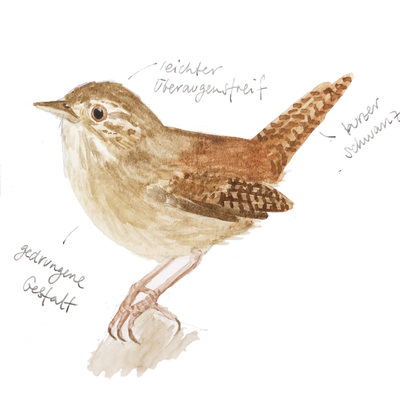
Hello Mastodon art people! I’m Julia, an illustrator and naturalist from Germany. I’ve quit all social media a few years ago because addictive algorithms, ads, infinite scrolling and tracking surveillance were killing my creativity.
Mastodon is likely the last social media experiment I’ll try. Here are some birds for you, because although I’ve left Twitter, I love drawing birds.
Edit: Since this post, I've made my home here. :-)
dear #mastodon,
which timeline/feature do you tend to spend the most time on?
p.s. please consider boosting for a more meaningful sample size.

I came across a neat browser extension today. It looks for "rel=me" links pointing to mastodon profiles, and puts it in a little list for you to review.
In other words, you visit a website, and if tells you if there are any mastodon accounts associated to the website.