«Get ready for NaNoCon 2025!
** July 26, 2025 – all weekend **
We're a friendly secular event: A fun get-together of new connections, supportive experiences, great ideas, and good times!»
https://www.nanocon.rocks
A community of nontheists at MIT, organizing to defend secular governance and advance atheistic thought.
Affiliated with Secular Student Alliance and CFI On Campus
#atheism #secularism #humanism #activism #education #community #students #MIT
| Website | http://ssomit.mit.edu |
| Location | Cambridge, MA |
🗓 THU MAR/21 5:30PM: ⚛️💁📖🙋 Join us and WaPo columnist Kate Cohen, for a discussion of her new book on being an atheist in a theism-normative society, "We of Little Faith: Why I Stopped Pretending to Believe (and Maybe You Should Too)" with MIT's humanist chaplain Greg Epstein.
🆓 Free + refreshments, live + streamed, 📚 💳 onsite cashless book sale + 📖🖊️ book signing.
🔗 https://calendar.mit.edu/event/we_of_little_faith
#MIT #students #secular #atheist #religion #events #free #books #nonFiction #CambridgeMA #Boston #America
Kate Cohen, Washington Post columnist and author of "We of Little Faith: Why I Stopped Pretending to Believe (and Maybe You Should Too)", sits down with Greg Epstein, MIT humanist chaplain and author of "Good Without God", to discuss the challenges of being an atheist in a country that presumes everyone is a believer — and the risks and rewards of swimming against the tide. Join the conversation! WHEN: Thursday, 2024/MAR/21, 5:30pm ET WHERE: 35-325 (3rd Floor, 127 Massachusetts Ave, [ https://whereis.mit.edu/?go=35 ]) Sponsored by the Humanist Chaplaincy at Harvard and MIT. The event will be photographed, recorded, and streamed. Refreshments and social at 5:30pm. Discussion starts at 6pm, followed by audience Q&A and book signing. Copies of "We of Little Faith" will be available for cashless purchase from the MIT Press Bookstore at the event. Livestream: https://www.youtube.com/watch?v=MHB342_AI7g More about the Humanist Chaplaincy at Harvard and MIT: https://www.humanistchaplaincy.org/ About the author: Kate Cohen is a Washington Post contributing columnist and author of "We of Little Faith: Why I Stopped Pretending to Believe (And Maybe You Should Too)" ( https://mitpressbookstore.mit.edu/book/9781567927368 ). "We of Little Faith" chronicles Kate's journey from Reform Jew to outspoken atheist, her decision to raise her children as atheists, and her efforts to recognize and replace the benefits religion can bring. It also argues that nonbelievers should be more vocal, both to enjoy more honest lives and to help save America. For this work and for her columns inspecting America's outsized deference to religion, the Freedom from Religion Foundation recently honored her with its "Freethought Heroine" award. Kate is the author of two previous books. "The Neppi Modona Diaries: Reading Jewish Survival through My Italian Family" ( http://www.amazon.com/The-Neppi-Modona-Diaries-Survival/dp/0874517834/ ) tells the story of a Jewish family who went into hiding to survive the Nazi invasion, and explores Kate’s own perspective as a post-Holocaust, non-believing Jew at the end of the twentieth century. "A Walk Down the Aisle: Notes on a Modern Wedding" ( http://www.amazon.com/Walk-Down-Aisle-Modern-Wedding/dp/0393324125/ ) examines through personal essays the functionally outdated but still hard-to-resist American wedding ritual. She and her husband live on a farm in Albany, New York. Website with social media links: https://katecohen.net Washington Post column: https://www.washingtonpost.com/people/kate-cohen/ About the discussant: Greg M. Epstein serves as the humanist chaplain at Harvard University and at MIT, and as Convener for Ethical Life at the MIT Office of Religious, Spiritual, and Ethical Life. Greg has contributed, as speaker or organizer, to thousands of humanist and interfaith programs at Harvard and elsewhere. He recently served a term as president of the Harvard Chaplains, Harvard University’s corps of over forty chaplains. Described as a “godfather to the [humanist] movement” by The New York Times Magazine, his NYT-bestselling book, “Good Without God: What a Billion Nonreligious People Do Believe,” ( https://mitpressbookstore.mit.edu/book/9780061670121 ) remains influential years after its initial publication helped popularize the notion that the rapidly growing population of secular people can live lives of deep purpose, compassion, and connection. Greg’s 2018 move to join MIT alongside his work at Harvard, inspired an 18-month residency at leading Silicon Valley publication TechCrunch, exploring the ethics of technologies and companies shifting our definition of what it means to be human, often in troubling ways. His next book, "Tech Agnostic: How Technology Became the World’s Most Powerful Religion, and Why it Desperately Needs a Reformation," ( https://mitpress.mit.edu/book-deals-october-2021-edition/ ) will be published Fall '24 by MIT Press, distributed by Penguin Random House. His writing has also appeared in The Boston Globe, MIT Technology Review, CNN.com, The Washington Post, and Religion News Service. Link list: https://linktr.ee/gregmepstein Chaplain page: https://chaplains.harvard.edu/people/greg-epstein ------------------ Sign up for email event alerts at http://mailman.mit.edu/mailman/listinfo/ssomit-announce Website: ssomit.mit.edu Email: [email protected]
Join us to celebrate the 215th birthday of Charles Darwin, and the science and wonder of common ancestry through evolution by natural selection. This year, evolutionary biologist and zoologist Prof. Gonzalo Giribet will talk about how understanding the distribution of animals through space and time contributes to a better understanding of evolution and its consequences, and why the co-discovery of evolution by natural selection was only possible by exploring the world. An audience Q&A follows the talk. WHEN: Thursday, 2024/FEB/22, 6pm ET WHERE: 35-325 (3rd Floor, 127 Massachusetts Ave, https://whereis.mit.edu/?go=35 ) Darwin's birthday party with cake, snacks, and beverages follows the talk. Sponsored by the Greater Boston Humanists The event will be photographed, recorded, and streamed. Livestream: https://www.youtube.com/watch?v=LxQa-n02P4I More about Darwin Day: http://darwinday.org About our speaker: Dr Gonzalo Giribet is the Director of the Museum of Comparative Zoology, Alexander Agassiz Professor of Zoology in the Museum of Comparative Zoology, Curator of Invertebrates and Molluscs, and Professor in the Department of Organismic and Evolutionary Biology, at Harvard University. He graduated from the Universitat de Barcelona (concentrating in Zoology and Genetics) in 1993, where he also obtained his PhD in 1997, with one of the first PhD theses to use molecular phylogenetics in a zoology department. In 2000, he moved to Harvard as an Assistant Professor in the Department of Organismic and Evolutionary Biology, and Curator in Invertebrate Zoology, receiving tenure and becoming Full Professor in 2007. Dr Giribet has received multiple internal recognitions from Harvard, including his naming as Harvard College Professor from 2017–2022 (awarded every year to five professors across the university for their dedication to undergraduate education) Dr Giribet’s research focuses on the evolution and biogeography of invertebrate animals, focusing on arthropods and crustaceans, but spanning the entire animal tree of life, including empirical and theoretical work. His main goal is to understand how animal diversity originates and is maintained, using whatever technique is needed. His work is deeply grounded in organismal biology, having conducted field work in 40 countries, including all continents, including Antarctica, and has dived in all oceans, including the Arctic and Antarctic oceans. He has graduated 13 PhD students, many of whom now have their own research groups, and several MSc students. Dr Giribet has authored/co-authored more than 400 scientific articles, and two major invertebrate zoology textbooks. He currently serves as Editor-in-Chief of the journal Invertebrate Systematics and in the Editorial board of about ten journals. He has named 150 new taxa, including new species, genera and families of multiple invertebrate phyla. In recognition of his work, 11 new species and one genus, Giribetia, have been named after him. Dr Giribet’s passions are windsurfing and wildlife photography. ORCID: https://orcid.org/0000-0002-5467-8429 Google Scholar: https://scholar.google.com/citations?user=0OdjAAkAAAAJhl=en Lab website: https://giribetgroup.oeb.harvard.edu ------------------ Sign up for email event alerts at http://mailman.mit.edu/mailman/listinfo/ssomit-announce Website: ssomit.mit.edu Email: [email protected]
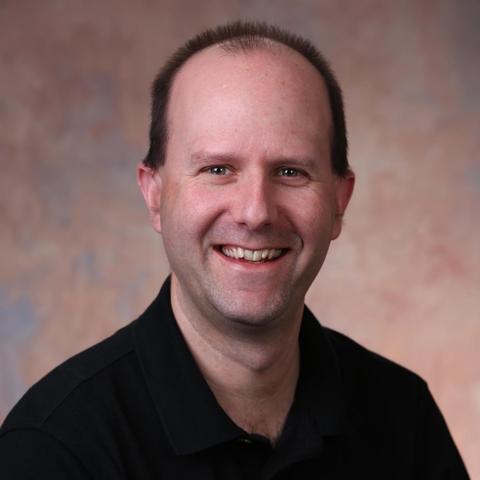
Probability theory is a branch of mathematics that deals with uncertainty, and how to reason about it. For Subject 12 our Course 0 series, in a talk titled "What Does Probability have to do with God? Exploring Bayesian Reasoning in Theological Problems", Dr Brian Blais will present a framework for rational inquiry based on probability theory. Dr Blais will explain the basic concepts and principles of probability, and how they can be applied to any domain of interest, including theology, the study of the nature of God and religious beliefs. He will explore some of the key theological concepts, such as belief, faith, miracles, and the existence of God, and how they can be analyzed using probability. He will also compare and contrast the scientific method with other ways of acquiring knowledge, such as revelation and intuition. His aim is to provide a clear and consistent way of thinking about these topics, and to reveal the hidden assumptions and implications of various theological arguments. Along the way, he will demonstrate some surprising and counterintuitive results that arise from probability theory, and how they can lead to errors in reasoning. WHEN: Wednesday, 2023/OCT/18, 6pm ET WHERE: 35-325 (3rd Floor, 127 Massachusetts Ave, https://whereis.mit.edu/?go=35 ) Free and open to the public. Presentation followed by audience Q&A. Free refreshments will be served after. The event will be photographed, recorded, and streamed. YouTube livestream: https://www.youtube.com/watch?v=zl9z-YbOg9E About our speaker: Dr Brian Blais is a professor of Science in the School for Health and Behavioral Sciences, Bryant University, Rhode Island. He has a PhD in Physics from Brown University, and for many years was a Visiting Professor in the Institute for Brain and Neural Systems, Brown University. His focus has been on computational and statistical methods applied to a wide range of fields such as the neuroscience of vision, paleoclimate, disease modeling, and most recently the textual properties of the New Testament. He has a personal interest in science education and maintains a blog at https://bblais.github.io where he explores the intersection of science and society, often dealing with issues in religious thought and pseudoscience. He is the author of the book "A Measure of Faith - Probability in Religious Thought". Speaker links: Website/Blog/Books/Links: https://bblais.github.io Twitter: https://twitter.com/bblais