Rhys Thomas White 🧬

103 Followers
37 Following
40 Posts
Scientist at the New Zealand Institute for Public Health and Forensic Science (PHF Science) in Aotearoa New Zealand 🇳🇿
I use #genomics to understand #evolution, diversity, and pathogenesis 🧬
Pineapple belongs on #pizza 🍍🍕
Twitterhttps://twitter.com/RhysTWhite
Google Scholarhttps://scholar.google.com/citations?user=NwdWAb4AAAAJ&hl=en
Websitehttps://www.phfscience.nz/staff-profiles/rhys-white/

Great news!
Our latest #OpenAccess paper has been published by @MicrobioSoc

📌Rapid identification and subsequent contextualization of an outbreak of methicillin-resistant Staphylococcus aureus in a neonatal intensive care unit using @nanopore sequencing
Link: https://doi.org/10.1099/mgen.0.001273

#Academia #AcademicChatter #PublicHealth

Rapid identification and subsequent contextualization of an outbreak of methicillin-resistant Staphylococcus aureus in a neonatal intensive care unit using nanopore sequencing

Outbreaks of methicillin-resistant Staphylococcus aureus (MRSA) are well described in the neonatal intensive care unit (NICU) setting. Genomics has revolutionized the investigation of such outbreaks; however, to date, this has largely been completed retrospectively and has typically relied on short-read platforms. In 2022, our laboratory established a prospective genomic surveillance system using Oxford Nanopore Technologies sequencing for rapid outbreak detection. Herein, using this system, we describe the detection and control of an outbreak of sequence-type (ST)97 MRSA in our NICU. The outbreak was identified 13 days after the first MRSA-positive culture and at a point where there were only two known cases. Ward screening rapidly defined the extent of the outbreak, with six other infants found to be colonized. There was minimal transmission once the outbreak had been detected and appropriate infection control measures had been instituted; only two further ST97 cases were detected, along with three unrelated non-ST97 MRSA cases. To contextualize the outbreak, core-genome single-nucleotide variants were identified for phylogenetic analysis after de novo assembly of nanopore data. Comparisons with global (n=45) and national surveillance (n=35) ST97 genomes revealed the stepwise evolution of methicillin resistance within this ST97 subset. A distinct cluster comprising nine of the ten ST97-IVa genomes from the NICU was identified, with strains from 2020 to 2022 national surveillance serving as outgroups to this cluster. One ST97-IVa genome presumed to be part of the outbreak formed an outgroup and was retrospectively excluded. A second phylogeny was created using Illumina sequencing, which considerably reduced the branch lengths of the NICU isolates on the phylogenetic tree. However, the overall tree topology and conclusions were unchanged, with the exception of the NICU outbreak cluster, where differences in branch lengths were observed. This analysis demonstrated the ability of a nanopore-only prospective genomic surveillance system to rapidly identify and contextualize an outbreak of MRSA in a NICU.
microbiologyresearch.org

Super proud of our latest #OpenAccess paper:

📌 Early identification of a ward-based outbreak of Clostridioides difficile using prospective multilocus sequence type-based Oxford Nanopore genomic surveillance | Infection Control & Hospital Epidemiology

Link: https://doi.org/10.1017/ice.2024.77

#Academia #AcademicChatter #PublicHealth

Early identification of a ward-based outbreak of Clostridioides difficile using prospective multilocus sequence type-based Oxford Nanopore genomic surveillance | Infection Control & Hospital Epidemiology | Cambridge Core

Early identification of a ward-based outbreak of Clostridioides difficile using prospective multilocus sequence type-based Oxford Nanopore genomic surveillance

Cambridge Core

It’s out! (despite surgeries, pandemic, floods, finishing the #PhD & relocating)… and it’s #OpenAccess

📌Genomic epidemiology reveals geographical clustering of multidrug-
resistant Escherichia coli ST131 associated with bacteraemia in Wales | Nature Communications

#Academia #AcademicChatter #PublicHealth

Link: https://doi.org/10.1038/s41467-024-45608-1

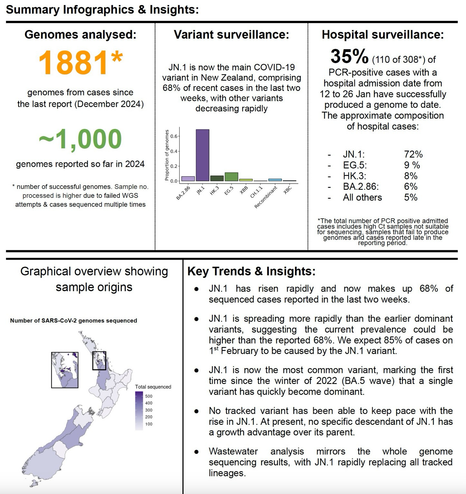
Latest #COVID19 update - featuring a 🟪Purple Reign🟪

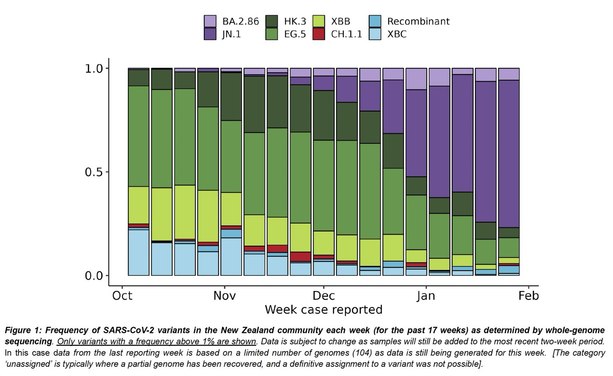
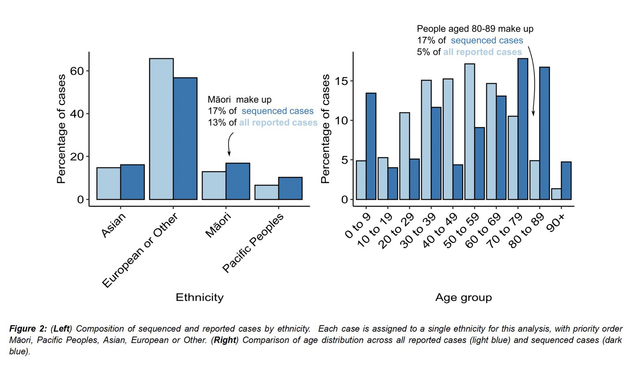
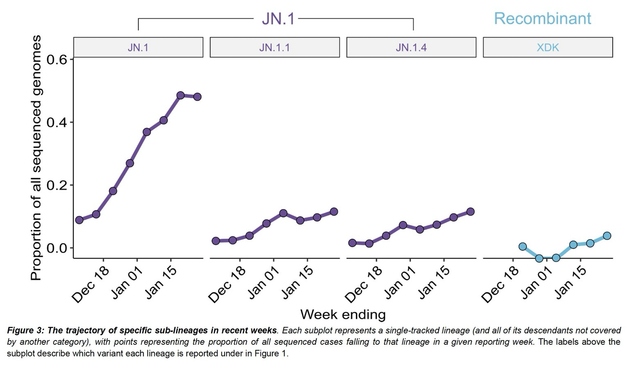
🌊 JN.1 now at 68% of recent cases, spreading faster
🏆 First time since winter 2022, a single variant dominates
🚽 #Wastewater analysis confirms a JN.1 takeover

See more: https://www.esr.cri.nz/our-expertise/covid-19-response/covid19-insights/

COVID-19 insights | ESR

Our new #OpenAccess paper just published in Microbial Genomics:

📌 Draft genomes of novel avian Chlamydia abortus strains from Australian Torresian crows (Corvus orru) shed light on possible reservoir hosts and evolutionary pathways | Microbiology Society

http://www.doi.org/10.1099/mgen.0.001134

Draft genomes of novel avian Chlamydia abortus strains from Australian Torresian crows (Corvus orru) shed light on possible reservoir hosts and evolutionary pathways

Chlamydia abortus, an obligate intracellular bacterium, is a major causative agent of reproductive loss in ruminants, with zoonotic potential. Though this pathogen is primarily known to infect livestock, recent studies have detected and isolated genetically distinct avian strains of C. abortus from wild birds globally. Before this study, only five avian C. abortus genomes were publicly available. Therefore, we performed culture-independent probe-based whole-genome sequencing on clinical swabs positive for avian C. abortus obtained from Australian Torresian crows (Corvus orru) in 2019 and 2020. We successfully obtained draft genomes for three avian C. abortus strains (C1, C2 and C3), each comprising draft chromosomes with lengths of 1 115 667, 1 120 231 and 1 082 115 bp, and associated 7 553 bp plasmids, with a genome completeness exceeding 92 %. Molecular characterization revealed that these three strains comprise a novel sequence type (ST333), whilst phylogenetic analyses placed all three strains in a cluster with other avian C. abortus genomes. Interestingly, these three strains share a distant genomic relation (2693 single nucleotide variants) with the reference strain 15-58d/44 (ST152), isolated from a Eurasian magpie (Pica pica) in Poland, highlighting the need for more publicly available genomes. Broad comparative analyses with other avian C. abortus genomes revealed that the three draft genomes contain conserved Chlamydia genomic features, including genes coding for type III secretion system and polymorphic membrane proteins, and potential virulence factors such as the large chlamydial cytotoxin, warranting further studies. This research provides the first avian C. abortus draft genomes from Australian birds, highlighting Torresian crows as novel reservoir hosts for these potential pathogens, and demonstrates a practical methodology for sequencing novel Chlamydia genomes without relying on traditional cell culture.

microbiologyresearch.org

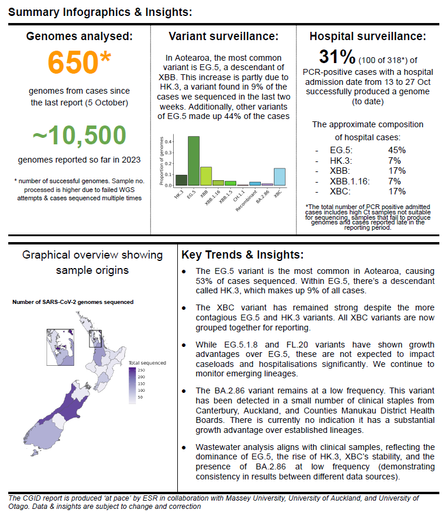
New #COVID19 update for Aotearoa New Zealand:

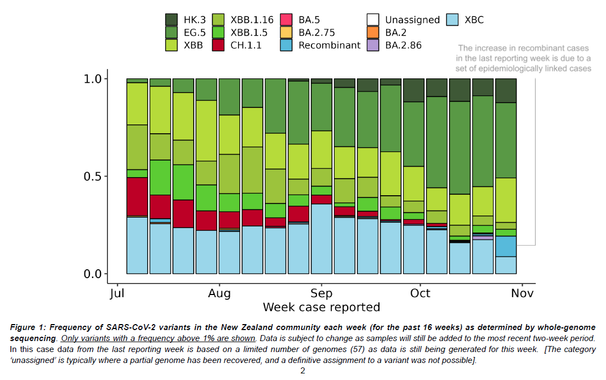
👉EG.5 is most common
👉XBC persists despite EG.5 & HK.3
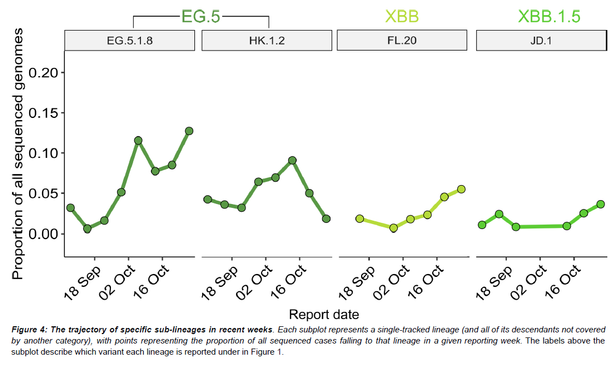
👉EG.5.1.8 & FL.20 growing but not alarming
👉Low frequency of BA.2.86
👉#Wastewater: EG.5 dominant, HK.3 rising, XBC stable, & BA.2.86 detected

See more: https://www.esr.cri.nz/our-expertise/covid-19-response/covid19-insights/

Tēnā koutou katoa & thanks to all who contribute to surveillance, incl. diagnostic teams & analysts who provide real-time info on variants as they establish here 👏Enjoy the weekend all!

COVID-19 insights | ESR

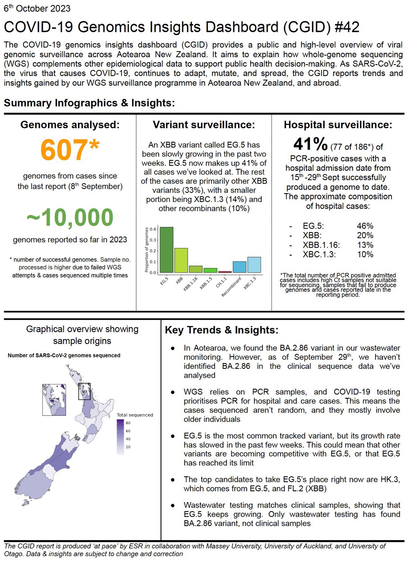
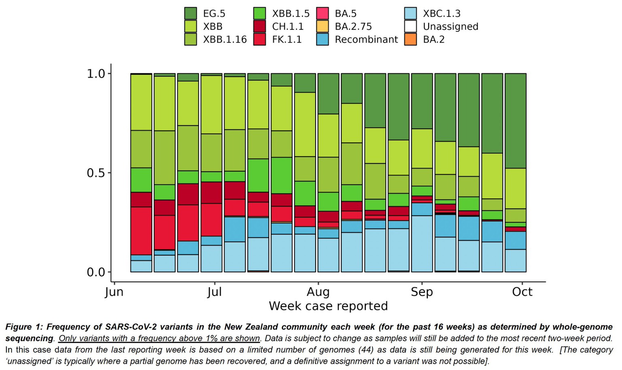
New #COVID19 update for Aotearoa New Zealand:
🧪BA.2.86 found in wastewater, not in clinical data as of Sept 29
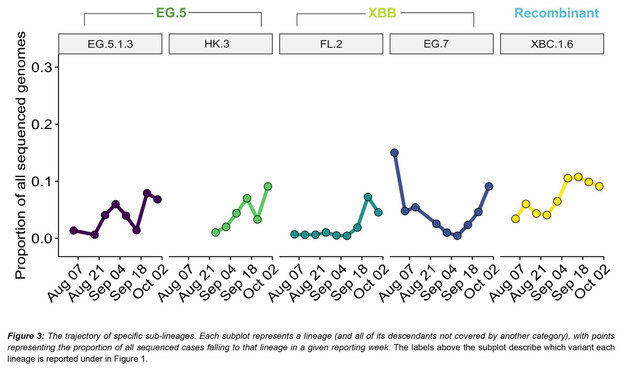
📈EG.5's growth has slowed, competition or saturation?
🔝Top contenders: HK.3 (EG.5) & FL.2 (XBB)
🚰#Wastewater confirms EG.5 growth

See more: https://www.esr.cri.nz/our-expertise/covid-19-response/covid19-insights/

COVID-19 insights | ESR

📢New paper out now!

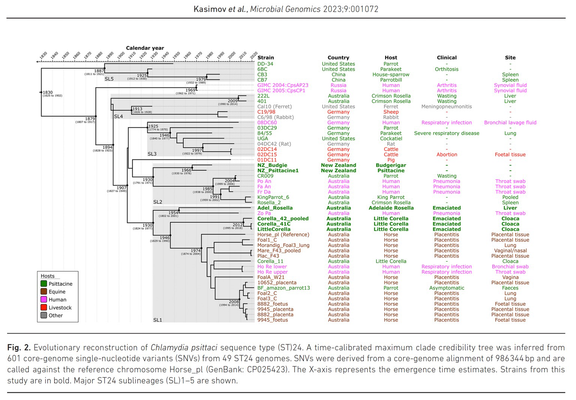
📌Whole-genome sequencing of Chlamydia psittaci from Australasian avian hosts: A genomics approach to a pathogen that still ruffles feathers | @microbiosoc #MGen #OpenAccess

Evolutionary timelines show ST24 in Australian #parrots shared an ancestor w/ C. psittaci that caused horse infections in Australia (at least 77 years ago). The two C. psittaci genomes found in New Zealand parrots (1979 & 1984) are genetically distinct

https://doi.org/10.1099/mgen.0.001072

Whole-genome sequencing of Chlamydia psittaci from Australasian avian hosts: A genomics approach to a pathogen that still ruffles feathers

Chlamydia psittaci is a globally distributed veterinary pathogen with zoonotic potential. Although C. psittaci infections have been reported in various hosts, isolation and culture of Chlamydia is challenging, hampering efforts to produce contemporary global C. psittaci genomes. This is particularly evident in the lack of avian C. psittaci genomes from Australia and New Zealand. In this study, we used culture-independent probe-based whole-genome sequencing to expand the global C. psittaci genome catalogue. Here, we provide new C. psittaci genomes from two pigeons, six psittacines, and novel hosts such as the Australian bustard (Ardeotis australis) and sooty shearwater (Ardenna grisea) from Australia and New Zealand. We also evaluated C. psittaci genetic diversity using multilocus sequence typing (MLST) and major outer membrane protein (ompA) genotyping on additional C. psittaci -positive samples from various captive avian hosts and field isolates from Australasia. We showed that the first C. psittaci genomes sequenced from New Zealand parrots and pigeons belong to the clonal sequence type (ST)24 and diverse ‘pigeon-type’ ST27 clade, respectively. Australian parrot-derived strains also clustered in the ST24 group, whereas the novel ST332 strain from the Australian bustard clustered in a genetically diverse clade of strains from a fulmar, parrot, and livestock. MLST and ompA genotyping revealed ST24/ompA genotype A in wild and captive parrots and a sooty shearwater, whilst ‘pigeon-types’ (ST27/35 and ompA genotypes B/E) were found in pigeons and other atypical hosts, such as captive parrots, a little blue penguin/Kororā (Eudyptula minor) and a zebra finch (Taeniopygia guttata castanotis) from Australia and New Zealand. This study provides new insights into the global phylogenomic diversity of C. psittaci and further demonstrates the multi-host generalist capacity of this pathogen.

microbiologyresearch.org

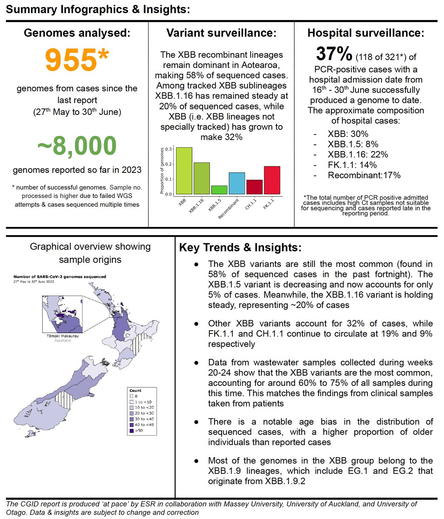
New #COVID update in Aotearoa New Zealand
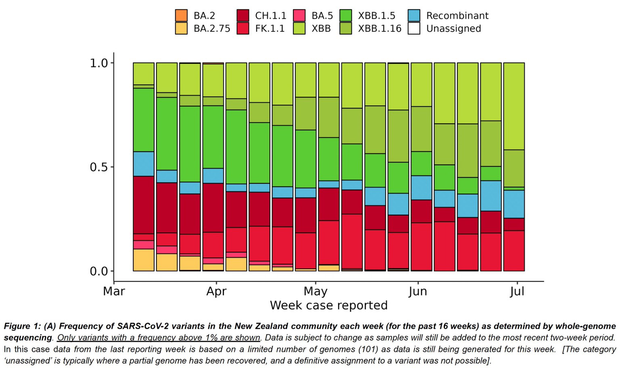
👉XBB variants dominate (58% of sequenced cases)
👉XBB.1.5 decreases to 5%
👉XBB.1.16 holds at 20%
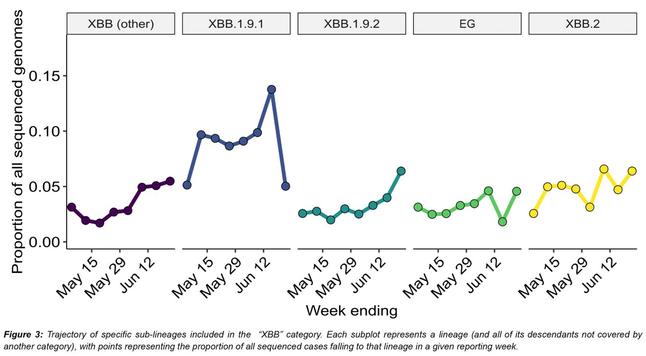
👉Other XBB variants at 32%
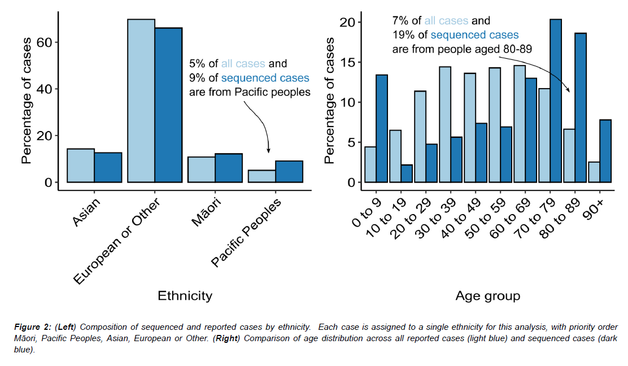
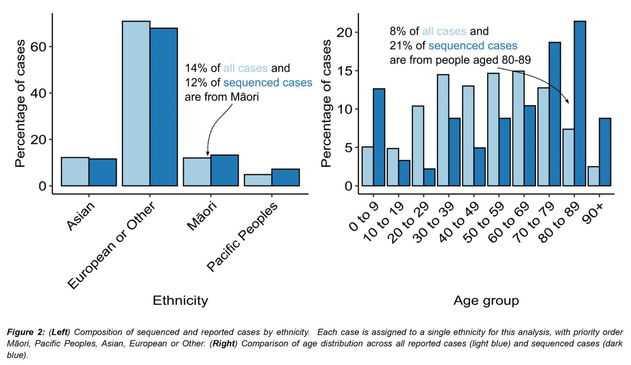
👉Age bias is seen in #COVID19 genome sequencing
👉XBB.1.9 lineages are common

Tēnā koutou katoa & thanks to all involved in #Covid_19 monitoring efforts, incl. diagnostic teams & analysts who provide real-time information on variants 👏

See more https://www.esr.cri.nz/our-expertise/covid-19-response/covid19-insights/

COVID-19 insights | ESR

Happy #WorldParrotDay!🦜 Parrots carry #zoonotic pathogens like Chlamydia psittaci. We identified a strain in a pet #parrot, highlighting transmission routes & health risks. Let's celebrate these birds while raising #HealthAwareness about #ZoonoticDiseases

https://doi.org/10.1016/j.vetmic.2023.109704