
@CindyG

58 Followers
370 Following
692 Posts

Program manager + systems thinker + visual thinker. Service design modelling for better team workflows and customer outcomes.

Curious analyst by nature. Humanist at heart. Sketchnote nerd.

Interests: #servicedesign #customerexperience #employeeexperience #businessdesign #organizationaldesign #digitalanthropology #ethnography #changemanagement #informationarchitecture #businesstransformation #digitaltransformation #environment

Birdsite@CEMbizanalyst

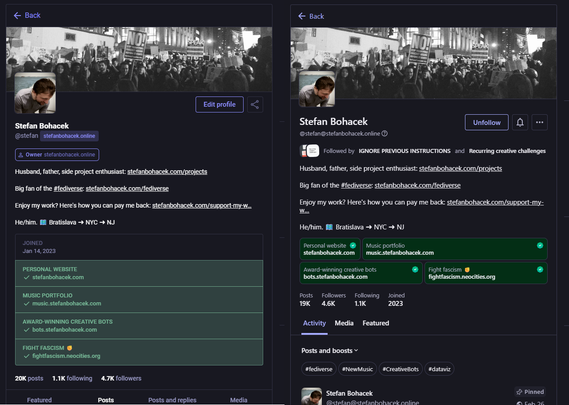
Side by side comparison. I particularly like the more compact design of custom fields.

#mastodon #fediverse #design #UXUI

Coming soon in Mastodon 4.6 - a redesigned profile page. We've used community feedback and surveys to inform these updates. In our latest blog post, @imanijoy explains our design thinking and choices. Here are a few highlights 🧵

https://blog.joinmastodon.org/2026/03/a-redesign-for-profiles/

A Redesign for Profiles

Sharing the design thinking for the new look coming to profile pages.

Mastodon Blog

Services don't happen at touchpoints. They happen over time.

The post-office visit isn't the service. Getting the parcel on time is. The GP appointment isn't the service. Feeling better is.

Most service design work focuses on the interaction. But the user's experience extends far beyond the moment of contact.

They arrive with a history. They leave with expectations.

Where does your service actually start?

#ServiceDesign #JourneyMapping #PublicSector

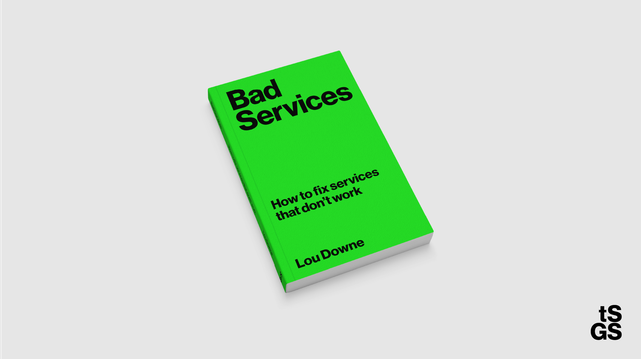
Lou Downe is coming out with a sequel to the excellent Good Services book, Bad Services: How to Fix Services That Don't Work.

#ServiceDesign #design

https://good.services/writing/introducingbadservices

Introducing Bad Services — Good Services

Every year we spend 15 billion hours in the UK ‘administering our personal lives. The sequel to the bestselling book Good Services, Bad Services untangles why organisations struggle to deliver services that work and what we can do about it

Good Services

"Despite the apparent emotional sophistication of these technologies, fundamental limitations have emerged. At first, users may be drawn into a relationship with an AI companion because they feel validated. But, over time, people consistently perceive human empathy as more emotionally satisfying and supportive. Is the ‘empathy gap’ why we fall out of love with AI?"

https://psyche.co/ideas/why-were-falling-out-of-love-with-our-ai-confidants

Why we’re falling out of love with our AI confidants | Psyche Ideas

Chatbots make us feel uniquely seen and heard, but then the ‘empathy gap’ kicks in and the relationship turns sour

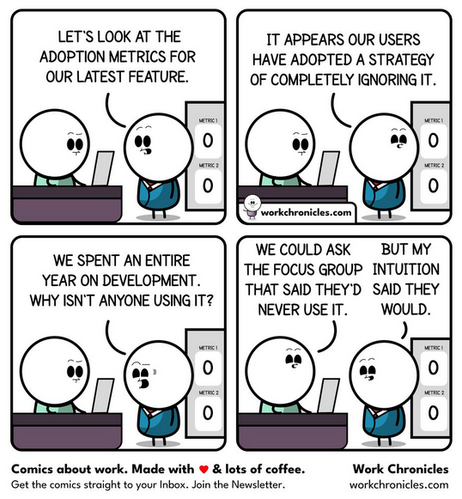
Technically impressive. Practically useless.
#webcomics #comics

RE: https://mastodon.social/@zackwhittaker/116092191816673310

“The bug, first reported by Bleeping Computer, allowed Copilot Chat to read and outline the contents of emails since January, even if customers had data loss prevention policies to prevent ingesting their sensitive information into Microsoft’s large language model.”

By Work Chronicles, @workchronicles
mastodon

Data vs. Intuition:

The real skill is: finding the natural joints of an activity.

Great designers cut at the natural joints of human intention.

Not at database boundaries.

Not at engineering modules.
Not at org charts.

Not at feature lists.

But at places where the human mind naturally says: “Yes… this is the next thing.”

When that happens, the interface facilitates a memorable flow for an activity

“But as we dug deeper, the real problem emerged: no one on the team could explain why certain design decisions had been made or how different parts of the system were supposed to work together. The code might have been messy, but the bigger issue was that the theory of the system, their shared understanding, had fragmented or disappeared entirely. They had accumulated cognitive debt faster than technical debt, and it paralyzed them.”

— Margaret Storey

https://margaretstorey.com/blog/2026/02/09/cognitive-debt/

How Generative and Agentic AI Shift Concern from Technical Debt to Cognitive Debt

The term technical debt is often used to refer to the accumulation of design or implementation choices that later make the software harder and more costly to understand, modify, or extend over time...

Margaret-Anne Storey