 Ruth — of systems & design
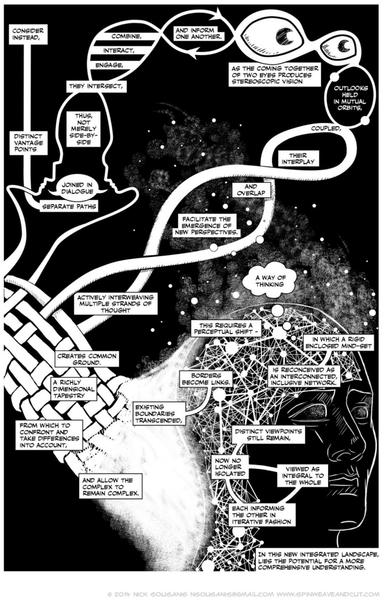
One of the things we think of as a downside of human interaction (disagreement, friction, the work it takes to understand and resolve, or not…) is also upside. Where power isn’t distorting too much, one person’s views aren’t being centered. There’s the need to get ideas (about the problem, and how to approach it) expressed in a way that conveys, which yields discovery & interwoven perspectives (across views — both in the sense of views of the system eg in sketches and models, and persons’ views)
And while we can do some of this prompting into view with genai, there’s something we might value and appreciate in the human interaction (in design and other settings). And notice too, when we give up too much of our own attention, when responsibility is handed off…
Tools change the worlds around them. Good to be somewhat intentional and heads up about what we lose, too…
Image: a page of Unflattening, by Nick Sousanis
 CindyG
 Sven Kloppenburg