@thejessiekirk @nixCraft
Very basic, incomplete, probably contains misunderstandings:
The stock market is slot machines. Put money in, if you're lucky, more money comes out. A company becomes part of the stock market by doing an IPO, or "initial public offering". At that point, the company sets the price of their shares, but after that, the slot machine decides. Before the IPO, the company is owned by the founders and any investors (including VC or venture capital).
The IPO is when the founders and investors get rich, so ideally they will want the share price to be as high as possible. But the higher they set it, the more likely it is to go down, and thus fewer people will buy the shares, making it go down more.
In this case, they think the hype is so high that they can get away with selling the shares at $135, even though the price is expected to drop to $40. Any sucker who gambles on these shares is almost guaranteed to lose big time.
Then there is some shares that are stable. They barely go up or down. People don't buy them to gamble, because there is nothing to win. However, they are stable because the company they represent generates a steady income. So retirement fund managers invest in those. They are not there to gamble, they are interested in a stable income.
Unfortunately, rich people are often good friends, and certain billionaires have been able to convince the people who manages the list of stable, safe investments to add their companies to these lists before they've even reached their post-IPO level. Meaning that the retirement funds would buy into them by default at $135 before they reach the expected $40, meaning peoples 401k would lose ⅔ of whatever money gets invested in this scam.
Thankfully, people have been able to get the attention of some of the big retirement funds, and they have told the people managing the lists of stable companies that if they try to pull this scam, the retirement funds will no longer use the lists, making the lists worthless.
 wildfire
 nixCraft 🐧
 Ojocle Olonam
 maya_b 🇨🇦
 Ray McCarthy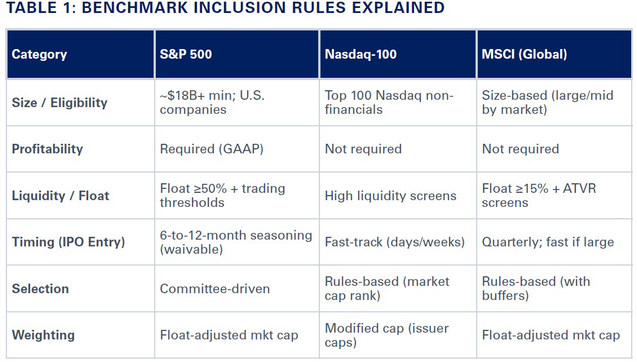
 PiTau
PiTau Toni Aittoniemi
 Oliver Schafeld
 Urzl
Urzl DeManiak 🇿🇦 🐧-The Stinkening
 jonoleth
 Deborah Preuss, pcc
 Randall Lee
 The Doctor
 Angie
Angie Russell
 Jessie Kirk
 MyYeeHaa
 Leeloo
 piebob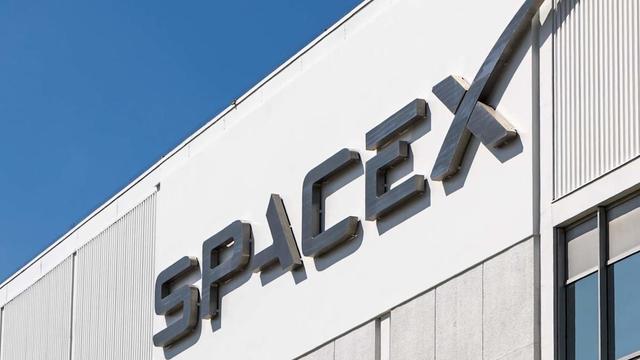
 ArneBab
 Joanie with the Good Hair 😷
 jcriecke
 Kinene⭐🐻
 Gerard Cunningham ✒️
 Okuna
Okuna benjamin melançon
 2k115
2k115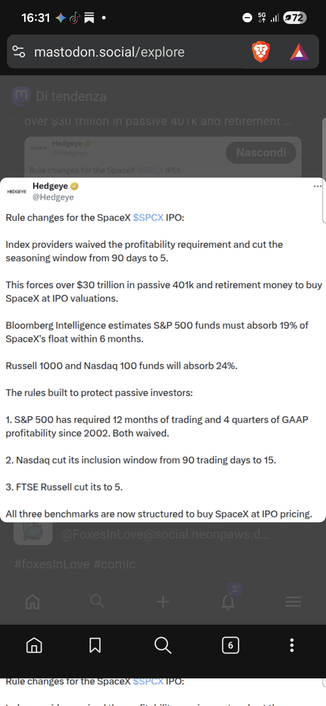
 Ed
Ed mark
mark Zhi Zhu 🕸️
 🆘Bill Cole 🇺🇦
 RealGene ☣️
 M Eilo