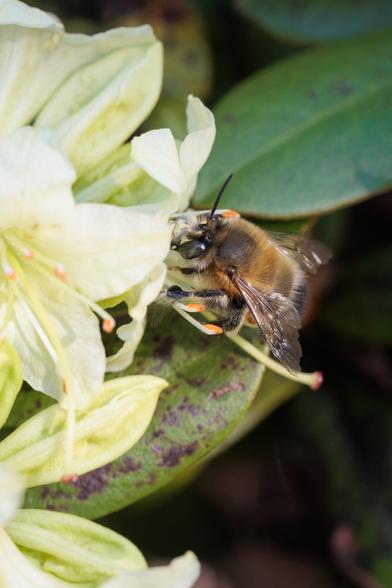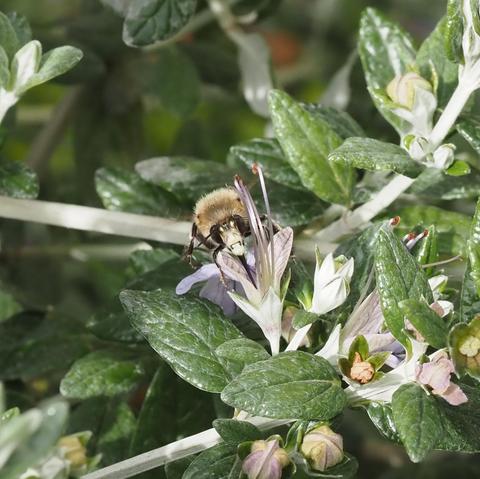
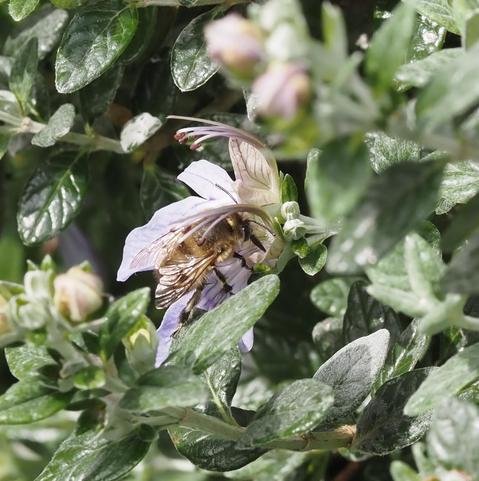
These move around rapidly, so this was a lucky shot. It is a male Hairy-footed Flower Bee (Anthophora plumipes). Here you can clearly see the hair on its legs and the very long snout. It is drinking nectar from Teucrium in my garden. For that it needs a long tongue, as the flower is tubular. The photo also shows the mechanism for dangling pollen, so that it brushes onto the hairs on the back of the bee.

#insects #solitarybees #bees

@lionelb The whole photo is like a swirling dance - something William Morris might have drawn.

Did you see the linked one, 3d ago? Super detail of the hairy feet!

https://pixelfed.hylobatidae.org/p/coprolite9000/947081757933556290

Coprolite9000 - Pixelfed (@[email protected])

From yesterday - a fantastically named Hairy-footed Flower Bee, Anthophora plumipes. (Look at the really long hairs on the lower parts of his front legs!) https://www.naturespot.org/species/hairy-footed-flower-bee #Derbyshire #insects #bees #macrophotography

Pixelfed

@wavesculptor

They are fabulous things. The females are a bit larger and jet black. They look like an entirely different species.

A bonus showing a face.

@lionelb 💚💚 -- also noticed that the iNat photos more local to me seem to show shorter, wider, rounder less hairy-bodied Hairy-footed's. Is the Germander prefered by them more than domesticated and other wild bees?

Lot of wild bees here, but often too fast in difficult terrain for my eyes to get a possible id, never mind a photo! Very pleased to recognise and hear the very loud Carder Bees on their regular flowers recently.

@wavesculptor

On the Germander, anything else is unusual but if it is sunny the Hairy-footed are a constant presence. I am sustaining hundreds of them.

They dominate on comfrey nearby too. Buff-tailed bumblebee is also present on both but in much smaller numbers.