OK, I've been silent for a while because ... research. My wife's gonna kill me if I write another book, but I realized she's not on Mastodon, so let's keep this our little secret, eh? My question: does the following make your socks roll up and down or is it a yawnfest?

I was comparing AI job displacement to the Enclosures—English commons privatized, millions of workers displaced. Seemed like a tidy historical parallel. Unfortunately, I kept reading. And reading. And reading. 1/8

The parallel was too tidy. The pattern went much further back.

I started with a simple question: why does wealth extraction feel so relentless right now? Gig work, algorithmic rent-seeking, AI displacing workers while stock prices soar. My assumption was that capitalism was broken and I was wondering what "post-capitalism" would look like. But now I think I was wrong about capitalism. 2/8

I was starting from a position of "knowing" the truth and trying to justify it rather than discovering the truth.

The deeper I dug, the more uncomfortable the evidence became. Sumerian temple economies centralized grain surpluses, then extracted labor from dependent populations. Athens ran on slave-worked silver mines. Rome displaced small farmers, creating a landless class pacified with bread and circuses (the "lazy Romans demanding handouts" trope is grade-A bullshit). 3/8

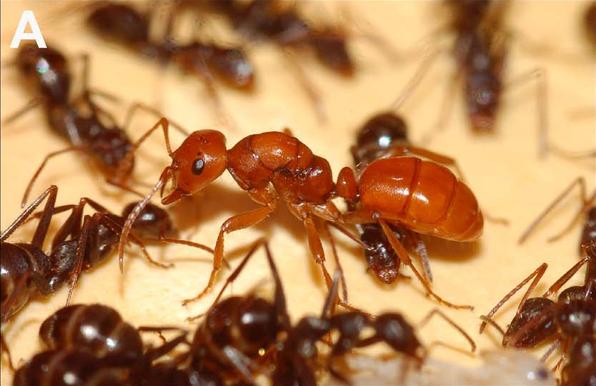
If you really want to go down the rabbit hole, the 2000-year-old Chinese dynastic cycle covers this with the "Mandate of Heaven." We can also document this behavior in ants, hyenas, birds, and other creatures: if you can get away with it, it takes less energy to steal than to create.

The pattern keeps repeating: gain leverage over something people need, then extract. It doesn't matter whether the leverage is grain, land, trade routes, or algorithmic lock-in. 4/8

Ibn Khaldun documented this cycle in the 14th century. Acemoglu and Robinson formalized it as "extractive institutions" (and won a Nobel prize for it). It's not new.

And then I started thinking about @pluralistic's enshittification framework: attract users, lock them in, extract value. That's not a description of platform capitalism. That's a description of Ur. Of Athens. Of Rome. Of the East India Company. Same pattern, different API.

This isn't a "capitalism is bad" argument. 5/8

Wealth extraction is a recurring institutional failure mode that predates capitalism by millennia. Hell, it looks like it predates humanity. Capitalism is just the current operating system running old malware. (And I have a neat chapter show how both Libertarianism and Communism make the same error in their "fix" for our woes).

This matters because if enshittification is only a capitalism problem, replacing capitalism fixes it. 6/8

But that doesn't work because it's a deeper institutional pattern and we need structural mechanisms which understand this. Solutions must assume the extraction will come back, because it always has.

AI is the next great extraction engine. We can see it coming because this has been happening for thousands of years. The working title is Bread, Circuses, and GPUs. I thought about naming it "4,000 Years of Enshittification," but that felt too opportunistic. 7/8

And Leïla, if you're reading this: I owe you flowers. Lots and lots of flowers. 8/8

I should point out that the structure of the book is:

1. Prove the thesis
2. Show why we keep allowing this
3. How do we prevent it?

9/8

@urlyman Thank you. Trying to figure out the "fix" for the issue. I think about writing tests for software. Most (not all) devs recognize the importance, but they get lazy. But it's been continued awareness of the issue that makes this practice more common.

For extraction, we need continuous awareness. An education campaign. How would it happen? And we have entrenched powers who will fight against it every step of the way. We need to make awareness and prevention core values.

@ovid at the macro level, I think what probably plays out is that the unaffordability of fossil fuels accelerates and that drastically changes the affordability of everything including compute. And that changes behaviour.

We all have to choose how to respond to that awareness when it arises. What purpose to import into a life lived in overshoot

@ovid

I think a big problem is the combination of a few factors. People tend to assume that whatever the state of the world is when they grow up is normal so don't ask the questions like "Why does my landlord get rent?".
The tendancy to think that when a fight is won it won't be needed to be fought again. Which leads to people forgetting that the rights we have (like weekends) were not given freely but fought for
Fighting is hard and takes energy.

@scimon Yup. That's a key problem. If it was easy, this problem would not have persisted for thousands of years. :(

@ovid @urlyman One only has to read Plato's Republic to see this long history. Yes I have noticed this cycle as well and yes it has a long history it precedes Greek and Romans..

"These brothers and sisters have different natures, and some of them God framed to rule, whom he fashioned of gold; others he made of silver, to be auxiliaries;
others again to be husbandmen and craftsmen, and these were formed by him of brass and iron."

Little section from Ewen *a social history of spin*
"First throughout the interview, Bernays expressed an unabashedly hierarchical view of society. Repeatedly he maintained that although most people respond to their world instinctively, without thought,
there exist an "intelligent few" who have been charged with the responsibility of contemplating and influencing the tide of history."

'awareness' 'Education' is anathema to these so-called 'elite'. One can also see this throughout history.

@ovid @urlyman interesting reading!

I feel like part of the solution is education. Make sure people can and do understand things so they don't vote against their interests.

@deliverator @urlyman I'm convinced that part of the solution is education, but let's consider the extremes.

Being a slave is the worst kind of extraction (barring cannibalism), but even though people *know* it's wrong, it's still relatively common, even today.

Overcoming the obstacle of education is part of the solution, but solving the problem of people knowing that something is wrong and therefore not doing it is something that can be minimized, but not "solved."

What Is Rent Seeking in Economics, and What Are Some Examples?

Rent seeking is defined as any practice in which an entity aims to increase its wealth without making any contribution to the wealth or benefit of society

Investopedia

@KerryMitchell @urlyman I replied to you earlier, but deleted those replies. I realized that you're hitting an important topic, but a Mastodon post isn't the right place to do it justice. The short version: rent-seeking describes extraction through economic and institutional channels, but the pattern I'm tracing predates economics entirely. Cuckoo birds don't seek rent, even if they do extract.

It deserves a proper chapter, not a thread. So thank you. You've given me homework.

@ovid @urlyman Ants are possibly the most successful creatures on earth and are, to push it in an anthropomorphic direction, pro-social builders: https://geneticliteracyproject.org/2022/11/22/ants-the-worlds-most-successful-species/ Maybe the development of extraction is inevitable, but it doesn't seem to be optimal all the time. Predators and parasites are dependent on their prey/hosts. Cliques that are exploitive run the risk of the guillotine or Chairman Mao... and short of revolutions, there are more modest reforms that can also keep them in check.

@KerryMitchell @urlyman Curiously, one of the first non-human extractive species I identified was ants: https://en.wikipedia.org/wiki/Slave-making_ant

Turns out that even for "pro-social" species, extraction is inevitable (and slavery is perhaps the worst form of extraction).

Slave-making ant - Wikipedia

@ovid yep, hence my link above to Lisi Krall

@KerryMitchell

@ovid @urlyman That’s interesting-not a common behaviour, but it evolves repeatedly and follows Emery's rule: Social parasites are often closely related to their host species. They’re like little 18th century Scotsmen; lairds and their clans.

@ovid

Where can i preorder ?

@Aedius I've a good outline and have started to write some of it, but I need to do much more research to ensure my citations are correct. I've also found out that most writing tools to cover this are rubbish. On top of that, my workload is ... heavy. So I've no idea when :)

@ovid @Aedius You’ve probably checked it out already, but just in case, my understanding is that Scrivener is good for this sort of thing?

Also:

@skington @Aedius Scriver is great, but it's mired in 2005 aesthetics, is hard to learn, and when you have to track tons of citations, you need a separate citation manager and a complicated workflow.

And tomorrow is Easter here in France. She's going to get a HUGE bouquet of flowers :)

@ovid
"Allowing this" implies that there is a choice made, that you intend to make a victim-blaming, "stop hitting yourself" argument.
@pteryx That's a fair point and I should keep it in mind while I build up my arguments. You could argue for some victim blaming, but 4000+ years worth? I don't think so.
@pteryx (dropping this point in my notes now. Thank you!)

@ovid as an anarchist, I think this jives with my instinct to blame hierarchies for these problems and oppose capitalism as one hierarchical system among others. I'm not actually that well-read on theory but it shouldn't be hard to find anarchist theorists who have thought through the issue in this way; David Graeber and Kropotkin come to mind as likely scholars to look at.

As for the solution, I think many can agree it requires a change to "human nature" but of those many are pessimistic about that being impossible. I don't share that pessimism. I think that human "nature" is in fact quite malleable over long or sometimes even short time-scales. To me, there are a few key ingredients in human nature required to avoid *a lot* of these problems (surely there would be other problems; I'm not envisioning this as a recipe for utopia):

1. Baseline unwillingness to obey orders from another. Obedience seen as disgusting and/or vaguely disquieting. This makes the task of the random antisocial jerk who wants to be a warlord nearly impossible.
2. Awareness of the risks of hierarchy, and an understanding of how to undermine it. This allows a non-global anarchist society to defeat a hierarchical threat by converting the individuals in the threatening group to their beliefs, ideally in part made easy by materially providing for the needs that the hierarchical society is withholding in order to cement control, and by demonstrating how much more enjoyable a life of free association is.
3. An instinctive impulse to provide for strangers and help one another. This one is already very much present in the current day, just brutally suppressed by states. The fact that it continues to bloom through the cracks of our modern order gives me a lot of hope.
4. That's it, mostly. I think one could argue that another necessary ingredient is some tendency towards spontaneous higher-order organization in order to actually get the work done necessary to feed everyone without hierarchies involved, but I see this as a minor detail.

Of course, *how* to change human nature to get this mix, at sufficient scale, and whether that could happen before hierarchies drive us to extinction is the much harder question.

In any case, as an anarchist I'm not dogmatic about this recipe. Others might have their own ideas about what could succeed, and as long as we don't extinct ourselves (very real possibility on multiple fronts) over millennia I think evolutionary processes at the societal level should produce *something* with longer-term stability than a few measly tens of thousands of years. We do still have existing present-day societies in small corners of the world that have been stable that long, in fact, and they may well simply outlive the present chaos and continue on past it. What I will argue against as an anarchist is pure pessimism. If you don't like my formula, by all means point out specific flaws or advocate for your own, or even day "I don't like that but I'm not sure what you do." Just don't say "That's unrealistic and couldn't possibly succeed, so we must continue with the status quo as the only option," because that means either we have incompatible definitions of "succeed" or you're arguing against any attempts towards changing a failing system because those attempts might fail, which is silly. (Of course, arguing that the failure modes of attempted change could be worse than the failure modes of continuing as is, but that's not a very solid-looking argument right now.)

@tiotasram I like the ideas, but anarchism doesn't seem (to me) to have a good answer to the "Warlord Problem." Take away institutions and, over time, someone rises up to claim power. History is VERY CLEAR about this. That "someone" will then start extracting. I don't know of any counter-arguments to this.

Humans as bastards and if we don't have inclusive, resilient, anti-extractive institutions, a handful win at the expense of the masses.

@ovid if you're stuck on the "humans are bastards" (for which I admit there seems to be ample evidence), I can see why that train of thought occurs. That's why my answer is "just change humans do they're not bastards."

As it turns out, "Humans are bastards and as long as we have any hierarchical institutions bastards will end up in control of them and use them as leverage to oppress and extract more efficiently" also has a mountain of historical evidence behind it. In the "let's just build better institutions" camp you'll also need to come up with a way to change human nature. Thankfully there's good evidence that human nature is extremely malleable in the long run at least.

I honestly wish I could bring myself to believe in the utopian dream of anti-extractive institutions, but I don't think I have that in me any more.

The Tyranny of Structurelessness - Wikipedia

@Configures @ovid that was an interesting read, but makes some big assumptions. In general I think the simplest reason this doesn't compel me to embrace hierarchical structures is that formal structures and even delegation of power need not involve hierarchy (the principles expressed in the last section are ones I mostly agree with).

As just one example: if I delegate decision-making power to a representative, as long as I retain the right to revoke that delegation, and I'm free to chose any delegate I want or choose not to delegate at all, then there's no hierarchy that the chosen representative can use to exploit me. They could temporarily betray my trust and make some decision that isn't in my interests, and it would have been my mistake to delegate to an untrustworthy person. But they wouldn't be able to then continue to make decisions counter to my interests since I'd simply withdraw my delegation.

I'll readily concede the need for non-hierarchical organizational structures and structure in general, I just think that structures which create/operate as hierarchies (including the informal structures Freeman is describing here) are incompatible with solving the problem this thread is about, because sooner or later, you'll get self-interested people in charge (or external self-interested people will use their power to take charge).

To (re-)address the previous post, states have a terrible track record with "the warlord problem" since they *are* the warlords.

@ovid

This is all interesting but I'm more concerned that you're hiding things from your spouse.

@Geojoek And you see? That's how the elites win. These trivial details distract us from the important ones 🫠

Seriously, she knows I love to write. She'll probably roll her eyes at this.

@ovid too opportunistic and as you mentioned, too narrow of a timeline.

Some awareness of all this is why, when asked about my political leanings, I go with “basically a communal anarchist but unfortunately Human Nature means I gotta recognize my mathematically ideal world cannot exist so I do what I can in my little bubble.”

Bit of a mouthful.

@ovid My brain is too fuzzy right now (stupid cold!) to recall the exact details about which tribe, but Graeber theorizes in Dawn of Everything that after a certain monarchy fell in prehistory, the civilizations that sprung up around it were specifically designed to avoid a concentration of power. More recently, various 18th/19th century american tribes also saw neighboring tribes being awful and made it so that positions of power (elected political office, etc) were undesirable and temporary.
@ovid So I have a depressing take that it's all about entropy at every level. Interstellar gas extracts entropy by clumping into a star. Fusion extracts more entropy by letting the atoms fall into a lower energy state. The heat is radiated into space, but some hits the planets. The Earth heats up and life evolves to extract entropy before it's radiated back into space. The food chain is all just entropy extraction. Humans build economies and technology to extract more entropy. All similar...
@slembcke I would suggest that the apparent difference is that as humans, we can recognize what's going on and stop it. We just need to figure out how. The first step is educating people.
@ovid @pluralistic Fascinating thread. What’s “Ur” though?
@toxy @pluralistic I probably should have said Urukagina, the ruler of the city-state of Lagash (in modern-day Iraq). He canceled debts and freed slaves. Documented priests and wealthy abusing the poor by seizing property and using excessive fines. Roughly 2400 BCE. First documented case I can find, though WHY he did this is contested.
@toxy @pluralistic If you have more questions, let me know. But I gotta hop on a plane now. Will respond later.
@ovid @toxy @pluralistic Keeping power for himself, not allowing a 2nd level of power to exist, which could dethrone him. 3rd layer and below deemed to weak to exerted any influence other than grateful recruits eager to fight any opposition.
@toxy @ovid @pluralistic an ancient city state, I believe in Mesopotamia. It’s even in the bible.
@neurologo @pluralistic @toxy Yup. And there's some evidence of extractive behavior their, but I haven't dug in enough, so it was sloppy of me to use that instead of Lagash.