Yesterday has been a great day: first, the referendum in Italy, then this landed in my inbox: "Proceedings Cumulus Nantes 2025 NOW ONLINE".
I have a short paper in it about a topic I hold dear: Ethics.

The title is "Information as an Experience: A Visual Design Approach to Ethics for Building Relationships between Researchers and Participants" and it's about design, research, and what "getting informed" actually means.

A 🧡

#Publication #Academia #Conference #AcademicMastodon #Design
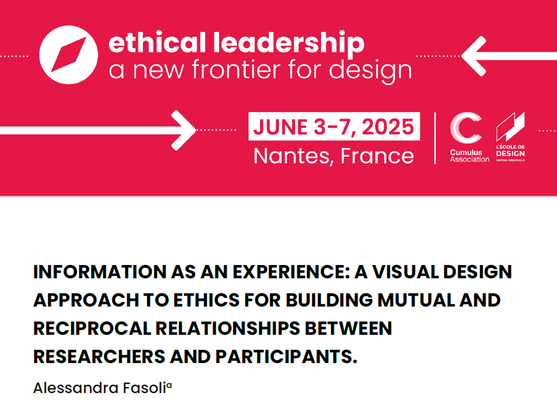
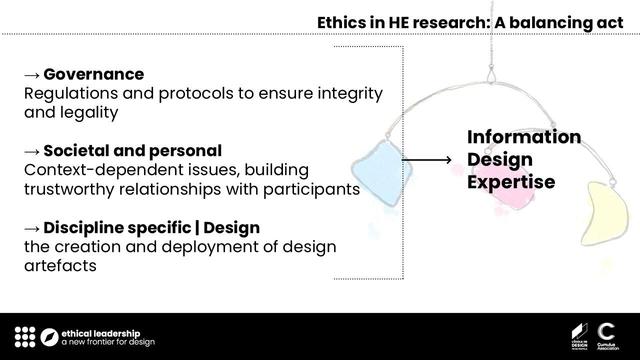
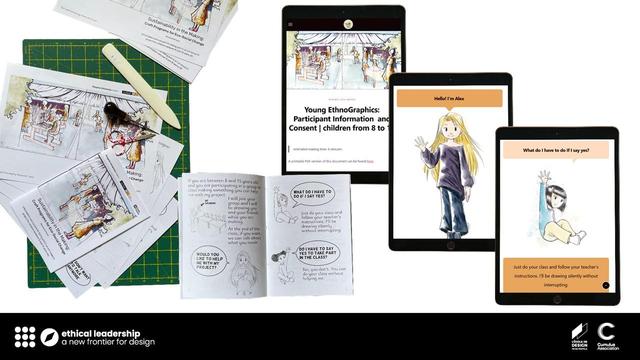
In the paper, I present my personal approach to ethical procedures, and argue for a visual design approach in the making of participant information sheets and informed consent form. I argue that researchers who wants to build trustworthy relationships with their participants shouldn't see ethics as a bureaucratic procedure, but as an underlying principle that guides the whole research design.

#design #ethics #bureaucracy #information

Using my PhD as a case study, I focus on the concept of "Informed Consent", the divine principle of all ethics submission and review. And mind you, I agree. People should fully comprehend what they are accepting to be part of, and be able to reassess their participation in any moment. But how does it actually work?
Well "Informed Consent" is composed of two parts: 1) information, or the act of getting informed, 2) consent.

2/

#Information #Consent #InformedConsent

Let's start with "Consent", which we might briefly describe as "agreement, permission". To "give consent" means to agree, or to give permission. To what? Hopefully, to something I have a clear understanding of. And how do you build this understanding? By *getting informed*.

And here is the trickiest part, not just in research, but in our society in general. Because, I argue, information is more than computer, and is more than simple notions.

/3

#Information #Consent #InformedConsent

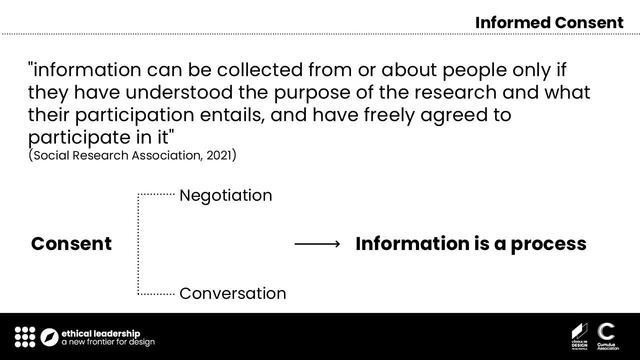
In the literature and in ethical handbooks, *consent* is often described as a conversation, a negotiation. It's not a one-off yes (and I will add not just in research, but in everything, from apps' T&Cs to sex). Implicit in this definition is the idea that *information* is a process, something, as the word itself makes clear (in+form), that is shaped over time, as data are gathered and reassessed against ever changing conditions.

4/

#Information #Consent #InformedConsent

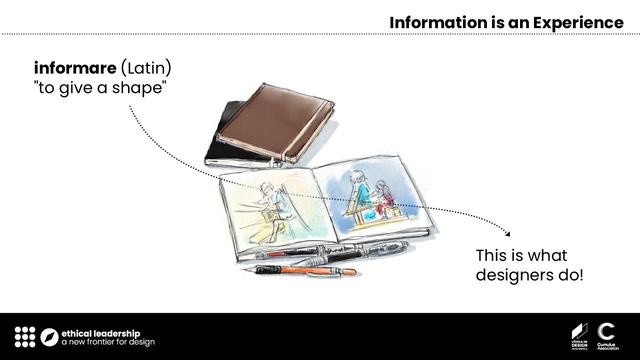
Information, I argue, is an experience, and to inform someone about your research means to shape your research in a way that someone external from you can understand that same shape.
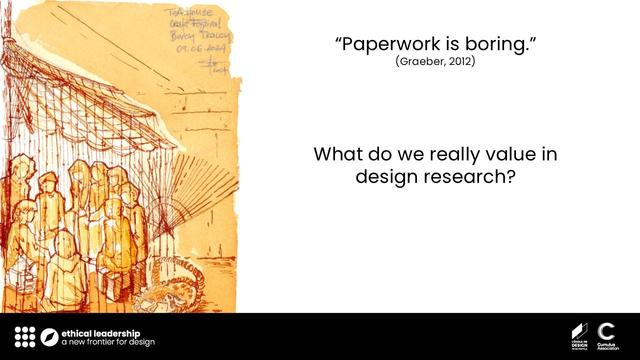
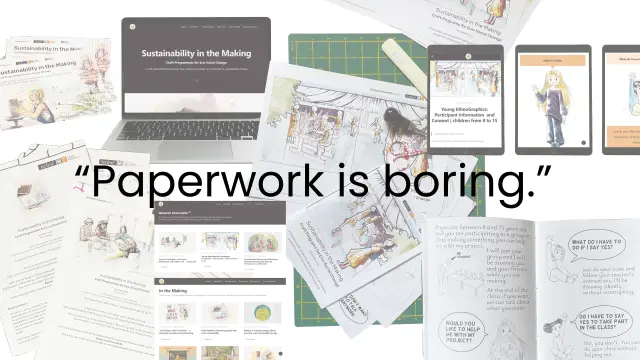
In research, this work is carried by "the participant information sheet" which often look exactly like the subscription T&Cs of your data-hungry platform: a boring paperwork.

5/

#design #ethics #bureaucracy #information

But if information is an experience, than there is a branch of design that actually focuses exactly on that, and it's the one that render all our apps and interfaces nice and cute and addictive: User Experience Design. And my question become, why do we use all these design principles and aesthetic for corporate profit, and we completely forget them for example in academic research?

6/

#design #ethics #bureaucracy #information #research #UX

And why do corporations care so much about cute, aesthetically appealing UX? To build a relationship with you. Possibly a long lasting one, because your fidelity means more profit. Let's be honest, they've been very successful. I just don't think that these skills should be applied for corporate interest but completely dismissed in something like academic research.
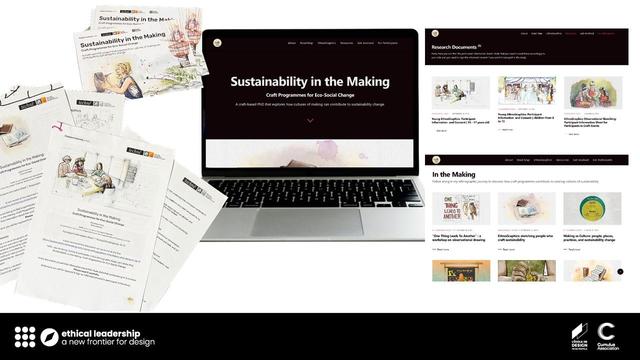
That was the rationale behind me spending so much time in creating the whole participant information experience for my PhD

7/

#UX

This has been very time-consuming, but extremely satisfying. And while some people still refused to participate and some still didn't really understand or see the point of my project, I nonetheless think that a more creative approach to participants information documents could somehow re-establish ethics as fundamental principles that shape how we relate to one another, and to our ecosystems, instead of an a-moral bureaucratic procedure.

8/

#ethics #research #design

Of course there is much more to add to the discourse, and this is a short paper whose aim was exactly to open a conversation, which I believe goes beyond academic research (especially after my recent experience with the NHS).
The full transcript of my presentation and the paper are available here:
https://sustainabilityinthemaking.com/cumulus-nantes-2025-ethical-leadership/

In the website you can also find the participant information sheets I mention in the paper.
The full conference proceeding are available here: https://cumulusnantes2025.design/

9/eof

Presentation at Cumulus Nantes 2025: 'Ethical Leadership, a new frontier for Design'  - Sustainability in the Making

Presentation of the short paper 'Information as an Experience: A Visual Design Approach to Ethics for Building Relationships between…

Sustainability in the Making
@alx great thread and research!