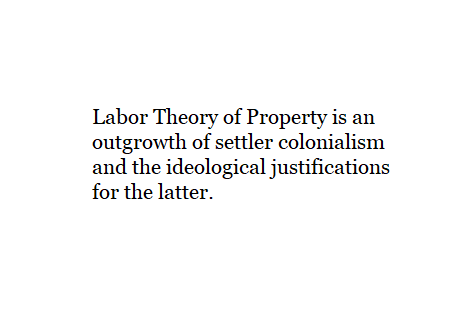
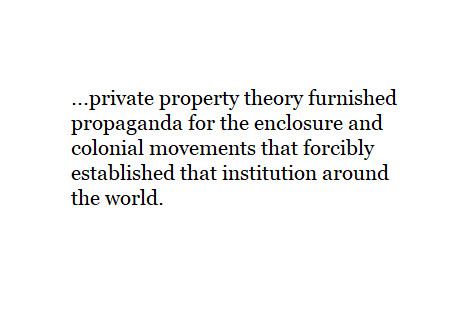
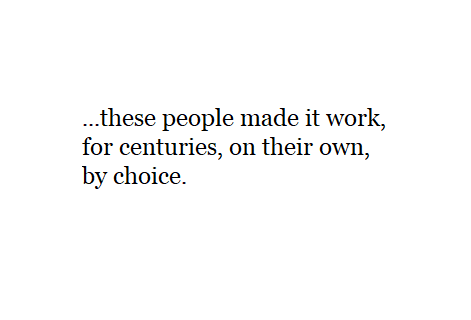
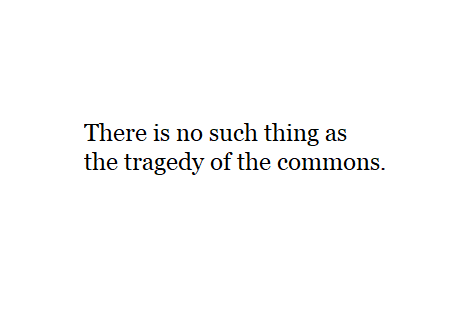
Looking further back we see that humans all over the globe have been actively managing our environment successfully and sustainably for many millennia, which reveals falsehoods embedded in the Lockean (white, European, patriarchal) view of humanity, history and land use. From the research article "People have shaped most of terrestrial nature for at least 12,000 years":
"The current biodiversity crisis is often depicted as a struggle to preserve untouched habitats. Here, we combine global maps of human populations and land use over the past 12,000 y with current biodiversity data to show that nearly three quarters of terrestrial nature has long been shaped by diverse histories of human habitation and use by Indigenous and traditional peoples. With rare exceptions, current biodiversity losses are caused not by human conversion or degradation of untouched ecosystems, but rather by the appropriation, colonization, and intensification of use in lands inhabited and used by prior societies. Global land use history confirms that empowering the environmental stewardship of Indigenous peoples and local communities will be critical to conserving biodiversity across the planet.
"Archaeological and paleoecological evidence shows that by 10,000 BCE, all human societies employed varying degrees of ecologically transformative land use practices, including burning, hunting, species propagation, domestication, cultivation, and others that have left long-term legacies across the terrestrial biosphere. Yet, a lingering paradigm among natural scientists, conservationists, and policymakers is that human transformation of terrestrial nature is mostly recent and inherently destructive. Here, we use the most up-to-date, spatially explicit global reconstruction of historical human populations and land use to show that this paradigm is likely wrong. Even 12,000 y ago, nearly three quarters of Earth’s land was inhabited and therefore shaped by human societies, including more than 95% of temperate and 90% of tropical woodlands. Lands now characterized as “natural,” “intact,” and “wild” generally exhibit long histories of use, as do protected areas and Indigenous lands, and current global patterns of vertebrate species richness and key biodiversity areas are more strongly associated with past patterns of land use than with present ones in regional landscapes now characterized as natural. The current biodiversity crisis can seldom be explained by the loss of uninhabited wildlands, resulting instead from the appropriation, colonization, and intensifying use of the biodiverse cultural landscapes long shaped and sustained by prior societies. Recognizing this deep cultural connection with biodiversity will therefore be essential to resolve the crisis."
https://www.pnas.org/doi/10.1073/pnas.2023483118
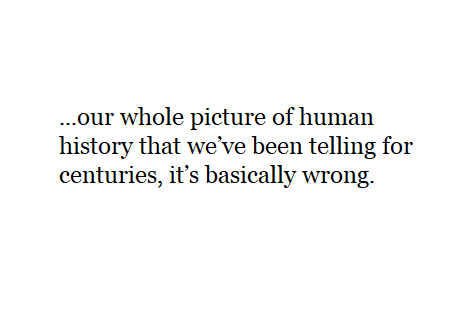
Those in power have been telling us that *we* (people in general or "human nature") are the problem. Popular narratives insist that humans and agriculture of any kind are intrinsically and inevitably destructive to the biosphere.
The actual evidence tells us otherwise:
@HeavenlyPossum on "Tells" (archeology):
"And here these farmers sat, year after year, millennia after millennia, in one place. These were people working with the same Neolithic agricultural package, growing the same sorts of wheat and raising the same sorts of sheep, in the fields around their tells.
They did not die out. They did not exhaust their soils to extinction. Many of them — especially the tells in the Danube Basin that constitute “Old Europe” — developed no states, as some people believe is inevitable from wheat cultivation. If they did leave, they left for reasons unrelated to the success of their way of life. But, as I noted, some of these tells are still inhabited, like the central citadel of Aleppo in Syria."
https://kolektiva.social/@HeavenlyPossum/113367947919067023
The great abandonment: what happens to the natural world when people disappear?
-Across the globe, vast swathes of land are being left to be reclaimed by nature. To see what could be coming, look to Bulgaria-
Many of the landscapes people now tend to think of as untouched, from the savanna lands of equatorial Africa to the deep Amazon rainforest, have already been deeply transformed by human presence. “The essential role that people play in ecology is the critical thing, and it’s been ignored,” Ellis says. “The most biodiverse places left on Earth – this is almost universally true – have Indigenous people in them. Why? Well, they conserve a lot of that biodiversity and actually produce it. They maintain that heterogeneous landscape.”
https://www.theguardian.com/news/2024/nov/28/great-abandonment-what-happens-natural-world-people-disappear-bulgaria
On Navajo Lands, Ancient Ways Are Restoring the Parched Earth
https://e360.yale.edu/features/navajo-natural-infrastructure-dryland-streams
Milpas
Based on the agronomy of the Maya and of other Mesoamerican peoples, the milpa system is used to produce crops of maize, beans, and squash without employing artificial pesticides and artificial fertilizers...
A milpa is a field, usually but not always recently cleared, in which farmers plant a dozen crops at once including maize, avocados, multiple varieties of squash and bean, melon, tomatoes, chilis, sweet potato, jícama, amaranth, and mucuna ... Milpa crops are nutritionally and environmentally complementary...
The milpa, in the estimation of H. Garrison Wilkes, a maize researcher at the University of Massachusetts in Boston, "is one of the most successful human inventions ever created."
The concept of milpa is a sociocultural construct rather than simply a system of agriculture. It involves complex interactions and relationships between farmers, as well as distinct personal relationships with both the crops and land. For example, it has been noted that "the making of milpa is the central, most sacred act, one which binds together the family, the community, the universe ... [it] forms the core institution of Indian society in Mesoamerica and its religious and social importance often appear to exceed its nutritional and economic importance."
https://en.wikipedia.org/wiki/Milpa
Evidence confirms an anthropic origin of Amazonian Dark Earths
First described over 120 years ago in Brazil, Amazonian Dark Earths (ADEs) are expanses of dark soil that are exceptionally fertile and contain large quantities of archaeological artifacts... Archaeological research provides clear evidence that their widespread formation in lowland South America was concentrated in the Late Holocene, an outcome of sharp human population growth that peaked towards 1000 BP
https://www.nature.com/articles/s41467-022-31064-2
The Supposedly Pristine, Untouched Amazon Rainforest Was Actually Shaped By Humans
"Perhaps [...] the very biodiversity we want to preserve is not only due to thousands of years of natural evolution but also the result of the human footprint on them," Iriarte says. "The more we learn, the more the evidence point to the latter."
https://www.smithsonianmag.com/science-nature/pristine-untouched-amazonian-rainforest-was-actually-shaped-humans-180962378/
Lost Cities of the Amazon Discovered From the Air
https://www.smithsonianmag.com/science-nature/lost-cities-of-the-amazon-discovered-from-the-air-180980142/
Genetic Evidence Overrules Ecocide Theory of Easter Island Once And For All
https://www.sciencealert.com/genetic-evidence-overrules-ecocide-theory-of-easter-island-once-and-for-all
Easter Island study casts doubt on theory of ‘ecocide’ by early population
https://www.theguardian.com/science/article/2024/jun/21/easter-island-study-casts-doubt-on-theory-of-ecocide-by-early-population
The truth about Easter Island: a sustainable society has been falsely blamed for its own demise
https://theconversation.com/the-truth-about-easter-island-a-sustainable-society-has-been-falsely-blamed-for-its-own-demise-85563
Debunking the “Ecocide” Myth: The Real Story of Easter Island
https://scitechdaily.com/debunking-the-ecocide-myth-the-real-story-of-easter-island/
Climate change, not human population growth, correlates with Late Quaternary megafauna declines in North America
https://www.nature.com/articles/s41467-021-21201-8
New research upends theory that Indigenous Australians hunted large animals to extinction
https://archive.ph/XuewE
https://royalsocietypublishing.org/doi/10.1098/rsos.250078
Study finds Indigenous people cultivated hazelnuts 7,000 years ago, challenging modern assumptions
Researcher says evidence challenges narratives of wild, untouched landscapes in what is now British Columbia
"What this is saying is ... intentional agricultural-type food production is part of our heritage for longer than ancient Egypt."
https://www.cbc.ca/news/canada/british-columbia/bc-hazelnut-research-1.7392860
All these examples just scratch the surface. Here is an absolutely mammoth thread from @pvonhellermannn with many more examples from around the world showing "that the history of our relationship to nature has not been one of unilinear destruction; and that destruction is not 'human nature'":
Posts 1-21: https://mastodon.green/@pvonhellermannn/109410840331192595
Thread continues here (posts 22-42): https://mastodon.green/@pvonhellermannn/109508169070569262
Thread continues here (posts 43-52): https://mastodon.green/@pvonhellermannn/109535265169676919
Note: some of the links in Pauline's thread are no longer working, but I was able to find alternatives. If you are seriously diving into her thread, you can check this post for alternate links:
https://kolektiva.social/@RD4Anarchy/114032517680702524
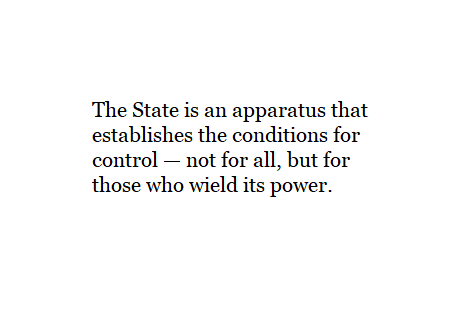
Rather than human nature, agriculture, or over-population, the cause of our current nightmare of environmental destruction originated with a specific group of people who had the power to enforce their exploitation and pillaging over the entire globe eventually. We'll look more later at the disastrous results of colonialism and capitalism.
9/30
 RD
RD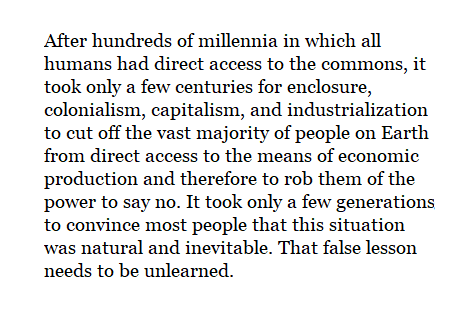










 Adrian Riskin