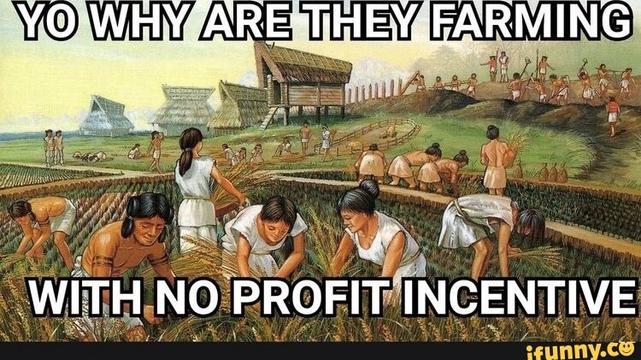
In particular, Scott blamed cereal grain agriculture for the rise of states, because cereal grains are uniquely suited for taxation: “visible, divisible, assessable, storable, transportable, and 'rationable.'”
“The fact that cereal grains grow above ground and ripen at roughly the same time makes the job of any would-be taxman that much easier. If the army or the tax officials arrive at the right time, they can cut, thresh, and confiscate the entire harvest in one operation. For a hostile army, cereal grains make a scorched-earth policy that much simpler; they can burn the harvest-ready grain fields and reduce the cultivators to flight or starvation. Better yet, a tax collector or enemy can simply wait until the crop has been threshed and stored and confiscate the entire contents of the granary…”
“The 'aboveground' simultaneous ripening of cereal grains has the inestimable advantage of being legible and assessable by the state tax collectors. These characteristics are what make wheat, barley, rice, millet, and maize the premier political crops. A tax assessor typically classifies fields in terms of soil quality and, knowing the average yield of a particular grain from such soil, is able to estimate a tax. If a year-to-year adjustment is required, fields can be surveyed and crop cuttings taken from a representative patch just before harvest to arrive at an estimated yield for that particular crop year. As we shall see, state officials tried to raise crop yields and taxes in kind by mandating techniques of cultivation…The point is that with cereal grains and soil preparation, the planting, the condition of the crop, and the ultimate yield were more visible and assessable.”
Not only are the products of cereal agriculture suited for taxation, but the farming itself is too. A farmer who works the same plot year year has a fixed “address.” The state knows where they live, what their name is, how much their land should produce each year, and how much it can extract as taxes.
10/12
 HeavenlyPossum



 busta kitten
 Joe Dohm (he/him)
 cliffordheath
 LisPi
LisPi dog and the plate
 CouncilsInExile
 Cy
Cy 60sRefugee
 Fish Id Wardrobe ⁂
 sleepfreeparent
 C. Lambeth
 J Lou
J Lou Li ~ Crystal System