#TUG2024 in Prague has started.

Thanks to @borisveytsman who has opened the conference. @TeXUsersGroup and of course the local organizers.

I will try to provide some abstracts/insights below this toot. But there are also an option to watch most of the talks online (Sadly youtube, but it's possible): https://youtube.com/c/texusersgroup/live

Schedule: https://tug.org/tug2024/program.html

#TeXLaTeX #TeX

Bevor Sie zu YouTube weitergehen

In the first talk @norbu talked about #TeXLive at #arxiv giving insights on the production and submission process. Facing a bunch of issues probably everyone has who tries to work with author submissions.

Also facing the issue that #overleaf users ignore errors and expect everything to be fine. Really would love have that changed as well.

#TUG2024 #TeXLaTeX #TeX

Mitchell Gerrard narrates about his journey “Holon programming regained”. Trying to get access to a technical report which “was privately circulated among computer scientist in 1973” and afterwards explaining the concepts from this report.

Therefore holon as a combination of holos and -om as in (Atom) means the concept of splitting up a big task into small ones with the idea of greating a general problem solver.

This was one of the inspirations for the literate programming concept.
#TUG2024

Another talk on literate programming is presented by Vincent Goulet. Talking about #Sweave a system to do literate programming within R.

Practical insights on the usage of using that concept and the advantage of maintaining documentation within a system like that.

As someone who was a bit mad at herself maintaining 5 template files instead of one #docstrip project I can totally relate. And am working on refactoring projects to improve that. #TeXLaTeX

#TUG2024

Martin Ruckert is explaining how and why one would like to do profiling for #TeX/#TeXLaTeX and friends. Showing small examples of how to optimize macros and also giving a realistic idea of how much it would change.

Time is one thing, but beside this he also points to the CO2 footprint.

Now I am wondering, if we should use this to compare TeX & Friends to word processors or DTP software. But one would also have to take the editor in account…

#TUG2024

The “rewite it in #Rust” movement reached the #TUG2024 and therefore the #TeX / #TeXLaTeX world. Tyge Tiessen talking about his trial and how wrong he was thinking about it as “a small side project”.

Sadly he started with TeX82 which means it had a bunch of limits we nowerdays don't have anymore. It doesn't provide pdf output and some other limits but in case you were thinking about a rewrite, you might be interested in his work: https://github.com/tyti/rtex

GitHub - tyti/rtex

Contribute to tyti/rtex development by creating an account on GitHub.

GitHub

#TeX / #TeXLaTeX infrastructure has grown wild in huge parts. Trials to modernize are in progress. One step recently taken is presented by Didier Verna talking about the TFM (TeX Font Metrics) validator.

The daily results for #TeXLive are published via https://texlive.info/tfm-validate/fonts.html

And it's not surprising to see that as soon as there are tests one finds issues in published projects. Totally matches my findings. We need more automated testing!

And I know it's a lot of work…

#TUG2024

TeX Live TFM Compliance Reports

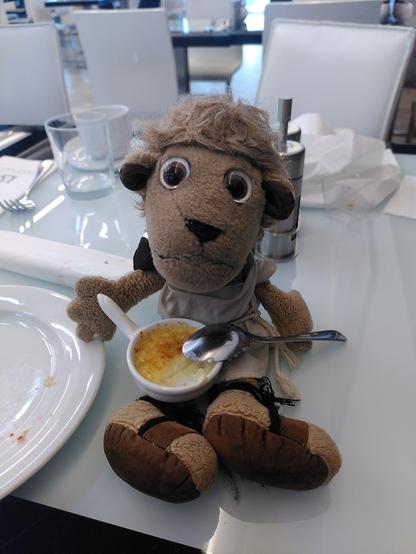
As usually we are skipping the group photo. Mr. Lion and me have different priorities ;)

#TUG2024

Sad thing, since i forgot some health related stuff at my Hotel room I missed the first talk after lunch, but @samcarter added the missing post. You find it here: https://fosstodon.org/@samcarter/112813015322922390
samcarter (@[email protected])

The afternoon continious with Boris Veytsman talking about packaging the Arsenal font for lua- and xelatex. After motivating the necessity for more good Ukrainian fonts, he also explained some of the problems to integrate the font into latex, like finding a sans serif math font which goes well with Arsenal. #TUG2024

Fosstodon

Now @witiko is talking about the implementation of the themes for the #TeXLaTeX #Markdown package.

So in case you want a more TeXnical approach, which is more flexible than #pandoc this might be a thing for you. May proudly say I contributed small bits to the package, still much less, that I'd have wanted to, but thats the Issue with #OpenSource especially FOSS

He promised we'd all want a wolf plushie in the end, so I really hope he has one for Mr lion ;)

#TUG2024

Sad thing… Was told I was visible within the stream … which I just not okay when I did not agree with it in any way …

Talked to the video people, they say then cannot change anything …

Trying to sort things out … sadly this is just an issue people pay too little attention to… moving to some corner now trying to hide … let's see if that helps. @TeXUsersGroup I'd love to have this being something to take care of not to happen again …

Interesting for people within the educational sector:
Wim Obbels, Bart Snapp and Jim Fowler prepared a presentation on the Ximera project. Some interactive math educational resource project with #TeXLaTeX input covering different outputs.

Was not aware – but seems to earn a view
https://github.com/XimeraProject

Project was in a “only bugfix” maintenance status, but now managed to receive funding and looks like making new progress.
Nice to see how funding is pushing projects back to life!

#TUG2024

Ximera Project

Ximera Project has 28 repositories available. Follow their code on GitHub.

GitHub

@sarahalang starts her talk about #TeXLaTeX within #digitalHumanities with an explanation of DH, stating that usually she has to explain what LaTeX is. Showing her usecase and giving an insight but also explaining about issues which this might add for people without a technical background.

As usual with different subjects I think we all should do more skill sharing across as we just can't imagine how other's might benefit from this exchange.
#TUG2024

Now I regret I linked the program :D Last part for today is one I am involved with. We try to spread the usage of #CiCd among #TeX and #TeXLaTeX users as well as developers. It's not streamed as the idea was to work with the participants.

Let's see how this all works out. There will be #TUGboat article by about it afterwards and there you also will find our demo repos.

#TUG2024

Mr. Lion and me now got a camera save spot. (At least that's what was told to us and we try to feel that way.)

Picture was taken half an hour ago. Day 2 of #TUG2024 has already started.

As you might see in the picture Mr. lion received his own duck (correctly scaled) from @samcarter, is extremly proud of it and will probably never again travel without it.

The first talk of day 2 #TUG2024 is given by @michal_h21 (#tex4ebook / #tex4ht) who is presenting on rmodepdf which is a tool to convert websites to ebook reader friendly pdf documents. I guess then converting to epub is also not a bit issue. It uses the reader mode and is using luaxml to process the html.

It's interesting to see it also the other way round. As he is usually known for #TeXLaTeX to #html facing different issues.

Link to the rmodepdf repo: https://github.com/michal-h21/rmodepdf/

GitHub - michal-h21/rmodepdf: Convert web pages in reader mode to PDF

Convert web pages in reader mode to PDF. Contribute to michal-h21/rmodepdf development by creating an account on GitHub.

GitHub

As there is a lot of #a11y in #TeXLaTeX for today Simon Pfahler is talking about color schemes for #colorblind people trying to increase awareness for these issues.

Generally the most important point probably is, that you should not encode a single value only in color.

https://ctan.org/pkg/colorblind

It's still in an early state of development but he requested suggestions and feedback to create it as useful as possible.
#TUG2024

CTAN: Package colorblind

Changxu Duan follows up presenting his work. Starting showing that LLMs are better with PDFs where they know the #TeXLaTeX source. Which is not surprising.

His Idea is to add the source as annotation or add it as simplified markdown or XML markup to the PDF document. In contrast to providing the full source attached this is preserving the connection to the object's position.
#TUG2024

Within tagging of typesetted math this is already quite common using the LaTeX code.

Last talk of the session is Joseph Wright speaking about the concept of templates in the #TeXLaTeX kernel.

The concept of providing common interfaces for Layout adjustments exists for a long time within the #TeX world but is now a thing which is pushed by the current development status, as it simplifies preserving the tagging while allowing more flexibility for the layout.

This is using the joy of #expl3 to some higher level commands towards the users.

https://ctan.org/pkg/xtemplate

#TUG2024

CTAN: Package xtemplate

@norbu presenting #OpenAccess trying to include that aspect at #arxiv.

I've been following the amazing work by @dginev towards #ar5iv for quite a while and in case you might have missed that:
https://ar5iv.labs.arxiv.org/

There's still a lot of work left, but I really love to see progress towards accessibility within the #TeX / #TeXLaTeX and generally #ScientificPublishing community. Especially showing arXiv it's possible to improve on a huge scale.

#TUG2024

ar5iv – Articles from arXiv.org as responsive HTML5 web documents

ar5iv offers a modern web view for arXiv's preprints. An open community resource, on a quest to a full collection of high-quality documents.

ar5iv

[1/3] Continuing the #a11y topic Ulrike Fischer is giving an update on the status of the #TeXLaTeX tagging-project.
https://github.com/latex3/tagging-project

Also explaining that the LaTeX team is currently pushing the development of #PDF as well as validators and viewers towards PDF 2.0 and Well-tagged-pdf (https://pdfa.org/wtpdf/)

The current tagging structure in some cases is too simple to match the actually complexity of documents but this needs examples to illustrate.
#TUG2024

GitHub - latex3/tagging-project: Issues related to the tagging project

Issues related to the tagging project. Contribute to latex3/tagging-project development by creating an account on GitHub.

GitHub

[2/3] In case you want to support that project they always ask for people testing files and also try just using it or create testfiles

They shortly added a list of packages which are supported and which are incompatible with the current state of development.
https://latex3.github.io/tagging-project/tagging-status/

Just that you know I am currently working on KOMA-Script and also prepared something for ragged2e, where I have to wait for some decisions of the LaTeX Team as mentioned in the issues.

[3/3] Ulrike also draws attention to the issue, that PDF 1.7 is not supporting math tagging in any accessible way so the PDF 2.0 support has to get better within all the viewers.

As an example illustrating the impact of this project Foxit PDF will now receive support pass the embedded #MathML code to NVDA.

This project also used #ar5iv resources as testfiles which shows how important it is to have huge amounts of files for testing and also people helping testing if it's actually useful.

[1/2] Spreading new concepts or improvements within the #TeX world is always a bit hard. Sadly there's a lot of users (or publishers) who sadly prefer to keep everything the way it was before. The more important it is that active developers use those interfaces instead of creating their own, as we now know, it's hard to clean that up in case there are incompatible changes.

Frank Mittelbach from the #TeXLaTeX project is once again talking about hooks to make developers using them. #TUG2024

[2/2] Same with the tagging sockets.

So just in case you are or plan to develop a package have a look at the publications of the #TeXLaTeX Project to keep yourself up to date with the common interfaces. It's much more helpful if people actually use those instead of having a huge bunch of packages implementing their own auxiliary macros as it was necessary back in the 90s.

You find them via https://www.latex-project.org/ or locally running `texdoc ltnews`

#TeX #TUG2024

LaTeX - A document preparation system

LaTeX is a high-quality typesetting system; it includes features designed for the production of technical and scientific documentation.

[1/2] Jeffrey Kuan as a math professor who is passionate about #a11y is confronted with the claim that a #PDF created via #TeXLaTeX can not be accessible at all. Which is not true but applies to most of the created documents so far.

In his talk he is describing issues he is facing trying to fulfill the law requirements and as someone who actually wants to provide accessible material. Sadly both don't match in a lot of cases.
#TUG2024

[2/2] Lacking support for students as well as teachers is one of the issues. He therefore also talks about the need of teaching students about tooling as well as the requirements of accessibility to be able to create accessible documents in the end.

Actually that matches my point of view always trying to get people to understand, that it's about the structure and not about actual layout when you create the content.

First part of the afternoon was mostly filled with project presentations of class files for journals. So I didn't know what to tell as they were mostly showing features or specific requirements but nothing too surprising.

But would be weird to leave it out so I wanted to mention.

Sadly mostly created in an old-fashioned way – and actually I don't get why anyone is publishing a new #BibTeX style in 2023 …
#TUG2024

There was a bit of discussion about the question if authors should make it easier for the publisher or the publisher should make it easier for the authors.

Actually I think it's the publisher's job to make it as easy for the author as possible, since those are responsible for the content.

But guess we all know there are some things extremly broken within scientific publishing…

Another but kind of different project was presented by Andrew Watters in a prerecorded talk.

He showed his “full spectrum litigator” which I'd describe as an #OpenSource toolchain for the nerdy #lawyer. ;-)

Setup looked similar to what I know from the ERP systems I work with using php to fill in variables into Templates, creating #TeXLaTeX code creating PDFs but also having Email handling and some more specific features.#TUG2024

Last talk before the workshop of today @samcarter is once again advertising the moloch #beamer theme. As it's the maintained fork of the metropolis theme I totally agree with her to tell people they should use that one instead.

But there are still discussions to replace metropolis or to just have metropolis load moloch.
#TUG2024 #TeXLaTeX

https://ctan.org/pkg/moloch

CTAN: Package moloch

#TUG2024 day 3 starts with the status update by Ondřej Sojka about his work on expanding the #hyphenation patterns across Slavic languages.

They use #MachineLearning to compare existing patterns to find out if they can be used or adapted to other Slavic languages.This work is not only to be used within #TeX / #TeXLaTeX of course and is (or will be) implemented e.g. in browsers or smartphone operating systems.

Preprint: https://tug.org/tug2024/preprints/sojka-slavic.pdf

#Typesetting

Antoine Bossard continues with language specific #typesetting:
Specifically Latin verse scansion.

Link to the preprint: https://tug.org/tug2024/preprints/bossard-verse.pdf

Showing how #unicode / #utf8 is improving also old languages, which I will use as a nice argument to get people to use unicode as some still are using #TeXLaTeX macros to insert accents or umlauts, which I just can't understand.

#TUG2024

I just realized I didn't say anything about the workshop yesterday. Actually kind of the same reason why I struggle with writing something about the current Talk. The workshop yesterday was about TeXFolio and the talk now is about Primo. Generally both are web based tools to do TeX editing and try to improve collaboration between authors and publishers. Sadly both are not OpenSource and only available as SaaS which is bit of too much of a black box.

@borisveytsman extended @docum3nt's bookshelf class for multilingual support and is now presenting the results and feature ideas. #TUG2024

It's a pandemic project which allows you to create a colorful virtual bookshelf out of a #BibTeX database to be used with #biblatex The intention was to be able to use it as background for video calls, but you can also just use it to finally have a shelf for your ebooks. #TeXLaTeX

Bookshelf on CTAN:
https://ctan.org/pkg/bookshelf

CTAN: Package bookshelf

[1/2] Just in case you use the units #TeXLaTeX package still somewhere within your documents (which always confuses me) you probably want to remove and replace it by #siunitx simple because that's the actively maintained one.

Joseph Wright is now talking about the last updates and plans for the package. The changes are much smaller than the complete reimplementation for v3.0.0 but he still is making the typesetting of numbers and units much easier.

#TUG2024

[2/2] As I still see italic `\mu` within micro metre it seems like there still are a lot of people not using these extensions for typesetting units. It simplifies a lot and the cool part is that you don't have to think about using a decimal comma or a period simply because it can use the document language.

Last session starts with Didier Verna's extensions to the Knuth-Plass algortihm. He developed them using his ETAP presented last year.

He is introducing an extra variant of contextual demerits to avoid the same word to be placed the same word at the beginning or end of successive lines also questioning if is worth or not depending on a lot of facts.

Link to the ETAP repo: https://github.com/didierverna/etap
Slides containing the data: https://tug.org/tug2024/slides/verna-knuth-plass.pdf

#typesetting #TeX #TeXLaTeX #TUG2024

GitHub - didierverna/etap: Experimental Typesetting Algorithms Platform

Experimental Typesetting Algorithms Platform. Contribute to didierverna/etap development by creating an account on GitHub.

GitHub

Last presentation at #TUG2024 is Martin Ruckert explaining his process of decision making and implementation during the creation of a color concept for the HINT project.
HINT is some kind of responsive format to display documents using the same algorithms as #TeX (https://github.com/ruckertm/HINT/)

As it has a light + dark mode colors are not chosen directly, which actually we all should try to avoid as it makes the content easier to be reused more universal within different document types or layouts..

GitHub - ruckertm/HINT: Sources and Documentation for the HINT project

Sources and Documentation for the HINT project. Contribute to ruckertm/HINT development by creating an account on GitHub.

GitHub