 Bernie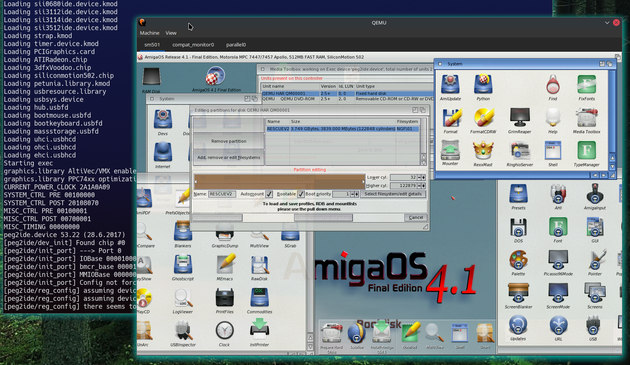
Big kudos to BALATON Zoltan for developing and upstreaming support for various #PowerPC Amiga boards in #QEMU and for documenting the process:
Big kudos to BALATON Zoltan for developing and upstreaming support for various #PowerPC Amiga boards in #QEMU and for documenting the process:
Building a working Kickstart for the QEMU-emulated Pegasos II wasn't trivial: #AmigaOS 4.1 is still proprietary and distributed in board-specific CDs.
I own only a copy of AmigaOS 4.1 FE for the Sam440, which isn't one of the boards supported by #QEMU. The kernel for the Sam440 crashes on all other boards.
Luckily, the classic #Amiga ROM has been modularized into a directory of lose ELF files, and I found the missing drivers in incremental OS updates I already had 😎
https://wiki.amigaos.net/wiki/UserDoc:How_AmigaOS_Works#Control_of_the_Kickstart
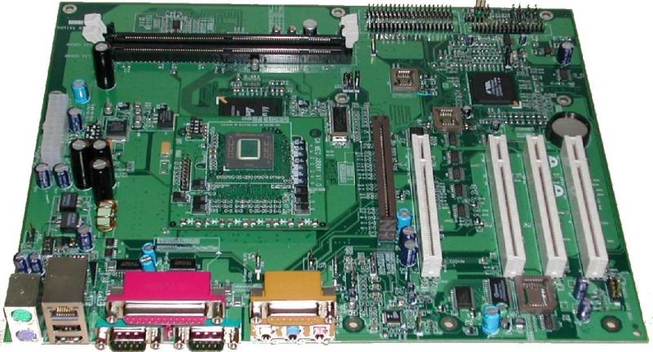
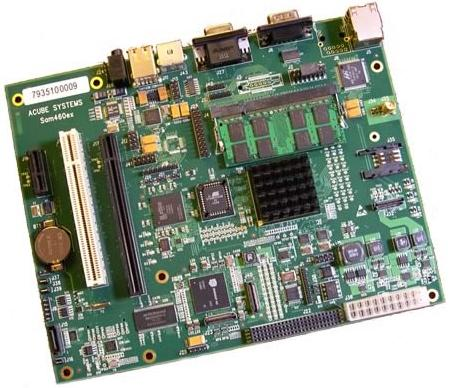
Initially, I spent some time trying to boot an emulated AmigaOne XE (2004) or the more modern Sam460ex (2010).
Both these boards use #UBoot, which requires a Second Level Bootloader (SLB) to load the Kickstart from an Amiga filesystem or from a CD.
U-Boot is GPLv2, but I'm afraid the SLB is not opensource, and I couldn't figure out what was going wrong.
The Pegasos II, instead, uses OpenFirmware. QEMU can directly load an ELF kernel with the "-kernel" switch and pass it a boot filesystem with the "-initrd" switch, a feature normally used to boot Linux systems.
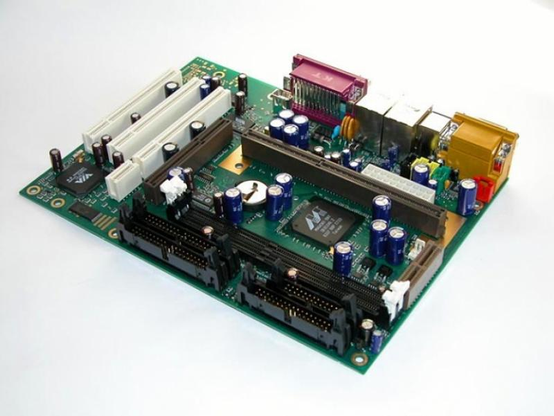
To easily boot AmigaOS, Balaton Zoltan created an opensource second-stage bootloader called bboot:
qemu-system-ppc \
-machine pegasos2 \
-kernel bboot \
-initrd Kickstart.zip \
-vga none -device sm501 \
...
I grabbed a precompiled bboot binary from the 0.7 release tarball, and assembled a working Kickstart.zip by trial and error, combining my complete KickstartSam440 with modules for the Pegasos found in various OS updates.
http://zero.eik.bme.hu/~balaton/qemu/amiga/aos_bboot.html
#ppc #amiga #amigaos
The latest A-EON boards, including the X1000, X5000 and the just released #A1222plus, also use #UBoot, but with a different second level bootloader called AmigaBoot, which can read the Kickstart from the an Amiga filesystem, including the new and mysterious NGFileSystem (NGFS).
I found a doc confirming my suspects that a copy of AmigaBoot resides in the on-board NVRAM. This explains how the A1222+ could boot off an old #AmigaOS 4.1 image for the Sam440 😏

@profoundlynerdy I heard that the So of the X5000 has been EOL'd long ago and the remaining stock is very expensive.
But yes, the A1222+ uses an underpowered NXP SoC. If you just want the fastest possible #PowerPC Amiga, nowadays you could simply use QEMU on an desktop PC 😏
@codewiz Given the open nature of the PowerPC ISA, I'm surprised there isn't a *lot* more hardware out there.
I'm sure someone could open source a more powerful Amiga-like system.
@profoundlynerdy The PowerPC alliance between IBM, Apple and Motorola / Freescale fell apart long ago.
Today only IBM is designing high-performance PowerPC cores, and they are only interested in using them for their own mainframes.
NXP and other vendors are only selling low-power SoCs for network equipment and embedded boards.
At this point, it's clear that #PowerPC is a dead-end for #AmigaOS. If we are going to do JIT emulation on x86 anyway, we could just go back to m68k 😒

 Profoundly Nerdy