 flpvsk
WIP enclosure design for a delay pedal. Still not sure if I can fit all the features into the 1590BB. Certainly hope that color is available!
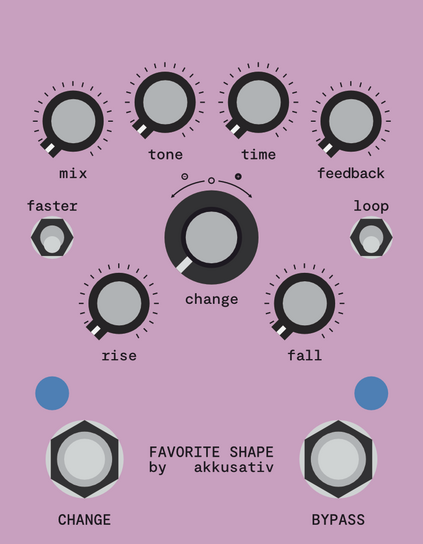
WIP enclosure design for a delay pedal. Still not sure if I can fit all the features into the 1590BB. Certainly hope that color is available!
Boards came in! Pretty happy with Aisler. Took me a couple of days to assemble. Figuring out a few kinks now.
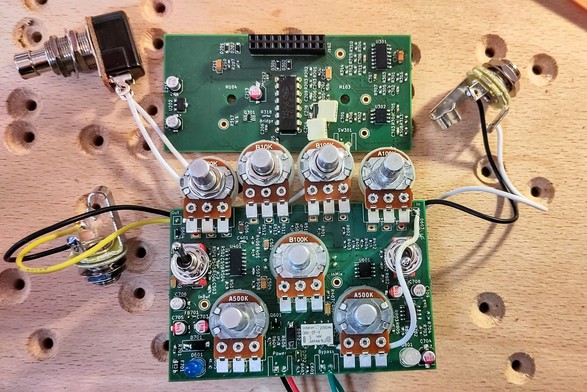
Spent the day chasing an annoying click from a Schmitt Trigger leaking into the audio path.
Trigger circuit is on one board, audio path — mostly on the other.
Made a jig to be able to manipulate the connection between the two boards. They mate via a 20-pin header. Started disconnecting one wire at a time, including power.
Finished with just one wire left. THE GROUND. The click somehow is transmitted via *the ground*!
Another day in analog audio electronics 😅
@poleguy Yay! I did want to start building radios 😅
In this case the guitar plays a large role, acting as an antenna or a tuner maybe? Volume and tone controls change the loudness of the click. A guitar w passive high output impedance electronics makes the click louder. One with active electronics, low impedance, removes the click almost completely.
Fascinating! Also infuriating 😄
@flpvsk I have no idea what your circuit is, of course. But high impedance outputs from guitars are a classic source of pain.
The solution in general is to understand where your currents are flowing (both on the signal line and on the return pwr/gnd paths). Avoid electrical and magnetic coupling by physical layout... And enclose, shield, and filter like you're building a Faraday cage. Metal enclosures and copper tape are your friends.


 poleguy looking for lost tools