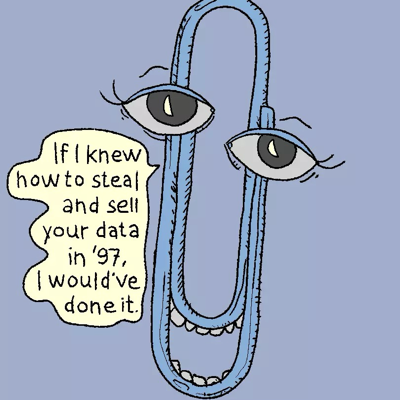
How could this happen? Owners of #Chamberlain #MyQ automatic garage door openers just woke up to discover that the company had confiscated valuable features overnight, and that there was nothing they could do about it.

--

If you'd like an essay-formatted version of this thread to read or share, here's a link to it on pluralistic.net, my surveillance-free, ad-free, tracker-free blog:

https://pluralistic.net/2023/11/09/lead-me-not-into-temptation/#chamberlain

1/

Pluralistic: The enshittification of garage-door openers reveals a vast and deadly rot (09 Nov 2023) – Pluralistic: Daily links from Cory Doctorow

Oh, we know what happened, *technically* speaking. Chamberlain shut off the API for its garage-door openers, which breaks their integration with home automation systems like #HomeAssistant. The company even announced that it was doing this, calling the integration an "unauthorized usage" of its products, though the "unauthorized" parties in this case are the people who own Chamberlain products:

https://chamberlaingroup.com/press/a-message-about-our-decision-to-prevent-unauthorized-usage-of-myq

2/

A Message About our Decision to Prevent Unauthorized Usage of myQ

Chamberlain Group

We even know *why* Chamberlain did this. As @arstechnica's @RonAmadeo points out, shutting off the API is a way for Chamberlain to force its customers to use its ad-beshitted, worst-of-breed app, so that it can make a few pennies by nonconsensually monetizing its customers' eyeballs:

https://arstechnica.com/gadgets/2023/11/chamberlain-blocks-smart-garage-door-opener-from-working-with-smart-homes/

3/

Chamberlain blocks smart garage door opener from working with smart homes

Chamberlain packed its app with ads while disabling third-party access.

Ars Technica

But *how* did this happen? How did a giant company like Chamberlain come to this enshittening juncture, in which it felt empowered to sabotage the products it had already sold to its customers? How can this be legal? How can it be good for business? How can the people who made this decision even look themselves in the mirror?

4/

To answer these questions, we must first consider the forces that discipline companies, acting against the impulse to enshittify their products and services. There are four constraints on corporate conduct:

I. Competition. The fear of losing your business to a rival can stay even the most sociopathic corporate executive's hand.

II. Regulation. The fear of being fined, criminally sanctioned, or banned from doing business can check the greediest of leaders.

5/

III. Capability. Corporate executives can dream up all kinds of awful ways to shift value from your side of the ledger to their own, but they can only *do* the things that are technically feasible.

6/

IV. Self-help. The possibility of customers modifying, reconfiguring or altering their products to restore lost functionality or neutralize antifeatures carries an implied threat to vendors. If a printer company's anti-generic-ink measures drives a customer to jailbreak their printers, the original manufacturer's connection to that customer is permanently severed, as the customer creates a durable digital connection to a rival.

7/

When companies act in obnoxious, dishonest, *shitty* ways, they aren't merely yielding to temptation - they are evading these disciplining forces. Thus, the Great Enshittening we are living through doesn't reflect an increase in the wickedness of corporate leadership. Rather, it represents a moment in which each of these disciplining factors have been gutted by specific policies.

8/

This is good news, actually. We used to put down rat poison and we didn't have a rat problem. Then we stopped putting down rat poison and rats are eating us alive. That's not a nice feeling, but at least we know at least one way of addressing it - we can start putting down poison again. We can start enforcing the rules we stopped enforcing, in living memory. Having a terrible problem is no fun, but the best kind of terrible problem to have is one that you know a solution to.

9/

As it happens, Chamberlain is a neat microcosm for all the bad policy choices that created the Era of Enshittification. Let's go through them:

Competition: Chamberlain doesn't have to worry about competition, because it is owned by a #PrivateEquity fund that "rolled up" all of Chamberlain's major competitors into a single, giant firm. Most garage-door opener brands are actually Chamberlain, including "LiftMaster, Chamberlain, Merlin, and Grifco":

https://www.lakewoodgaragedoor.biz/blog/the-history-of-garage-door-openers

10/

The History of Garage Door Openers — Lakewood Garage Door

Garages became commonplace in America with the introduction of the automobile about 100 years ago. For decades, the driver or a passenger would have to get out of a car and open the garage door. In the 1920s, motorized openers helped automate this process. A button located inside the garage activate

Lakewood Garage Door

This is a pretty typical PE rollup, and it exploits a bug in US competition law called #AntitrustsTwilightZone:

https://pluralistic.net/2022/12/16/schumpeterian-terrorism/#deliberately-broken

When companies buy each other, they are subject to "#MergerScrutiny," a set of guidelines that the #FTC and #DoJAntitrustDivision use to determine whether the outcome is likely to be bad for competition.

11/

Pluralistic: The antitrust Twilight Zone (16 Dec 2022) – Pluralistic: Daily links from Cory Doctorow

These rules have been pretty lax since the Reagan administration, but they've currently being revised to make them substantially more strict:

https://www.justice.gov/opa/pr/justice-department-and-ftc-seek-comment-draft-merger-guidelines

One of the blind spots in these merger guidelines is an exemption for mergers valued at less than $101m. Under the #HartScottRodinoAct, these fly under the radar, evading merger scrutiny.

12/

Justice Department And FTC Seek Comment on Draft Merger Guidelines

The Justice Department and the Federal Trade Commission (FTC) are releasing a draft update of the Merger Guidelines (Draft Guidelines), which describe and guide the agencies’ review of mergers and acquisitions to determine compliance with federal antitrust laws. The goal of this update is to better reflect how the agencies determine a merger’s effect on competition in the modern economy and evaluate proposed mergers under the law. Both agencies encourage the public to review the draft and provide feedback through a public comment period that will last 60 days.

That means that canny PE companies can roll up dozens and dozens of standalone businesses, like funeral homes, hospital beds, magic mushrooms, youth addiction treatment centers, mobile home parks, nursing homes, physicians’ practices, local newspapers, or e-commerce sellers:

http://www.economicliberties.us/wp-content/uploads/2022/12/Serial-Acquisitions-Working-Paper-R4-2.pdf

13/

By titrating the purchase prices, PE companies - like #Blackstone, owners of Chamberlain and all the other garage-door makers - can acquire a monopoly without ever raising a regulatory red flag.

But antitrust enforcers aren't helpless. Under (the long dormant) Section 7 of the #ClaytonAct, competition regulators can block mergers that lead to "incipient monopolization."

14/

The incipiency standard prevented monopolies from forming from 1914, when the Clayton Act passed, until the Reagan administration. We used to put down rat poison, and we didn't have rats. We stopped, and rats are gnawing our faces off. We still know where the rat poison is - maybe we should start putting it down again.

15/

On to regulation. How is it possible for Chamberlain to sell you a garage-door opener that has an API and works with your chosen home automation system, and then unilaterally confiscate that valuable feature? Shouldn't regulation protect you from this kind of ripoff?

It should, but it doesn't. Instead, we have a bunch of regulations that protect Chamberlain from *you*.

16/

Think of #BindingArbitration, which allows Chamberlain to force you to click through an "agreement" that takes away your right to sue them or join a class-action suit:

https://pluralistic.net/2022/10/20/benevolent-dictators/#felony-contempt-of-business-model

But regulation *could* protect you from Chamberlain. Section 5 of the #FederalTradeCommissionAct allows the #FTC to ban any "unfair and deceptive" conduct.

17/

Pluralistic: 20 Oct 2022 It was all downhill after the Cuecat – Pluralistic: Daily links from Cory Doctorow

This law has been on the books since 1914, but Section 5 has been dormant, forgotten and unused, for decades. The FTC's new dynamo chair, #LinaKhan, has revived it, and is use it like a can-opener to free Americans who've been trapped by abusive conduct:

https://pluralistic.net/2023/01/10/the-courage-to-govern/#whos-in-charge

18/

Pluralistic: The learned helplessness of Pete Buttigieg (10 Jan 2023) – Pluralistic: Daily links from Cory Doctorow

Khan's used Section 5 powers to challenge privacy invasions, noncompete clauses, and other corporate abuses - the bait-and-switch tactics of Chamberlain are ripe for a Section 5 case. If you buy a gadget because it has five features and then the vendor takes two of them away, they are clearly engaged in "unfair and deceptive" conduct.

19/

On to capability. Since time immemorial, corporate leaders have fetishized "flexibility" in their business arrangements - like the ability to do "dynamic pricing" that changes how much you pay for something based on their guess about how much you are willing to pay. But this impulse to play shell games runs up against the hard limits of physical reality.

20/

Grocers just can't send an army of rollerskated teenagers around the store to reprice everything as soon as a wealthy or desperate-looking customer comes through the door. They're stuck with crude tactics like doubling the price of a flight that doesn't include a Saturday stay as a way of gouging business travelers on an expense account.

With any shell-game, the quickness of the hand deceives the eye.

21/

@pluralistic Binding arbitration should just be made entirely illegal.

You should not be able to waive your right to use the legal system of the country you're a citizen of.

That right to the legal system is one of the points of being a citizen to start with.
@pluralistic can someone please explain to me what “magic mushrooms” are in this context?
@pluralistic And so the mirror-looking part is easily answered.

They're awful people to start with.
@pluralistic another case of Unauthorized Bread
@pluralistic Animal Farm, Brave New World, 1984 et al were always meant to be taken as warnings not inspiration I thought
@pluralistic Do we have a term for workaround that don't involve DMCA violations? For example, my chaimberlain door opener doesn't have any smarts in it, but it does have a wall button I can push to make the door go. An ESP32 and a relay could easily make an MQTT or HTTP endpoint to get it to go, without doing any kind of engineering of the door itself. I would love to see more solutions like that.

@pluralistic

"But this impulse to play shell games runs up against the hard limits of physical reality: grocers just can't send an army of rollerskated teenagers around the store to reprice everything as soon as a wealthy or desperate-looking customer comes through the door."

Can't they?

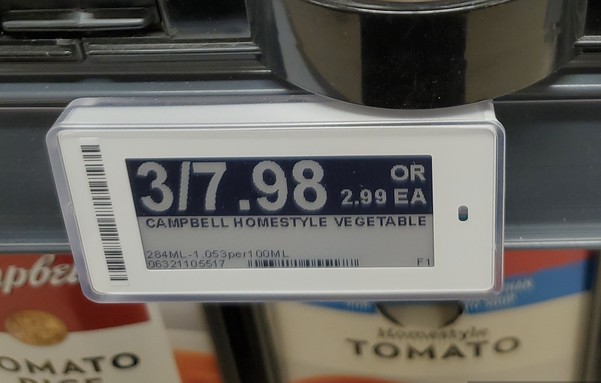
I've never thought about it before, but after reading this paragraph, I'm now AMAZED that the big grocery chains haven't replaced those little price signs on the shelves with digital displays of some kind, so that they can adjust prices on the fly.

@kingkaufman @pluralistic

Guess what they have all over the shelves of Loblaws' ubiquitous grocers (and the other chains they own and 'compete' against here in Canada)?

i have a feeling they're e-ink but i never got around to actually looking into that, can also do red
@kingkaufman @pluralistic a local grocery store used eink price tags and it was very fancy but I think the burden of price twiddling is not worth the trouble
@huxley @kingkaufman @pluralistic Similar to Kohl's, its an expensive pain in the ass to maintain
@kingkaufman @pluralistic Most supermarkets I go to do have those. Have had them for a small decade actually. Dunno if they have bluetooth but probably yes. Tiny battery though so not likely to listen all the time.

@dascandy42
@kingkaufman @pluralistic

Yeah, aren't these kinds of displays normal? Is this one of those things where we Norwegians don't even realize how abnormally digital we are, like with how we don't use cash for anything other than illegal drugs any more?

@kingkaufman @pluralistic

Of course then they'd need to track you around the store to know what price they quoted you when you 'tendered for' items.
This, of course, they can do. The possibilities for arbitraging a can of spaghetti to mess with a huge retainer would be tasty. Impossible to turn down, "my new hobby" delicious.

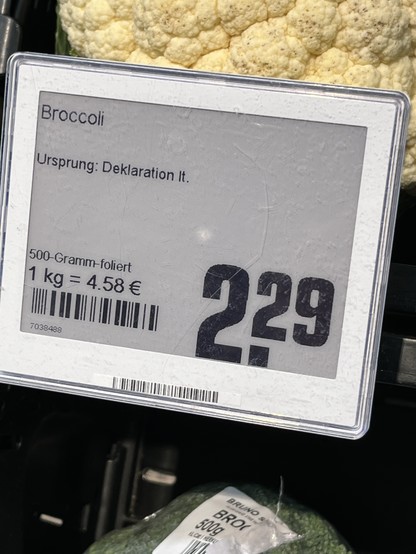
@kingkaufman @pluralistic they've had LCD displays in Intermarché & Carrefour supermarkets in France for a few years, and I noticed what looked like e-ink price displays in my local Lidl in Ireland last night

@kingkaufman @pluralistic
I have seen such digital displays on big supermarket shelves in France, but changing the pricing while the shop was open would be legally problematic as a form of false advertising by putting the price up between when you pick up an item and when you get to the till.

Funnily enough, similar large French supermarkets have been known to employ staff on rollerskates to back up the checkout staff, but not an army, barely even enough for a squad.

@HodgesC @kingkaufman @pluralistic Local supermarket here in SW Germany uses e-paper price tags.
@_tillwe_
Same in Holland. Our national pride (and prime expert in ripping off farmers and other producers - the buyer sets the prices, not the seller) Albert Heijn aka AH has these too. I haven't seen the change while in the shop, but I can totally imagine that's the long term plan...
@HodgesC @kingkaufman @pluralistic

@HodgesC @kingkaufman @pluralistic I've actually been hit this in Austria where it is common to change the price of petrol multiple times during the day at petrol stations.

I must have arrived at around 11.59 and the price of the petrol changed like a second before I started filling up a tank. Had to pay like €0.05 more per litre.

@sztupy @kingkaufman @pluralistic
presumably they can get away with it by locking in the price when you lift the nozzle, and claiming that you must have seen it and agreed before actually taking the product. Sneaky.

@HodgesC @kingkaufman @pluralistic I heard a rumor that some tests of digital displays (and instant price changes) at Walmart stores in the U.S. ran into some trouble with violating state (Mass?) law around price changes.

But, I never verified that, so it's probably not true.

24/7 stores have to solve this, even for non-digital shelf tags.

@BoydStephenSmithJr @kingkaufman @pluralistic

Good point. Here in the UK, Sunday trading laws mean only small shops are 24/7 anyway, which might be simpler to handle. An occasional reprice of everything at once could perhaps be made legal by an announcement to check pricing, that no one would be able to do much about. Or maintain the lower price for some time after the change displays, but someone would call that too generous and change the policy.

@pluralistic

Many replies saying this exists, tho they mostly seem to be coming from outside the U.S. I've never seen them, even living until 3 months ago in the Bay Area.

Anyway, this is like when I came up with the idea for Spotify, which I did the first time I ever used Pandora, which was before I'd ever heard of Spotify, which did exist.

@kingkaufman @pluralistic BestBuy stores had them for more than a decade here too.
@kingkaufman @pluralistic I've been interested in those digital displays for a few years, as a (rank) hobbyist. Wal-Mart and other stores have used them for a decade or more, but in small numbers--like a couple hundred per store (e.g., to highlight a sale on a shelf). I suspect tiny e-paper displays still aren't cheap enough to use for every product in the store, or even every product that could change price a lot. If they were, I'm guessing big chains would do that, b/c flexible pricing = $.