Okay I think for first attempt getting Linux running I'm just going to sigh and install Ubuntu 23.04. If it works ok and I establish a /home on the other drive I'll consider pop!_os later as an experiment in learning (or living without) kernel signing.

My goals:

- Fit on 37 GB spare partition
- Get Vulkan running and execute one webgpu program in Rust
- (win condition) Successfully support a sound card with 16 channels of IO
- (stretch goal) Get Wayland running

I guess I'm going with GNOME rather than KDE based on looking at the current state of both on Google Image Search (possibly not an accurate source) and feeling less repulsion when I look at GNOME. I don't understand why the titlebar and the "dock" with the launcher icons are 2 different things in GNOME now. Couldnt u just put the launcher icons in the titlebar I only ever run 3 apps anyway

Last time I ran desktop linux was 2016, I tried to use a late beta of KDE Plasma and it never worked right

Current status: Lobster

Ok so installation of Ubuntu was smooth and it seems fine now I'm inside. I'm experiencing one problem, and it is totally baffling: Both in the installer and in the OS itself, a giant banner pops up about once every three minutes saying there is no Internet. This despite the installer downloading from the Internet fine, me running Firefox without problems, etc.

EDIT: This is really irritating actually lol
EDIT 2: It's resolved. Apparently Ubuntu HATES intranets

The fonts do look kinda... well, okay, really bad, especially in Firefox. The lowercase "i" looks strangely like an uppercase "I" much of the time. "Private WIndows".
Within half an hour of installing Linux the lack of visual differentiation between tabs in firefox is already annoying me and I'm already trying to figure out how to install Chrome

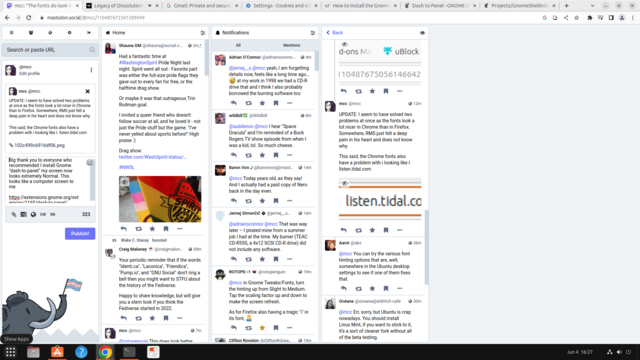
UPDATE: I seem to have solved two problems at once as the fonts look a lot nicer in Chrome than in Firefox. Somewhere, RMS just felt a deep pain in his heart and does not know why.

This said, the Chrome fonts also have a problem with i looking like I. lIsten.tIdal.com

Big thank you to everyone who recommended I install Gnome "dash-to-panel" my screen now looks extremely Normal. This looks like a computer screen to me

https://extensions.gnome.org/extension/1160/dash-to-panel/

Now if I can just I'll be good to go*

* Ready to start the horrible misery of figuring out if nvidia/wayland are working and if not why not

Dash to Panel - GNOME Shell Extensions

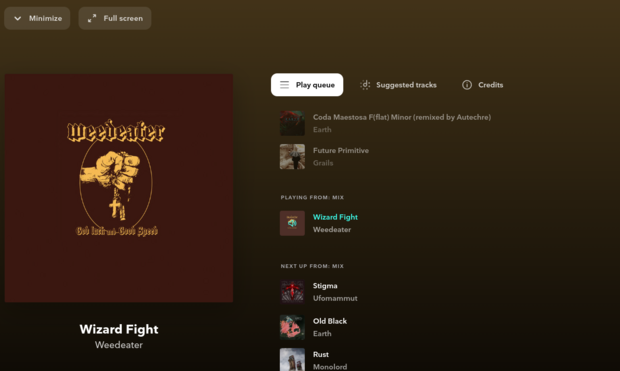
Do not break X Windows. Gnome-tweaks is on, she has water and she is listening to her favorite music

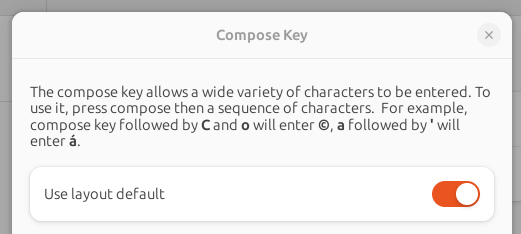
Minor complaints: I want to use the Compose key. In GNOME, if you go to the settings and look up the compose key, you will find a pane helpfully explaining that the compose key is set to the "layout default".

Thanks??! GNOME could you?! Could you possibly tell me what the default *is*!?

Anyway uhhh y'all have been very helpful so: Does anyone know, until I explicitly mapped the Compose key to the Left Super key, GNOME was doing a thing where tapping the Windows key would bring up a kind of Mac OS X Expose screen showing all the Windows. Now Compose is using that key. Anybody know what that shortcut is named. I bet I could map it to something else if I knew what it was named

ALTERNATELY can I just map left super to right alt entire, or something

EDIT: It's "Show the Overview"

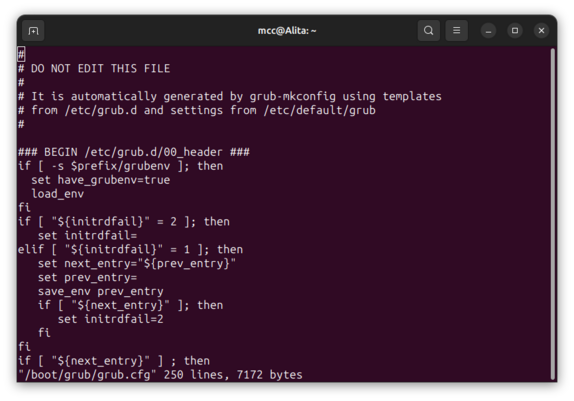
OPINION: It is total garbage that (according to every tutorial?) the way to get grub to default to launching Windows automatically involves manually editing a file (grub.cfg) that begins with "DO NOT EDIT THIS FILE"

Just total unearned confidence that just because I installed Linux on my desktop it *must* be because I prefer to use Linux on my desktop

UPDATE: It doesn't matter that grub is confusing to change the defaults on, because the moment I boot into Windows, it disables grub completely and I have to go into the BIOS boot select menu to get back into Linux.

Which…
was…
…exactly the behavior I wanted to start with.

…the two user-unfriendly OSes on my computers are fighting, and they're canceling each other out.

Extremely surprising outcome: Not only did GNOME mount my Windows/NTFS partition without me even asking it to, it mounted it *readwrite*, and I just opened up /Users and started mucking around with my files and it's just… letting me change things?? Bypassing any and all security?? Did I just fucking accidentally fucking rootkit my own machine by installing Linux?! "lol"
Do you ever post something about computer usability on Internet and immediately worry you have created a major opsec mistake by admitting that last thing out loud
Okay seriously everybody seems to think this is very funny but this is… bad? This is bad practice? Linux distros should not be mounting the entire drive readwrite including files that otherwise would require administrator permissions without at any point, such as during install, asking me if I wanted to do this? I wouldn't have even realized it had done it if I hadn't gone looking? Literally any piece of software on the Linux machine gets owned and it can virusify any part of Windows freely.
Like I want to be able to but ideally it should make me like… enter a password first. Also ideally this should be the default behavior it defaults to until I tell it "no it's okay give every linux app root access to the Windows drive"

OK so unrelated note, a question. I got the compose key working. Now I want to install my custom compose key mappings. I copied over the file from my copy of WinCompose and put it at ~/.XCompose. I logged out and back in.

It did nothing. Not one single app supports my custom compose mappings.

Does… anyone know how to make custom compose work on Ubuntu+Gnome? I'm having surprising troubles finding an answer on Google.

Day one Linux seems to be going okay with my two major issues being:

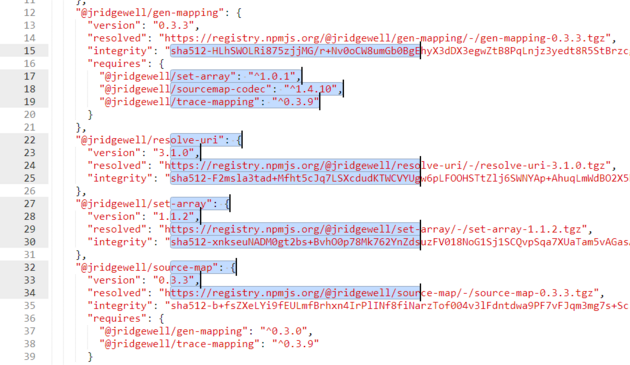
- Getting apps to respect ~/.XCompose appears to be horrifically difficult, and for "snap" applications, may be impossible
- Getting "click mouse button down to scroll" behavior like on Windows turns out to be horrifically difficult and may be impossible

I *think* I have the NVidia propreitary drivers working. Wayland works, but it causes Chrome menus to glitch out, so I guess I'm going back to Xorg for now

On an unrelated note, I was *very* annoyed to discover that on Linux mousewheel-clicking a tab in Chrome closes it, but now I'm back in Windows, and testing, mousewheel-clicking a tab in Chrome closes it.

…what?

Why would this be the default behavior? That's so weird

I have also discovered that clicking and dragging with the mouse wheel in Sublime Text causes it to do something *incredibly* weird
"I'm a rebel… an outlaw! I use the mousewheel to scroll… on *Linux*!"
Does anyone know how to edit/view the shortcuts in the "dock" in Ubuntu Gnome? (I'm using "Dash to Dock" but I think that only changes how it appears). I want to change the args to one of the icons, but they're just sorta… they're just there, there's nothing like a "Properties" if you right click. It seems like there must be a dotfile or an XML or something somewhere GNOME is using to store what those icons are and what happens when you click them.
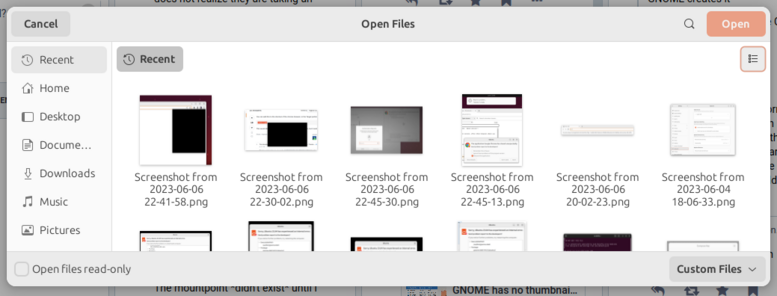
Can the GNOME file open dialog really not show image previews? In 2023? It seems reasonable to expect it to be able to show them
I got .XCompose working… I can now type a thumbs up symbol in Linux 👍

Update on my Windows drive being mounted behind my back ( https://mastodon.social/@mcc/110487969478341949 ) : It turns out to be both more normal, and weirder, than I thought

So I thought it was irritating the mount was at this arcane mountpoint and I didn't know it was there until I clicked file browser -> "Other Locations"

Nope, not exactly

The mountpoint *didn't exist* until I went into "Other Locations" in the Gnome filebrowser, at which point GNOME creates it

Ubuntu didn't create it! The Gnome filebrowser did!

Like, it feels much more normal to me that this thing occurs in response to a user action, but weird that the user does not realize they are taking an action (mounting a drive readwrite) by opening a folder
My Linux install is getting closer to working well but one weird problem I have is every time I boot into Linux and then back into Windows the Windows clock seems to be set to like, a totally random time, many hours off. This collides with an interesting existing problem where when the Windows clock goes wrong it doesn't fix itself for weeks. I can force it to sync with NTP but I can't seem to, like, schedule NTP syncs to happen daily or at startup or whatevs. (I do not have Fast Startup on.)
Okay I was absolutely not expecting this, but this actually is *not* a quirk of my machine and there's a standard, well-understood reason which you have the option of fixing on either the Linux or the Windows side https://mastodon.social/@[email protected]ace/110503566522176548
@mcc Is Windows *still* trying to keep the system clock in local time rather than UTC?? 🤦🤦🤦

@mcc Oh wow, I remember reading about this decades ago.

...which makes it feel great how it's still a problem.

@klara @mcc Threads like this are great for realizing just how much Linux weirdness that I've grown to accept as normal.

@mcc Linux sets the system time to UTC by default, Windows uses local time (and last time I checked had no way to be forced to use UTC, there used to be a registry tweak but it doesn't seem to work anymore). Easiest fix would be to tell Linux to use local time as well.

oh, and NTP on Windows is flaky at best

@noiob I absolutely was not expecting there to be a logical explanation for this
@mcc the arch installation guide mentions it, luckily
@mcc you need to configure the Linux install to use windows style clock because there's no way to stop windows re configuring it every boot
@mcc Is it just that Windows and Linux disagree about whether the hardware clock is in UTC or local time? That's the traditional issue with the symptom you described. Windows requires local time, or at least it did last I heard about this.

@mcc might be related to UTC/localtime, have you tried applying what paragraph 3.1 of https://wiki.archlinux.org/title/System_time says?

it usually solves the clock drift issue for me

System time - ArchWiki

@mcc Out of the box, Windows expects the hardware clock to be local time, not UTC; Linux expects the opposite. You can reconfigure Windows to use a UTC RTC: https://wiki.archlinux.org/title/System_time#UTC_in_Microsoft_Windows That might be what's going on here.
System time - ArchWiki

@mcc make sure the Windows Time service is set to start automatically. (run services.msc -> right click Windows Time -> startup type Automatic). that's usually the reason for these types of issues.
@gsuberland Nice, thank you so much

@mcc @gsuberland That reminds me of @fuchsiii which knows a thing from the #ArchWiki on how to force Redmondian #Govware to accept #Unixtime as System Clock yet display #LocalTime on the Desktop...

Maybe she got that link handy...

@gsuberland @mcc

Every time I boot to Windows during daylight savings time I have to switch automatic-time updating off and then on again to make it stop lying about the time.

It's been that way for years, through Win 10 and Win 11.

@pre @mcc you can use Scheduled Tasks to automate this fwiw.

but still, it really shouldn't be so much of a pain in the ass to start with. the Windows Time stuff needs some love.

@mcc if it’s NOT the thing everyone else is suggesting about Win and Linux arguing about local v UTC time, maybe check if the mono’s battery needs replacing? Seems unlikely, but not impossible?
@mcc Agh! So it's not just me!? That one took me a while to figure out since I rarely run Windows on my work machine. It seemed like the Windows clock was just always wrong. So annoying!
@slembcke See responses, apparently it's easy to fix by changing either a setting on the Linux side or the Windows side :O

@mcc @slembcke i recommend changing the windows side to UTC instead of linux to local time.

reason is that no os can deduct from the time alone if the change from or to DST has already been done or not. so when using local time you get this issue two times a year on the first start after DST change again. using utc everywhere evades this.

@slembcke @mcc it's a fun one because it's existed forever and it's always a PITA. At some point I swear Ubuntu or whatever was sorting it out in the installer if it detected a Windows install but yeah...

@dotstdy @slembcke @mcc

Apparently the workaround is:
sudo timedatectl set-local-rtc 1 --adjust-system-clock

Of course the real problem here is that Windows still doesn't properly support hardware clocks running in UTC :-p

System time - ArchWiki

@mcc @dotstdy @slembcke
I *think* that works as well, but usually those instructions for Windows come with diffuse warnings that some things might *not* work - however, I first saw this for Win7 (IIRC) and even if those warnings had merit back then, *maybe* nowadays it's fine.
OTOH, in that case, why would MS hide it in the registry?
@Doomed_Daniel @dotstdy @slembcke IME everything important is hidden in the registry
@mcc @dotstdy @slembcke
true.. or in some bla.msc tool that looks like it hasn't changed since NT4 and can only be started by entering its exact name in the start menu search (or maybe through that weird god mode folder)
@mcc @dotstdy @slembcke
Anyway "properly supporting" would mean that Windows at least has a checkbox for this near the time/timezone settings, or ideally detects that the HW clock is running in UTC and just accepts and uses that instead of changing it back to the local timezone (which can probably cause issues with timestamp consistency when switching from/to DST)

@mcc Are you sure it's not just because Windows is using RTC in local time, while Linux defaults to having RTC in UTC? If you're dual-booting, the best solution is to tell Linux to use RTC in local time (there's a way to tell Windows RTC is in UTC, but it's unsupported, and has caused problems in the past, such as the machine freezing for an hour during DST transitions).

As for NTP in Windows, try running this from elevated command prompt:

w32tm /config /syncfromflags:manual /manualpeerlist:"0.si.pool.ntp.org,0x1 0.europe.pool.ntp.org,0x1 3.europe.pool.ntp.org,0x1" /reliable:yes /update
net stop w32time
net start w32time
w32tm /resync

(replace the servers with something appropriate for you)

@mcc some choices in GNOME are extremely weird and some are extremely normal, but the community can't agree which are which.
@mcc because it will feel seamless for the user and that is a good thing for ux
@mcc that whole UX was inspired by macOS.. Apple's Finder also has all the known-but-unmounted drives included in the sidebar and when you click one it gets mounted and an eject icon appears there. I don't remember which drives get auto mounted on login though in macOS, a Windows drive would probably alsoooo only get mounted in response to that user action..
@valpackett the thing I'm having a problem with is it's mounted readwrite and available to all processes disregarding all permissions on the drive
@mcc @valpackett that's a limitation related to NTFS in Linux: there's no practical way to map Linux user IDs to Windows user GUIDs, so permissions are scarcely enforceable.
@oblomov @valpackett There is a practical way which I found on stack overflow, two days ago, in about thirty seconds, the first time I searched Google to see if there was a practical way to do it
@oblomov @valpackett meanwhile, even if it were true that Linux cannot map the permissions (which is not true) a reasonable *coarse* way to map the permissions would be, since in this scenario your only options are "root access" or "no access", to ask for a root password or sudo root password before proceeding,.which would give the user an opportunity to back out if they had not meant to take this action.
@oblomov @valpackett (such a UI also might provide an opportunity to ask the user whether they want to mount read only or read write; currently, since the UI doesn't even ask you if you *want* to mount the drive with root permissions, there appears to be no way to mount it read only even if you would prefer this.)
@mcc @valpackett I'm not disagreeing, but the whole GNOME shtick is to second-guess the user. I wouldn't be surprised if the mount-with-full-access, no question asked, is also “inspired” from macOS (what does Apple do when you mount an NTFS volume?)
@oblomov @valpackett it does not mount NTFS drives
@mcc @oblomov tbh I suspect that not requiring a "sudo" type confirmation here might be coming from customized polkit policies Ubuntu ships for Ubuntu reasons… (?)
@valpackett @oblomov It wouldn't surprise me but I still don't really like it
@mcc @valpackett practical as in “a tech impaired CEO could do it”? Now I want to know it too
@mcc It's just trying to help you. Why won't you let it help you?
@TomF I mean! I want it to help me! I just want it to help me in predictable, discoverable ways! And ideally not perform raw drive device actions which bypass file permissions without somehow requesting escalated privileges!
@mcc and what was the issue?

@mawhrin I was copying the wrong file lolsob

It was actually loading it it just didn't have the sequences I expected in it

However it wouldn't have done any good anyway without that daemon -v trick because it turns out WinCompose is more lenient about format than ibus is, for example WinCompose accepts <.> but XCompose only allows <period>

@mcc the latest version does in grid view but I don't know if this version is in the latest Ubuntu release or not. They hold back certain GNOME packages sometimes
@bogpunk Hm so in both list and grid view the icon is a little bitty icon-sized preview of the image but it would be nice to get a full size preview. (The icon is *bigger* in grid view, but…)
@mcc yeah, while I personally haven't had any issues with the current implementation, I can definitely see that being useful. Especially with things like screenshots of text like you're showing there. Given how big and visible GNOME makes everything, it seems like something that would be a natural fit
@mcc sorry, the way I phrased that like "I haven't had that issue" is annoying me. Just to clarify, I meant that as in I didn't think of that until you pointed it out
@bogpunk Oh it's fine, I just wanted to know what to expect
@mcc The day I expect Linux designers to have reasonable priorities is the day I can run Slackware on a smartphone
@sporp Hmm, I've got a PinePhone laying around and could compile a patched kernel... Maybe could work!
@j3rn problem is, how do you run a touchscreen keyboard for BASH?