 Mya Breitbart
We spent most of 2022 hunting down a sea urchin killer - and the results are published in Science Advances today - check out this story (with lots of great photos) by #USFCMS - https://www.usf.edu/marine-science/news/2023/scientists-identify-2022-sea-urchin-killer.aspx summarizing the work. #urchin #Diadema #disease #ocean #marine #oceanography #ciliate #protist #ecology #research #science #invertebrate #microscopy 🧵

Here’s a photo showing a healthy long-spined sea urchin (Diadema antillarum) on the left and a dead one on the right. Affected sea urchins lost control of their tube feet, used their spines instead of tube feet for locomotion, and their spines drooped, became unresponsive, and then were lost. After spines dropped, the urchin tissues are quickly lost, leaving an empty test
While the first signs of urchin death were seen in the US Virgin Islands in January 2022, throughout the spring and summer of 2022 the mass mortality event spread throughout the Caribbean. We were lucky enough to work with an incredible team of international collaborators and aided by the AGRRA Diadema Response Network (https://www.agrra.org/sea-urchin-die-off/) which collected reports to track the spread
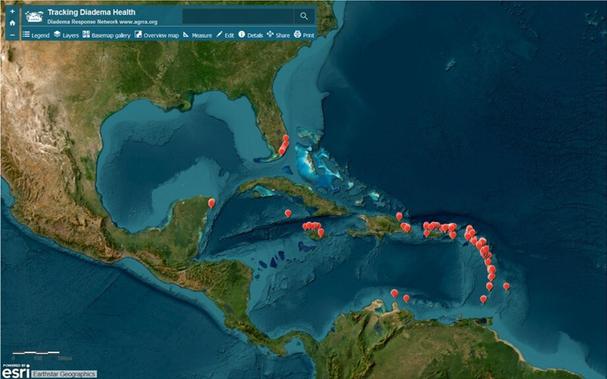

Why were we so concerned about dying urchins? In the 1980s, Diadema underwent a massive die-off, in which ~98% of the urchins were lost throughout the Caribbean. Since Diadema are important herbivores (algae-eaters) on coral reefs, loss of this one species had devastating consequences for corals - which were overgrown by algae. The cause of this die-off was never determined and unfortunately no affected specimens exist today. Diadema has slightly recovered but the wham - this 2022 event!
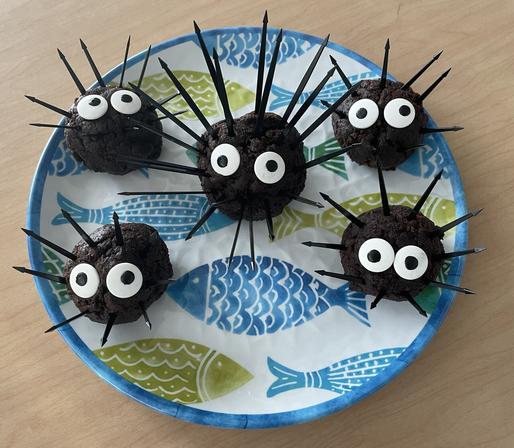
Working with a large group of collaborators, especially Ian Hewson at Cornell University, Christina Kellogg at the US Geological Survey, and Yasunari Kiryu at Florida Fish and Wildlife Research Institute - we compared healthy and sick urchins to see if we could identify any potential biological pathogens. We used transcriptomics (sequencing all the expressed genes) and microscopic/histopathology methods. Both methods found ciliates (single-called eukaryotes) associated with the disease
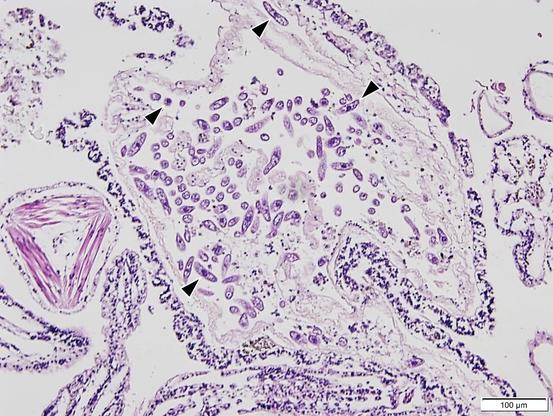
The ciliate we identified was most similar to Philaster apodigitiformis, which is a Scuticociliate, a group known to be pathogens of marine organisms. We consistently found this ciliate in diseased urchins but not healthy ones. But the biggest breakthrough was that we were able to culture the ciliate in the lab and then perform infection experiment on naive Diadema to show that the ciliate caused the same disease signs and led to death (control urchins stayed healthy)
Finally, we re-isolated the ciliate from the infected urchins, fulfilling Koch’s postulates, the gold standard for identifying a disease-causing agent. Here’s a gif of the killer itself, swimming around under the microscope
And here’s an up-close glamour shot of the ciliate. We named the disease Diadema antillarum Scuticociliatosis (DaSc) and are eager to do follow up work to address many questions about the outbreak - including figuring out how to combat the disease, save the remaining urchins, and give Caribbean coral reefs a fighting chance as they continue to face many challenges.
Finally, a huge thanks to our microbiology team and all our collaborators and coauthors. Here’s a link to the paper - https://www.science.org/doi/10.1126/sciadv.adg3200
 Alex Crits-Christoph
@virome_girl this is an amazing science story!
@alexcc Thank you!