A #COVID19 update for the weekend:

- COVID risks are moderate in the US right now. The CDC's transmission map shows 71% of the US at the highest level of COVID transmission, but its community level map only has 14% of the US in the High category. (The community level map feels like the wrong tool for the wrong time--it only turns red when hospitals fill up WITH COVID, but the primary risk isn't acute illness but long-term risks of repeated COVID infections.) https://covid.cdc.gov/covid-data-tracker/#county-view?list_select_state=all_states&list_select_county=all_counties&data-type=Risk

COVID Data Tracker

CDC’s home for COVID-19 data. Visualizations, graphs, and data in one easy-to-use website.

Centers for Disease Control and Prevention
- If you're in the mid-Atlantic or Southeast US, you should be masking in crowds. Even by the lax standards of the CDC's community levels map, everyone in metropolitan New York City, New Jersey, Delaware, and much of Virginia, North Carolina, and South Carolina should be masking (not to mentions portions of other southern and Midwestern states.) https://covid.cdc.gov/covid-data-tracker/#county-view?list_select_state=all_states&list_select_county=all_counties&data-type=CommunityLevels
COVID Data Tracker

CDC’s home for COVID-19 data. Visualizations, graphs, and data in one easy-to-use website.

Centers for Disease Control and Prevention

- And, if you followed WHO guidance, which changed this past week, you'd be masking EVERYWHERE without regard for current COVID status. Its guidance is masks “for anyone in a crowded, enclosed, or poorly ventilated space.” https://www.who.int/news/item/13-01-2023-who-updates-covid-19-guidelines-on-masks--treatments-and-patient-care

- The trends right now in the US all point to a better week ahead. COVID in wastewater is declining. https://covid.cdc.gov/covid-data-tracker/#wastewater-surveillance

WHO updates COVID-19 guidelines on masks, treatments and patient care

The update is part of a continuous process of reviewing such materials, working with guideline development groups composed of independent, international experts.

- However, we should not expect that to continue. XBB.1.5 continues to grow rapidly in the US, and in states where it became predominant last month, it caused significant rises in infections and hospitalizations. (It could be that lower post-holiday travel and crowds will prevent a rapid surge, but that will only slow, not prevent this variant's spread). https://covid.cdc.gov/covid-data-tracker/#variant-proportions
COVID Data Tracker

CDC’s home for COVID-19 data. Visualizations, graphs, and data in one easy-to-use website.

Centers for Disease Control and Prevention
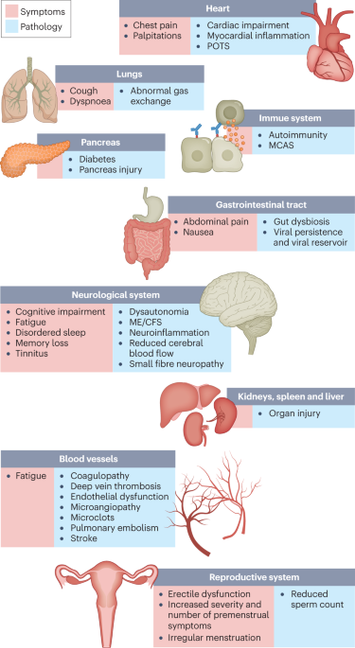
- We must take the long-term risks of repeated COVID infections more seriously. A new study found that “Long COVID is associated with all ages and acute phase disease severities, with the highest percentage of diagnoses between the ages of 36 and 50 years, and most long COVID cases are in non-hospitalized patients with a mild acute illness.” It concludes, “a significant proportion of individuals with long COVID may have lifelong disabilities if no action is taken.” https://www.nature.com/articles/s41579-022-00846-2
Long COVID: major findings, mechanisms and recommendations - Nature Reviews Microbiology

Long COVID is an often debilitating illness of severe symptoms that can develop during or following COVID-19. In this Review, Davis, McCorkell, Vogel and Topol explore our knowledge of long COVID and highlight key findings, including potential mechanisms, the overlap with other conditions and potential treatments. They also discuss challenges and recommendations for long COVID research and care.

Nature
- To add more to that, another recent study found that people with COVID-19 have continued risks AFTER the acute state. Those who are 21 days or more post-diagnosis have a 40% higher risk of cardiovascular disease and a 500% higher risk of all-cause mortality. https://academic.oup.com/cardiovascres/advance-article/doi/10.1093/cvr/cvac195/6987834
Association of COVID-19 with short- and long-term risk of cardiovascular disease and mortality: a prospective cohort in UK Biobank

AbstractAims. This study aims to evaluate the short- and long-term associations between COVID-19 and development of cardiovascular disease (CVD) outcomes and mo

OUP Academic
- There are even more concerning variants being monitored. Sweden is seeing an explosion of COVID deaths--it's 3rd-highest surge of the pandemic. We don't know why. It may be that a new variant, XBF, is growing rapidly and possibly increasing fatality rate. It's too early to know, but the risk of a more deadly variant persists as we continue to encourage too much transmission and spread. https://ourworldindata.org/explorers/coronavirus-data-explorer?zoomToSelection=true&time=2020-03-01..latest&facet=none&pickerSort=asc&pickerMetric=location&Metric=Confirmed+deaths&Interval=7-day+rolling+average&Relative+to+Population=false&Color+by+test+positivity=false&country=~SWE
COVID-19 Data Explorer

Explore global data on COVID-19.

Our World in Data
- China deserves a mention. The situation there will grow even more dire due to the lunar new year. Data is thin, and the official data is not accurate. Experts expect China will see 36,000 deaths daily in the coming weeks. (The prior worldwide peak in early 2021 was less than 15,000.) Still, the risks China poses the rest of the planet seem modest; the variants causing this surge are not a risk in nations with high rates of prior infection and immunity protection.
https://www.bloomberg.com/news/articles/2023-01-18/china-s-covid-deaths-to-peak-at-36-000-a-day-over-lunar-new-year-analysts
- The World Economic Forum is underway in Davos right now. It's worth mentioning for one very specific reason--world leaders, when they gather, are taking COVID very seriously. Their badges won't activate to permit access without a negative PCR test. Photos of event spaces show high-quality commercial HEPA 13 air filters. Some crowded events are masked. And there's been reports of UVGI lights in meeting rooms.
The world and business leaders see their lives as worth protecting, yet they've extended few of these same protections to classrooms, conference rooms, offices, and event venues. Which is more important to you--the life of your spouse or child or the life of your CEO or senator? Then why voluntarily accept the COVID risks of crowded spaces that your leaders recognize and refuse to take for themselves? https://twitter.com/KashPrime/status/1615745744673148929/photo/1
Kashif Pirzada, MD on Twitter

“The world's elite at the Davos forum are enjoying every possible protection from Covid, including PCR testing, air filtration, UVGI light. Why isn't this being offered to everyone else? Every school, every workplace should have the same protections as the rich and powerful.”

Twitter
BOTTOM LINE: COVID risks are certainly less than they have been, but the risks of repeated infections in a population with waning immunity is still significant. I'd urge some caution. That doesn't mean isolating, but it should mean that you consider masks and avoiding crowds if you can.

A personal postscript:
My wife and I went out to eat for our first meal in a restaurant in six weeks last night, since COVID risks are declining presently in Ireland. Even with a lower COVID threat, we ate early to avoid crowds; we shared the restaurant with just four other customers.

We will take measured risks based on the current COVID status in our area. You do you, but if we all had a little more awareness and caution, we'd save lives, prevent mass disability, and protect the economy.

@augieray Covid is still here in Australia. Many are still wearing masks and my friends are avoiding crowded places. It’s hard for pubs, hotels and restaurants. Many have been doing take aways.
@wabrennan7 I really wish restaurants emphasized takeaway, encouraged off-rush-hour customers with deals, reduced density during rush hours, and installed more filtration. I had hoped restaurants might start to compete on the basis of safe environments, but not enough people care. Maybe they will in the future.
@augieray @wabrennan7 do you carry a CO2 meter?
@Qbitzerre @augieray No. I didn’t know one could. I’m fortunate to live outside a crowded city surrounded by lots of 🌳🌳🌳
@wabrennan7 @augieray Vitalight meter is inexpensive, rechargeable. Hangs from my belt loop. I use it as a crowd/ventilation warning when indoors in public. As a proxy it can give false positives for risk (if nobody's exhalation carries virus), but not false negatives. An added layer of protection.
@augieray A number of places here set up tables and chairs outside their cafe or restaurant so people could be distanced.

@augieray I've been using hospitality establishments for a while (and haven't caught Covid yet). Simple things such as avoiding peak times like Saturday night, picking places with open windows or sitting outside (moreso in Summer) etc probably do help quite a bit.

I'm taking precautions such that if I catch Covid it will be doing something I enjoy such as eating a nice meal. Not something like travelling on a bus, walking around a supermarket etc.

@augieray Risk in a lot of US is trending upward because of XBB15. My family is returning to higher vigilance because of that. Rt for that variant is pretty alarming, although its impacts are in line with earlier Omicron.

@BrandxB In the entire thread, that's the next thing I sad. But at this moment, risks are not trending up. COVID in wastewater is declining (across every region). https://biobot.io/data/

It won't last, but the data is the data, and I think I was pretty clear throughout the thread that people need to take COVID seriously.

Biobot's Wastewater Data and Wastewater Intelligence Platform

Our wastewater intelligence platform monitors concentrations of both pathogens and chemicals in wastewater from across the U.S.

Biobot Analytics
@augieray there is no predicting how it will mutate. More infections mean more mutations. We are waiting to hit the lottery, but insufficiently informed to quantify risk. Don't microdose hopium. It is addictive.
@Qbitzerre I honestly get a frustrated with responses like this. I spend 45 minutes collected more than a dozen factual links and urging caution, and then I get criticized for "microdosing hopium." On the one hand, I get it--I criticize Eric Topol for wildly swinging from "optimism" one week to caution the next. Only, I don't think anyone could read the entirety of my threat and read it as hopium. The reason to note this about China is because 1) it's acurate, and 2) to discourage racism.

@augieray I understand your frustration. I did read the entirety of your thread, and that is why I chose the word "microdosing" - and I don't think you are unrealistic. Perhaps I should have worded it differently, e.g.: as offering microdoses. Please forgive me for being so disgusted with the political and social atmosphere to be alarmed by gratuitous optimism.

As to racism, I get that too, yet I don't feel responsible for others' conflations.

@Qbitzerre |On the one hand, I do understand. As I mentioned, I get frustrated with how some experts vacillate rapidly from hopium to fear. (I was blocked on Twitter by Topol after pointing out his criticism of “pervasive pessimism” had been incorrect as vaccine protection faded and COVID mutated.) I hope I didn't overreact to your comment--I just didn't like being thought of as someone selling hopium when I've so consistently urged continued caution. So, I do get where you're coming from!
@augieray perhaps it was I who overreacted. Thanks for your response. I've become sensitive to sentiment. For example, when I see caution characterized as fear, I read it as denial. Just touchy. Apology for any misunderstanding.
@augieray No, *unvaccinated people* infected with one of the original strains of the virus are at this risk. Please stop spreading misinformation.
@_Jordan That is fundamentally false. Many studies have found that vaccinated people, particularly those with waning protection 4-6-months or longer after their last jab, are at risk. That one line in this one study does NOT suggest that vaccinated people aren't at risk.
@_Jordan Vaccinated people are at LESS risk, not NO risk. Lots of evidence to back this up. https://www.gavi.org/vaccineswork/covid-19-vaccination-protects-against-long-covid
COVID-19 vaccination protects against Long COVID

UK data indicates that even though vaccinated people may have breakthrough infections, they are at less risk of developing Long COVID than those who are not vaccinated.

@augieray I never claimed they were not at risk. But *only unvaccinated people* are at that reported level of risk, and only during that time period infected with the strains that existed at the time. Your post implies that *everyone* infected with COVID, no matter when, no matter their vaccination status, is at that level of risk 21 days or more post-diagnosis, which could not be further than the truth. I would place this in the category of anti-vax misinformation.

@_Jordan I do my best to be thorough in the limits of microblogging.

Since there are far more risks than most people seem to realize, and people tend to overestimate their waning protection from older jabs (just 16% of Americans have their bivalent booster), I think your point may be accurate on this one study, but you may miss the overall need of everyone to take care.