we talked last week about what can go wrong with floating point numbers, so -- what can go wrong when using integers?

so far I have:

* 32 bit integers are smaller than you think (they only go up to 4 billion!)
* overflow
* sometimes you need to switch the byte order
* ?? (maybe something about shift / bitwise operations? not sure what can go wrong with that exactly)

I'd especially love real-world examples of things that have gone wrong, if you have them!

@b0rk sign preserving vs non-preserving shifts with signed ints is always fun.
@b0rk For the last one, sign extension can bite you
@reedmideke ooh do you have an example of how this has happened to you by any chance?
@b0rk @reedmideke using an unsigned int in a for loop can lead to an infinite loop (while x > 0). Also, the differences between how programming languages support these. Java doesn't have unsigned int.
@b0rk @reedmideke I ran into a compiler bug about them last week (was doing a signed shift when it should have done a logical one). Some hair pulling ensued.

@b0rk Hmm, don't remember a specific case, though I'm pretty sure I've messed it up. Sticks in my mind because assembler usually has two different right shift instructions, for sign extending or not, and if using an unfamiliar language, I have to figure out which it does.

As https://learn.microsoft.com/en-us/cpp/cpp/left-shift-and-right-shift-operators-input-and-output?view=msvc-170 notes it's actually implementation defined in C/C++ whether right shift sign extends 😱 though AFAIK normal platforms do

Left shift and right shift operators ('<<' and '>>')

Learn more about: Left shift and right shift operators ('<<' and '>>')

@b0rk
* underflow
* signed and unsigned may act differently
* loss of precision if the order of operations decreases the number of bits in the the intermediate results
@gdinwiddie can you say more about "signed and unsigned may act differently"? (how?)

@b0rk
It's been a long time since I've worked at that level, but signed integers typically presume a twos-complement representation; unsigned not. That can affect shift operations, arithmetic between operands of different types, and probably other things, depending on how they're implemented.

If you divide by two by shifting right, you want to shift in a zero for unsigned, and repeat the sign bit for signed, for example.

@gdinwiddie why would you shift an signed integer? i always assumed shift was only used on unsigned integers

@b0rk @gdinwiddie say you want a signed 31 bit integer and a bool packed into 32 bits.
int x; // the packed 32bits.
x & 0x01; // the bool.
x >> 1; // the int.

More generally, you want that to optimize, for instance, division by powers of two.

@b0rk @gdinwiddie shift is a great cheap divide by 2^n ('cause divides can be *expensive*), but... this in test.c:

#include <stdio.h>
int main(int argc, char **argv) {
printf("%d\n", -4 >> 1);
return 0;
}

$ gcc -o test test.c ; ./test
-2

And Node gives similar results:
$ node
Welcome to Node.js v16.15.0.
Type ".help" for more information.
> -4 >> 1
-2

But Perl....:
$ perl -le 'print (-4 >> 1);'
9223372036854775806

@danlyke @b0rk @gdinwiddie

To be fair. That's just pearl doing pearl things.

@b0rk @gdinwiddie fair. I kind of assumed it was 64 bit losing the top bit, but above 32 bits the numbers aren't familiar to me, so it could be 53 bits or whatever the "overlay an int and a double on the same space" encoding ends up being. And I'm sure I've worked on architectures where the carry flag or zero of something got shifted into the high bit, so ya had to be careful.
@danlyke @b0rk @gdinwiddie then compare -3/2 to -3>>1. Effectively, the rounding may vary. This is a pitfall of underflow.
@b0rk @gdinwiddie arithmetic right shift can divide sign numbers by 2 and keep sign. Left shift multiply by 2 with no prb.
@b0rk @gdinwiddie arithmetic right shift ire-nsert the sign bit. While logical right shift always insert a 0.

@b0rk @gdinwiddie

I recall that the 6502 instruction set has two types of bit shift operators. A rotate, or a pure shift. One just recycles all bits, the other shifts in a zero every time.

6502 Bit Manipulation Operations - 6502 Assembly

@hlangeveld @b0rk
I never programmed the 6502, and find it odd they don't have an ASR (arithmetic shift right) which keeps the sign bit. That's what you need for 2's complement division by powers of 2.

Compare with the 6800 instruction set: http://www.8bit-era.cz/6800.html#ASR

6800 instruction set

MC6800 decoding table, full instruction set with description. Addition to my web based MC6800 assembler.

8bit-era.cz

@gdinwiddie @b0rk

Fair.

The 6502 was a more cost-effective chip compared to the 6800. I don't think integer division was a design target. Low cycle count operations were a strong objective.

@b0rk @gdinwiddie one that has been biting me since the very first time I tried to use Java is that bytes in java are signed. So 0xFF is a negative number, and when you do a right shift with >> it gets promoted to a _negative_ int, then masking back with & 0xFF to get the byte result is incorrect

byte b = (byte) 0xFF;
System.out.println(b); // -1
S.o.println(b >> 1); // -1
S.o.println(b >>> 1); // 2147483647
S.o.println((0xFF & b) >> 1); // 127

@bazzargh @gdinwiddie one big takeaway for me from this thread is that java doesn't have unsigned integers!
@b0rk @gdinwiddie it's not something that normally bothered me but the very first thing I tried to write was a Quake bot, and I needed to pull bytes out of the network packets...boom

@b0rk @bazzargh @gdinwiddie

i was decidedly nervous when we were allowing a major contractor to reimplement a key accounting application in server-side Java.

In theory we had enough bits ...

(Alas IBM JVM didn't support the AIX Floating Decimal in firmware option, that was only for COBOL and RPG.)

@b0rk @gdinwiddie say you write the following bound check:
if (x < length - 1) { ... }

If you are using usigned, and if legth is zero, then the bound check is busted. This is a common error, and is very likely to pass code review.

@b0rk

How about adding signed versus unsigned.

@b0rk they only go up to four billion when they're unsigned. 😉
@b0rk bigendian/littleendian when serializing/deserializing.
@b0rk If you start looking at the bits of integers then you need to know about twos-complement or you might be surprised.
@b0rk problems/mistakes when casting (eg, truncation or signed/unsigned). not handling signed ints correctly when doing bit manipulation (eg, masking bits for truncation)
@bnewbold are there good reasons to do bit manipulation on signed integers? (what are they?)
@b0rk I don't have a ref to a real example off the top of my head, but as a possible example, constructing a UDP datagram header length field.
start accidentally with a default 32-bit int and sum bytes. payload is huge and you roll over 2 billion; undefined but might appear negative. verify that payload is less than 2^16 (it is, because negative), then bit mask low 16 bits and shift in to header alignment
@b0rk I think the more common issue is that one thinks they are manipulating an unsigned int, or assuming that a signed value is safely in positive range, but it isn't
@bnewbold yeah that makes sense. someone else mentioned that some language don’t have unsigned ints
@b0rk the most common times I end up doing bitwise "mask and shift" on integers are protocol headers, binary file formats, and embedded hardware register interaction, in C. but then sometimes I do a hack in python and forget when integers are signed/unsigned, etc, and and up using a library like 'struct' instead of figuring out how builtin types work
@b0rk @bnewbold One of them is fast multiplication/division by powers of two.
@b0rk
- unexpected promotion of byte/short to int values (changes bitwise ops when negative)
- getting floor division when you expected true division or vice versa (esp in e.g. python)
- floor division behaves "differently" for negative versus positive integers, so -(x/y) is not (-x)/y.
- division by zero throws an error (unlike floating point)
- negating an integer doesn't always produce a non-negative integer (two's complement means there is one more negative than positive value)
@b0rk they don’t all divide evenly / some of them are more special than others
@b0rk This is mostly specific to C/C++, but in those languages signed overflow is undefined behavior, so simple addition can misbehave in all kinds of ways sometimes if the numbers get too big or too small.
@nelhage i didn’t realize it was undefined behaviour!

@b0rk @nelhage it really shouldn't be, given that the practical behaviour is identical on 99% of target ISAs, but here we are.

this undefined status also causes some pretty horrible nightmares with overflow checks being optimised out by the compiler, since to a lot of compiler devs "undefined" means "an excuse for an optimiser pass"

@b0rk @gsuberland @nelhage this is better in C23, all implementations are now required to use two complement for signed integers, so there is a lot less things left undefined now

@gsuberland @b0rk @nelhage It's more complex than just how it behaves on target ISAs. If signed-overflow is defined, then the compiler can't tell whether

for (int i = 0; i < max_count; i++) { ... }

will terminate (because i++ might make i smaller!), which blocks certain optimizations. So defining signed-overflow would slow down lots of programs that never overflow (!)

It's a nasty mess with no good way out, like many aspects of C/C++.

@b0rk operations on combinations of floats and integers can be surprising if you're expecting integers to be implicitly coerced to float, or vice versa.
Y2K22 bug: Microsoft rings in the new year by breaking Exchange servers all around the world

In order to resume processing of mail, sysadmins are disabling malware scanning on their exchange servers, leaving their users, and possibly the servers themselves, vulnerable to attack.

Neowin
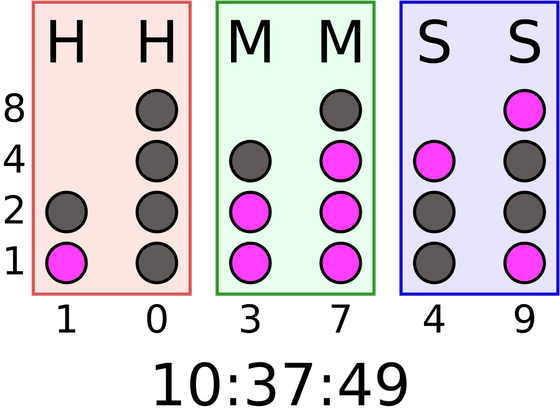
@clark TIL BCD
@b0rk - I thought I knew it until I looked the Wikipedia article. So many encoding variants. Makes my head hurt.
https://en.wikipedia.org/wiki/Binary-coded_decimal
Binary-coded decimal - Wikipedia

@clark @b0rk the most amazing about BCD is the 8087 floating point unit had it as a native format!
@b0rk this is the classic real world example of integer overlow https://ai.googleblog.com/2006/06/extra-extra-read-all-about-it-nearly.html
Extra, Extra - Read All About It: Nearly All Binary Searches and Mergesorts are Broken

@b0rk on a similar note, there's an hour long talk on "why implementing std::midpoint()" is very tricky https://www.youtube.com/watch?v=sBtAGxBh-XI
CppCon 2019: Marshall Clow “std::midpoint? How Hard Could it Be?”

YouTube

@b0rk the only thing that comes up for me regularly is that modulus doesn't work the same way across languages, when you ask for the mod of a negative number

which leads to "what the hell is even happening" type bugs

@b0rk or how floor division can trip people up with negative numbers, as it rounds to the smaller number

>>> -3.5 //2
-2.0
>>> 3.5 //2
1.0

@tef @b0rk exactly this! It's not modulus, it's remainder, usually
@b0rk There are multiple ways to define modulo for negative numbers and the behavior varies by programming language: https://torstencurdt.com/tech/posts/modulo-of-negative-numbers/ https://en.wikipedia.org/wiki/Modulo_operation
Modulo of Negative Numbers

The modulo operator returns the remainder of a division. But things get a little more tricky when you throw negative numbers into the mix.

@b0rk
* Numerical order is different than alphabetical order.
* Leading zeros are sometimes important (e.g. zip codes).
@b0rk Notable 32-bit overflows: time_t, Gangnam Style