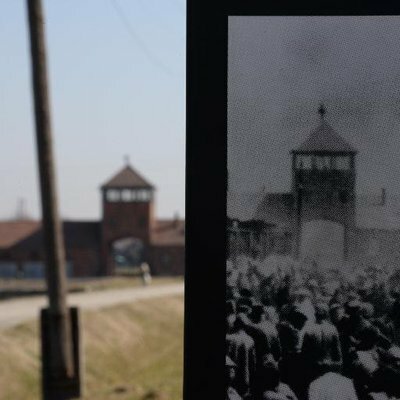
 Auschwitz Memorial
The new episode of our "On Auschwitz" podcast is dedicated to the fate of Poles deported to Auschwitz during the ethnic cleansing operation the Germans organized in the Zamość region of occupied Poland.
A total of 1,301 people, including at least 162 children were deported to Auschwitz in three transports in 1942 and 1943.
#Auschwitz #history #podcast #OnAuschwitz #Poland #Nazis #Germany #Zamość #memory #ww2 #education @histodons @museum

"On Auschwitz" (26): Deportations of Poles from the Zamość region to Auschwitz by On Auschwitz
After Germany attacked the Soviet Union in June 1941. Heinrich Himmler gave the order to create a "German settlement area" around the occupied Polish town of Zamość. The population of that region was to be expelled and replaced by German settlers. The area was chosen for its agricultural character. It consisted of five towns and 696 villages. The displaced population was sent to transit camps, where they were subjected to racial screening. Those who, according to German criteria, were not "racially valuable" were planned to be deported to concentration camps. A total 1,301 people, including at least 162 children were deported to Auschwitz in three transports Dr Wanda Witek-Malicka of the Auschwitz Memorial Research Centre talks about the ethnic cleansing carried out by the Germans in the Zamość region and the fate of the inhabitants of this region deported to Auschwitz. — In the picture: a family photo of Jan and Aniela Malec (Jan - the younger man sitting in the middle). Their children were taken away from them in the Zamość camp. Jan and Aniela were deported to Auschwitz, where they both died in a short time (Jan in March and Aniela in April 1943), orphaning four daughters aged 4-13. The girls were deported from the Zamość camp to Siedlce, where they survived the war. See also our online lesson about this topic: https://lekcja.auschwitz.org/dep_zam_PL/
 iamBullivant
 flourhappy