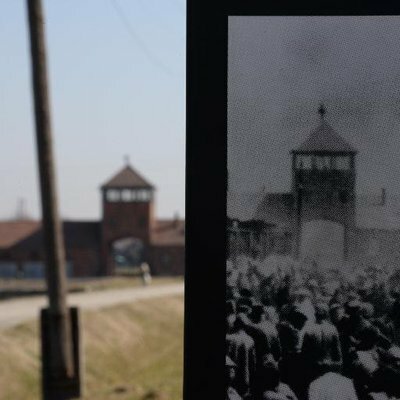
The new episode of our "On Auschwitz" podcast is dedicated to the fate of Poles deported to Auschwitz during the ethnic cleansing operation the Germans organized in the Zamość region of occupied Poland.

🔊 https://anchor.fm/auschwitz-memorial/episodes/On-Auschwitz-26-Deportations-of-Poles-from-the-Zamo-region-to-Auschwitz-e1sov31

A total of 1,301 people, including at least 162 children were deported to Auschwitz in three transports in 1942 and 1943.

#Auschwitz #history #podcast #OnAuschwitz #Poland #Nazis #Germany #Zamość #memory #ww2 #education @histodons @museum

"On Auschwitz" (26): Deportations of Poles from the Zamość region to Auschwitz by On Auschwitz

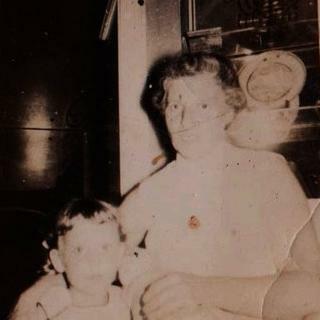
After Germany attacked the Soviet Union in June 1941. Heinrich Himmler gave the order to create a "German settlement area" around the occupied Polish town of Zamość. The population of that region was to be expelled and replaced by German settlers. The area was chosen for its agricultural character. It consisted of five towns and 696 villages. The displaced population was sent to transit camps, where they were subjected to racial screening. Those who, according to German criteria, were not "racially valuable" were planned to be deported to concentration camps. A total 1,301 people, including at least 162 children were deported to Auschwitz in three transports Dr Wanda Witek-Malicka of the Auschwitz Memorial Research Centre talks about the ethnic cleansing carried out by the Germans in the Zamość region and the fate of the inhabitants of this region deported to Auschwitz. — In the picture: a family photo of Jan and Aniela Malec (Jan - the younger man sitting in the middle). Their children were taken away from them in the Zamość camp. Jan and Aniela were deported to Auschwitz, where they both died in a short time (Jan in March and Aniela in April 1943), orphaning four daughters aged 4-13. The girls were deported from the Zamość camp to Siedlce, where they survived the war. See also our online lesson about this topic: https://lekcja.auschwitz.org/dep_zam_PL/
Anchor
@auschwitzmuseum @histodons @museum The podcast looks interesting. I shall definitely listen to it. Thank you for sharing and for the exceptionally important work that you do at the Auschwitz Memorial. It is so important that we never forget what the Nazis did to the Jews, the Roma, Poles, gays, people with disabilities and other minority and marginalised groups.

@bullivant @histodons @museum

2 things
I am glad that you are here @auschwitzmuseum
But MORE than that?
Glad you are interacting with folks

I am a Jew who grew up learning about the Holocaust from friends parents who had numbers on their arms.

My family didn't talk about it

Which was apparent when I started doing my genealogy and was STUNNED at how many of my ancestors were gassed and bulleted and pogromed

I'm listening to the Podcast
#Neveragainforall

@flourhappy

Thank you for the kind words. Interaction is a huge challenge considering the scale of our activity on different platforms. Yet, we keep trying to do our best.

Let us know what you think about the podcast.

@bullivant @histodons @museum

@flourhappy @bullivant @histodons @museum @auschwitzmuseum

In my family noone was willing to talk about their experiences and the family members murdered by the Nazis, sometimes they took their stories to the grave, occasionally they would eventually open up about it and I believe it may have helped them to do so.
This is why #AuschwitzMuseum is so important

@Runsforcoffee @bullivant @histodons @museum @auschwitzmuseum

I have a really hard time believing that family members DIDN'T know about all our relatives that were exterminated.
Slightly off topic I am related to both Faye Schulman and the Bielski's . Faye took the photo's for the Documentary Four Winters . About the Partisians that fought the Nazi's

But yes these stories are crucial as folks die off

@flourhappy @bullivant @histodons @museum @auschwitzmuseum.

If there's noone or nothing to tell the stories , then you have to want to go looking for them, otherwise you know nothing...
We discovered more on the Internet in our 50's about wider family than we ever got from most surviving relatives, not least because as they aged their recollections were often very inaccurate.
I'm guessing that the blocking and compartmetalising of the past was a coping mechanism..

@Runsforcoffee @bullivant @histodons @museum @auschwitzmuseum

I'm first gen Ukrainian Jew although that really doesn't describe "who I am" And I am a secular Jew too . That's one of the reasons I started my genealogy. What does it mean to be Jewish in a world where many still want us dead?

@flourhappy @bullivant @histodons @museum @auschwitzmuseum

All the anxieties and none of the supposed benefits?😂 That's how I see it...

@Runsforcoffee

I'm 70 years old

I'm old enough to remember a sign I saw as a kid in Delaware which is on the Mason Dixon line

No ni**ers
No kikes

Somewhere around 1961

And on that same trip?
My family got tuned away from a Hotel in Atlantic City NJ because they were full ( they weren't the Hotel was restricted to both black folks and us Jews)

@flourhappy

Shameful and far from over ..

@flourhappy @bullivant @histodons @museum @auschwitzmuseum

Delayed realization is real. I was aware that my grandmother was in a camp in WWII, but didn't understand what this entailed until I got older and could research it myself.

She went to Ravensbrück, "Hitler's Hell for Women." Separated from her brother; she never saw him again. They were the sole survivors in their family from mass starvation in Ukraine a decade earlier.

As far as I know, she never spoke to anyone about those times.

@pinkunz @flourhappy @histodons @museum @auschwitzmuseum I don't think many survivors talked about it for a long time. The trauma and survivor guilt was too great.

@bullivant @pinkunz @histodons @museum @auschwitzmuseum

@bullivant @pinkunz @histodons @museum

I understand that
What I can't get my head around is what they knew and what they kept from me @auschwitzmuseum I did listen to the podcast. I will think about it for a bit and write some response

@flourhappy @bullivant @pinkunz @histodons @museum Thank you. We hope you will find time to listen to all: podcast.auschwitz.org
@museum @histodons @auschwitzmuseum I highly recommend the following:
(It's available for free on Kanopy with your library card)