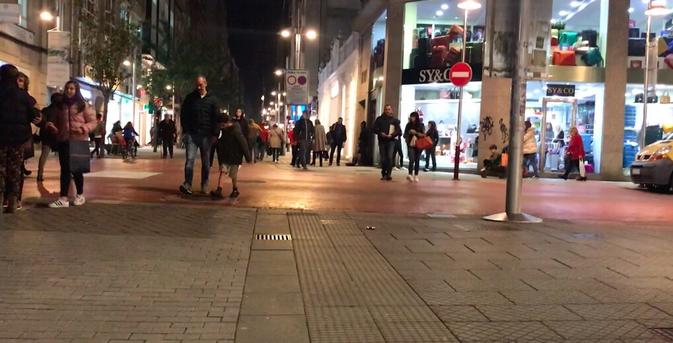
Paving tiles are so much easier to repair, pull & replace for utility work & #tree root care, and rearrange for new road layouts than #asphalt or #concrete.

Tiles are cheaper, can embed rather than spew #carbon, and provide drainage.

Photo next to #transit hub in #Lund #Sweden. White crosswalk pavers in arc of gray pavers. Smooth enough for #disability & #bike use. Perfect for #transit speed.

And pavers can hold the weight of a #bus.

#PavingTiles for the win!

#infrastructure #engineering

@CathyTuttle
In really cold climates with freeze-thaw cycles, water may get under them and when freezes causes them to heave. It heaves asphalt too, and the spring crack filling crews come out.
Asphalt is recyclable and cheaper than using new material. They examine it and determine if they have to add any new material to it. I do not know the energy costs for heating the asphalt versus making new paving stones/bricks and whether sub-layers have to be different.
@jamesbicycle @CathyTuttle There are lots of places that don’t get cold enough to worry about frost heaves. I’m also skeptic at that they would be worse with pavers. Pavers are quick to replace, and because they are many small fragments, won’t crack in the same way asphalt does.
@dx @jamesbicycle @CathyTuttle I think a key thing is “does cold weather fuck it up” and “does getting fucked up mess with folks who roll or wheel around or are otherwise disabled?”

@jeffbyrnes @dx @jamesbicycle Sweden is cold, clears snow effectively, and takes good care of the mobility of its people with disabilities.

Many central cities in Sweden are cobbled. I don't know specs of how 🇸🇪 snow clearing works but it worked quite well all thru the winter I lived there.

Swedish friends who worked in disability mobility told me these cobbled streets worked well for walking & rolling.

US cities may have a different standard of bumpy cobble that might not be as forgiving.

@CathyTuttle @dx @jamesbicycle great to hear! I live in Somerville, MA, USA, & one of our major gathering/commerce areas used a lot of brick when it was last rebuilt. That brick is not great, esp. for folks who roll primarily.

I’d love to advocate for something attractive like pavers that’s not anti-disability, so this is super helpful!

@jeffbyrnes @dx @jamesbicycle
Story about a city that doesn't deal w snow, but still relevant. #Pontevedra, an entirely car-free city center in western #Spain, is mostly streets made of stone and concrete pavers.

I walked around the center (population ~40,000) with chief city planner who says visitors often ask him why the city has so many people using #wheelchairs.

“We have the same numbers of #disabled people as any city,” he says. “But here ALL people can easily use our public streets.”

@CathyTuttle
Don't know re USA. The "dry cold" part of Canad. It was close to freezing 2-3 weeks ago then 10 days below -30°C, warmed up to -15 today. The snow sticks to the roads and walkways unless immediately removed. There are only a few places with bricks. Graders might remove some of them.

This is a grader in my city: http://i.cbc.ca/1.3336867.1448480290!/fileImage/httpImage/image.JPG_gen/derivatives/16x9_1180/snow-grader.JPG

@jeffbyrnes @dx

@jeffbyrnes
Snow removal. And where the snow gets removed from first:
Typical: car routes for work commuting for proportionately more men
Equity: walking routes for children and proportionately more women who're taking the kids to school

@dx @CathyTuttle