I've been thinking a lot about Twitter and failure lately. And the absurdist Gladiator spectacle that we're all watching. I decided to turn it into a blog post: https://zephoria.medium.com/what-if-failure-is-the-plan-2f219ea1cd62
What if failure is the plan? - danah boyd - Medium

I’ve been thinking a lot about failure lately. Failure comes in many forms, but I’m especially interested in situations in which people *perceive* something as failing (or about to fail) and the…

Medium
@zephoria Great post! Some of what you say matches my sense that Twitter has been ‘hollowed out’. Yes, the people who have left (or ‘quiet quit’) have probably been replaced by new users, particularly those on the political right who previously felt that Twitter wasn’t for them. But the quality and richness of the platform has suffered and the whole thing has a kind of ‘wild west’ or ‘bargain basement’ feel that is quite different to how Twitter used to be even a few short months ago. Is the beginning of a wider failure or just change into something else? Time will tell.

@zephoria
I was especially triggered by this part:
“ I’m terrified for the activists and vulnerable people around the world whose content exists in Twitter’s databases, whose private tweets and DMs can be used against them if they land in the wrong hands (either by direct action or hacked activity). I’m disgusted to think that this data will almost certainly be auctioned off.”

Yikes!

@zephoria Thank you for this, fascinating read. To debate a point made in passing, I don't think I can agree with you on local news. Factually you're clearly right about the trajectory of those specific orgs and the investors. But if there was a business model that could support local journalism, we wouldn't have to rely on the old ones still being around to start/support new ones. Both are true, but Craigslist/the nationalization of news is the more important factors IMO
@adamgurri I think it's important to separate out what it takes to make news sustainable NOW vs. how we got here. The 60s/70s saw a huge surge of ad revenue, prompting companies to engage investors and go public. From this point on, it wasn't about sustainable business; it was about ROI to investors. Financiers took over the board seats, pushed to sell the land, forcing news co's to pay rent (which kept rising).
@zephoria Agree with you. Also agree that because of conflation between the two question (what it takes now vs what happened) people have read back answers to one question as being explanations of the history, which they are not.
@adamgurri News co's were able to be sustainable with no rent. But they couldn't do hockey stick ROI. And that's what the financiers expect. So that's why they squeeze. TODAY, news co's are in a worse place. They need investors, they don't own valuable property, advertising is especially cheap, etc. But I would argue that if financiers hadn't taken over these companies (and these co's hadn't gone public), we'd be having a VERY different convo.
@zephoria From an ecological point of view, even if the long term trajectory was still failure for those businesses, they might have lasted years or even decades longer, or places that went to 0 local outlets might have kept 1 or 2
@adamgurri This is indeed possible, although I still think that regulation of Gannett and Alden Global Capital and other such financiers would've done more to enable news futures than the historical erasure of Craigslist.
@zephoria Craigslist is more a stand-in though, no question the loss of classifieds would’ve rocked the industry and that was going to happen with the internet no matter what

@zephoria @adamgurri
We got there when the networks'corporate masters decided the #FourthEstate produced Jack shit to the bottom line and factual information as a public service (even as a loss leader) didn't pull in as much ad $s as drama so why, the fuck, should they care?

The #FCC didn't seem to think the #Corporations owed citizens anything for the public airwaves anyway, so why bother.

News is now a profit center because we were stupid enough to allow it.

@zephoria "Network effects intersect with perception to drive a sense of a site’s social relevance and interpersonal significance."

That's it in a nutshell, lol. It's still too early to tell, but, as you say, I bet those on the inside know.

Great read. Thank you.

@zephoria wishing that more people wrote like this
@zephoria best thing I’ve read yet on the rise and fall of social platforms. Thank you
@zephoria Insightful post! Thanks.
@zephoria your comment about twitter's dementia struck a chord with me too - people were talking about its death a couple of weeks ago, but I am seeing a decay into senescence instead, where it loses coherence and starts repeating itself. It can look alert in short bursts to strangers, but is no longer fully present to those who know it well.
@zephoria
Wow - just finished reading. Thanks for your thoughts/analysis. I'm also most worried about the vulnerable people who will be hurt. Excellent piece.
@zephoria Nice piece. Insightful analysis. Thanks for writing it.
I am not sure what Elon's true aim is, but shedding some of the audience might be part of the plan. After all, a profitable company with fewer users is better than a unprofitable company with 396.5 million users. As long as he can keep a loyal core and make money on advertising, that might work.

Especially if you factor in that the former Twitter CEO is creating Bluesky, a decentralized social media platform. If Twitter sheds some users, but then federates with Bluesky or even ActivityPub, it might actually be able to turn a profit despite a lower user count.

What's new in this era is that federation is an option, and could even be enough to break its fall. Lower infrastructure costs, but still have access to nearly 400 million users via federation anyway.... Hmmm.
@zephoria great piece, danah - I use twitter now the same way I used FeedDemon in ~2005 ... a list of feeds with no engagement. I am still technically a DAU for ad impressions, but the ads on twitter these days are hot garbage.
@timobrien @zephoria
Seconding the observation that the latest flood of Twitter ads are garbage! You may not be old enough to have seen late-night commercials on local television stations for Ronco products such as the pocket fisherman. Current Twitter ads remind me of that bargain basement genre of crap ads for crap products.
@zephoria What is a “sticky node”?
@Tengrain @zephoria
I, too, wondered about a few technical terms such as “sticky node.“ later paragraphs provided some context. I took a sticky node to be a valuable contributor whom readers would visit the site to read.
@zephoria
Props to anyone who's read Perrow's _Normal Accidents_ and used it in an appropriate context. On failure, there's "failure" like a plant dying to spread its seeds, and "failure" like a nuclear meltdown that lays waste to its surroundings. Under better economic conditions, the release of Twitter's staff might seed a thousand new ventures. Right now, it's just another weakness in an increasingly flimsy network of ad-supported ventures.
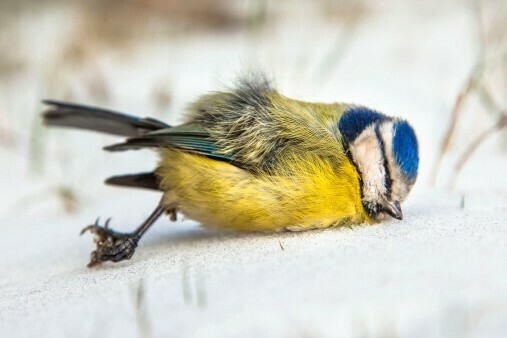
@zephoria @anildash oof that poor bird needs a content earning 😨

@zephoria

"When the fake women disappeared, the real women disappeared. And so did the men."

That's so interesting, seems so unpredictable.

⬆️⬆️⬆️⬆️⬆️⬆️

Wisdom from @zephoria

@zephoria Really interesting points in the piece:

"Network effects intersect with perception to drive a sense of a site's social relevance and interpersonal significance."

"We're in a modern day Coliseum watching a theater of suffering performed for the king under the rubric of 'justice.'

Thanks for sharing your thinking and expertise - I do wonder about your final question of failure as a desired end goal and if this is all a kind of "chaos is a ladder" type of opportunism

@zephoria I think another lens through which to see the collapses underway is of bureaucratized, professionalized Big Social. It happened at Facebook through boringness and Twitter through willful swamp-draining: the collapse not of the network but of a class of its maintainers.

This is a shame in the sense that this class had partly turned these capitalist firms into public-benefit utilities, despite their status as publicly traded corps. But in both cases, capitalism is getting its revenge.

@ntnsndr @zephoria

For those of us who invested deeply in Google Plus, the upheaval at Twitter is just another reminder that these essential communications platforms are just too important to leave in the hands of these failing forms of economic organization.

Having a fediverse or some other, more decentralized, platform is a great start. But the real missing piece is the new economic structures to support them.

I know I'm preaching to the choir in saying this, of course. :)

@gideonro @zephoria Absolutely. That's why at #Socialcoop, members fund their own social. We don't want to rely on the business models or largess of anyone else for something so important.

Slow computing:) https://newrepublic.com/article/121832/pleasure-do-it-yourself-slow-computing

The Joy of Slow Computing

Turn on, boot up, drop out.

The New Republic

@zephoria "The drama that unfolds in the World Cup is wholesome"?!

It seems you missed the slave labor Qatar used to build their facilities as well as their abhorrent treatment of LGBT folk and our supporters. Not wholesome. Not at all.

@dlauri *totally* fair. And I should admit I haven’t followed squat about the World Cup. I was thinking more generally but your point is well-taken.

Excellence!

@zephoria

https://zephoria.medium.com/what-if-failure-is-the-plan-2f219ea1cd62

"(...) We are certainly seeing entire sub-networks flock to Mastodon, but (...) [y]ou can lose whole segments and not lose a site.

(...) The bigger question concerns those emotionally sticky nodes.

(...) And sadly, that’s what I expect we’re about to see. A manic, demented creature hurting everyone who loved it on its way out the door. (...)"

#Twitter #Mastodon #fediverse #SocialWeb #networks #media #journalism #failure

What if failure is the plan? - danah boyd - Medium

I’ve been thinking a lot about failure lately. Failure comes in many forms, but I’m especially interested in situations in which people *perceive* something as failing (or about to fail) and the…

Medium

@josschuurmans @zephoria

"Nearly everyone I talk with is surprised that the actual service of Twitter is mostly still working."

I think this sort of statement is more telling, as it shows how much people got (and are) caught up in the dramatic narrative about Twitter rather than actually responding to the facts on the ground.

If nearly everyone a person talks to is surprised, that means those nearly everyones were wrong, and that needs to be appreciated!

@zephoria Excellent post. I didn’t quite understand this part <<when journalists/advocates/regular people on the right declare progressive politicians/policies to be failures, both mainstream media and the left obsessively amplify falsehoods and offensive content in an attempt to critique and counteract them. (Has anyone on the left managed to avoid hearing about the latest round of celebrity anti-Semitism?)>>
Are you saying MSM &left are SUPPORTING falsehoods, or pointing out the falsehoods of the right? If the latter, what is your argument against doing that? Both have biases thst distort reality in some ways, but the perversion of realty by the far right Is orders of magnitude worse
@zephoria i’m going to need to read the essay a second time to see where it addresses the hypothesis that failure is the plan, as the title indicates. As it is, I read a number of insightful reasons why Twitter is doomed, but I did not see any reasons why is intentional.
That said, this passage made me feel so seen:
@zephoria
So many good observations about what condemns a social medium. I would like to read the essay listing attributes necessary for success! For example, conversations depend on high-value contributors and strong moderation; that is, troll removal.
@zephoria
I can't decide which is better, watching Elon Musk set giant piles of his own money on fire in an epic display of incompetence, or listening to conservatives try to convince me that all of this is making me sad.
@zephoria every word of this is incredible, and I’m trying to figure out when and in which courses I can have students read this next semester
@zephoria Very interesting post. Have you thought about the difference for users switching from a platform like FB where relationships are two-way, and a one-way platform like Twitter? With two-way relationships, a user can bring her connections with her when switching by inviting them to the new network. With Twitter, users can’t bring their audience with them. Especially for non-public figures who have to start from scratch building a following, that is a huge switching cost.
@rich1 There are indeed differences between FB and Twitter, but it has more to do with community norms than the directionality of the graph. Because its more common to "follow" on Twitter, people with large followings can actually have greater influence. In FB, it's more a matter of within-network friendships doing the pull. Either way, what matters is who someone pays attention to. And in both places, attention is not evenly distributed, regardless of directionality of the graph.
@zephoria @rich1 this is so counter-intuitive, but I know you have receipts. Have you perchance written about the difference between the graph and attention?
@hans @rich1 I'm curious what's counter-intuitive to you. Early social media was overwhelmingly people who knew each other following/friending each other. And then we saw celebrities (with uneven attn) and then the rise of the personal brand, the influencer, the creator. And of course corporations and journalists and others with status. Some of these can pull followers to other platforms. Celebs are obvi. But also journalists to Substack for example. Friend groups have local status dynamics.
@zephoria @rich1 Even though both Twitter and Facebook seemed to transition from "social network" to "social media" around the same time (late aughts?). I felt like Twitter became a place of broadcast naturally, due to the one-directional follow. For Facebook it seemed more like they had to *add* the algorithmic feed and frictionless sharing atop a bi-directional and thus more exclusive network.
@hans @rich1 (As for having written about it, ooof. I wrote a lot about attention and network dynamics when I was tracking social media full time. Mostly on my blog. But if only I could remember where or what. Too many things never got written up. The problem with research... So many darlings killed on the chopping floor. And somewhere on a backup drive in a closet, there's even code that once analyzed the temporal patterns of the graph shifts in FB and MySpace. Hahahah.)

@zephoria

ME is not *sure* about failure as plan (bc peeps like Elmo nevah think or admit they fail at anything)

Rawther ME thinks the purpose/plan was/is to co-opt the captured set of pre-existing users while reforming that into a rght-wing hate-speech troll haven under guise of Free-Speech just bc he Can!

BC those entitled haters are always *the victims* - hail Sir Elmo their defending Knight! (& TFG) riding to their defense.

Bleh! 😡

@zephoria

> Failure of social media sites tends to be slow then fast.

Same thing that the Mike character said about how he went bankrupt in _The Sun Also Rises_, of course.

"Two ways," Mike said. "Gradually, then suddenly."

Excellent writeup, for sure, thanks for sharing it!

@hillernyc <grin> Bingo. Nice reference identification!
@zephoria „This is why boring but informative content never has a chance against that which prompts fury.“
Well said!
@zephoria this was such a well written article. Distills and threads a bunch of really complex ideas really beautifully!