
Managing autistic, ADHD people and those with other neurodivergences is different from managing typical people and there must be something about it somewhere.

@esttorhe I’d love to see a large corporation take a shot at this.
You undoubtedly already have several autistic and adhd employees. You could ask those who are ok to reveal themselves about what works.
Also one high level director I know who’s autistic and adhd is Ani Moller might be worth reaching out to them.
Here’s a good primer in the meantime.
@Aniket I've been thinking about this and can't think of any technique.
When I work on peer feedback I usually focus on the most important aspect of the person:
- What's their strongest point.
- What's their weakest point
- What's one thing they can do to improve
Not sure if that's what you're looking for, but I hope it helps.
@Aniket In the event of no training, do you have a good IT department? Talk to the manager.
If he doesn't know he's managing neurodiverse staff, listen anyway. He probably is.
Recently completed a Diploma in Leadership & Management & nothing in any detail around neurodivergence.
Which is strange because you're absolutely right.
@Aniket I will ask my partner who trains new nurses/Más at her health center for what she'd recommend. (We are both ND.)
First step I suspect is HR who are actually good at their jobs and understand how accommodations work.
@Aniket I passed by this video so it might be helpful!
@Aniket as a neurodivergent manager (who has managed at least two other neurodivergent people) I feel like I've learned by doing and by thinking about what would help me (or, conversely, what really *didn't* help me). Also as someone in HR I've also encouraged other managers to do things I've learned work.
All that said, I feel like I know bits and pieces and do what I can to help other managers learn, too, but a resource to point others to would also be so helpful.
@Aniket a few quick things off the top of my head:
- there's usually not actually one "right" way, so clarify the goal then let people figure out what works for them
- a lot of neurodivergent people need specifics and details, so plan for them to ask questions! And be as specific as you can, especially about what's most important (goals, objectives, parameters)
- especially (but not only) for ADHDers, let them control *when* they work on *what* so they can task-switch
I've found that NTs are more likely to want the one "right" way to do things, so be ready to offer a suggestion if they do need it.
NTs also don't always connect dots like many autistic folks do (seeing parallels/patterns), so there's sometimes a need to slow down and walk through how things connect instead of just naming the pattern/connecting the dots and moving on. What's an obvious connection/pattern to an autistic brain might not be obvious at all to NTs.
This is actually something of a lightbulb moment, although it shouldn't be, I knew these things before, I just didn't ... connect the dots.
This can lead to the autistic person getting terribly frustrated at constantly having to explain what they see as the simplest of things to the rest of the team on a daily basis. It can also lead to them either seeing the rest of their team as slow dim-witted fools or at least appearing to do so, which can be a real cause of friction.
@allysonf @Aniket I have to constantly do this in teaching. My squirrel brain creates weird analogies which work for some, while others need step by step, and others just see the pattern.
There's a lot out there for supporting kids that translates brilliantly to adults.
I've never understood why society forgets that ND children remain ND even if they're over 18.
@Aniket my company has a sharepoint site for ADHD and surprisingly is a phenomenal resource for managers. whether they use it is a whole another discussion...
i just share that link everytime i speak with someone about my adhd, which is literally everytime and everyday 😂
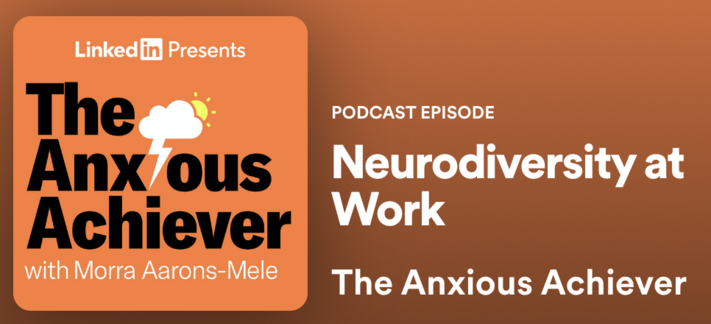
Listen to this episode from The Anxious Achiever on Spotify. Host Morra Aarons-Mele speaks with Danny Lakes, a Procter & Gamble employee who is on the autism spectrum, as well as Todd Ballish, a neurotypical manager at P&G, about why having a program for neurodiverse workers is a strength for the company. Then, we’ll hear from Emily Kircher-Morris, host of The Neurodiversity Podcast.
@static this is a really good one for autism in tech workplaces.
https://www.youtube.com/watch?v=k9X5tkVyM_A
And an Indian org
https://www.youtube.com/c/MuchMuchMedia
Whatever they do, try to let them know that neurotypicals cannot talk about neurodivergent issues. I've seen so many initiatives go wrong because of this and ND employees burnout over bad leadership of ND diversity leadership by neurotypical people.
@static ah, also I help with an org that works to support autistic people.