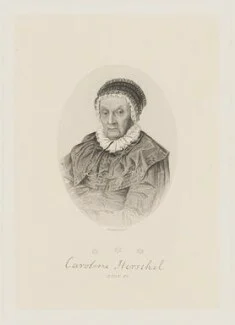
In this week's episode, we learn a bit more about the life & accomplishments of Caroline Herschel -- this engraving of her was created when she was 92!

Learn more here (and for EVEN MORE check out the first comment of our pinned post) https://starrytimepodcast.podbean.com/e/asterism-caroline-herschel-and-comets/

📷 :https://www.npg.org.uk/collections/search/use-this-image/?mkey=mw12403

#CarolineHerschel #Astronomy #AstroDon #space #science #astronomy #WomenInSTEM #WomenInScience #History #herstory #comets

In this week's episode, we're talking about Caroline Herschel & Comets!

Listen here & see the thread below for links for a deeper dive into the life and accomplishments of Caroline Herschel: https://starrytimepodcast.podbean.com/e/asterism-caroline-herschel-and-comets/

#comets #Herschel #astronomy #AstroDon #space #science #history #Herstory #WomenInScience #WomenInSTEM #WomenAstronomers #astronomers #comet #SciComm #podcast

Asterism: Caroline Herschel and Comets | Starry Time

Join Jordan and Kit for this asterism episode about Caroline Herschel and Comets!    Episode transcripts: https://www.starrytimepodcast.com/episode-transcripts Website: https://www.starrytimepodcast.com/ Social: https://universeodon.com/@starrytimepod Support the show: https://ko-fi.com/starrytimepod   Timestamps 00:00 Introduction 00:56 A Brief History of Caroline Herschel  06:07 Comet Basics 13:40 Outro   Keywords: Caroline Herschel, women in astronomy, comets, comet discovery, Kuiper Belt, Oort Cloud, asteroids, meteoroids, interstellar comets, Messier catalog, Flamsteed designation, Royal Astronomical Society, history of astronomy  

Women in Science: Dr Jennifer D’Souza

diesen Beitrag auf Deutsch lesen

The blog series “Women in Science” introduces women from TIB who share insights into their careers and personal experiences in science. Dr Jennifer D’Souza studied Natural Language Processing at the University of Texas at Dallas, USA, and is now an AI/NLP research group lead at TIB.

At TIB, she leads the “NLP for Scientific Information” research group within the Open Research Knowledge Graph (ORKG), a platform dedicated to making scientific knowledge more structured, machine-actionable, and accessible. Her group’s research explores how language models and other AI techniques can support scientific knowledge organization, while also investigating the evaluation and limitations of generative AI systems.
In this interview, she shares what she finds most rewarding about a career in science, the lessons she has learned along the way, and her hopes for the next generation of women scientists.

What fascinates you about working in science?

Three aspects come to mind. First, science provides a systematic way to study questions and understand the world around us. It offers well-defined methods for engaging with complex problems and the vast amount of information that is constantly being produced.

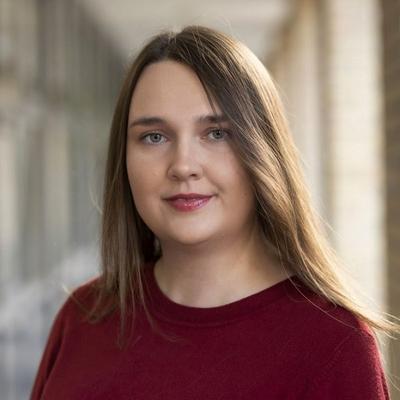
Dr Jennifer D‘Souza // Photo: TIB/C. Bierwagen

This is closely connected to my own work on processing and organizing scientific knowledge.

Second, I enjoy collaborating with like-minded people to build new systems and ideas together. Many scientific advances emerge through teamwork and the exchange of perspectives.

Third, I value the opportunity to teach and communicate scientific ideas to the next generation. Sharing knowledge and helping others develop their own scientific thinking is a particularly rewarding aspect of academic work.

As a woman in science, what would you have liked to have known earlier?

The importance of building a research network. While the value people place on networking varies, many of the most interesting projects I have worked on originated through conversations with others – whether at workshops, conferences, research projects, or informal discussions.

Over time, I came to appreciate how valuable it is to engage with the broader scientific community, meet people working on related problems, and exchange ideas. Simply attending workshops and events in areas that interest you can open unexpected opportunities for collaboration and learning.

What advice would you give to girls and young women who are considering a career in science?

Women often tend to second-guess themselves more than they should. I agree with many others who have highlighted the importance of confidence. Women should trust in their abilities and recognize that they belong in science just as much as anyone else.

I would also encourage young women to share their ideas openly, engage in discussions, and not hesitate to create opportunities for themselves when they do not already exist. Science benefits from diverse perspectives, and we need more women contributing their voices to important scientific conversations.

A wish for the future of women and girls in science …

I would love to see a future in which women entering science no longer feel like they are exceptions in the room. In particular, I hope to see much more balanced representation in engineering and technology-related disciplines, starting in our classrooms. At the same time, I do not see this as a separate issue. Science is strongest when it reflects the diversity of society as a whole and when talented people from different backgrounds feel welcome to contribute. One thing I particularly appreciate is that we are already beginning to see this in many research environments, including at TIB, where diverse teams and perspectives are increasingly part of everyday scientific work. I look forward to a future where such diversity is simply the norm.

Women in science – a blog series

The blog series “Women in Science” introduces women at TIB who provide insights into their scientific careers, role models and experiences from their everyday working lives. They all share their perspectives and wishes for the future of science and encourage other women to take their place with confidence.

#AI #ArtificialIntelligence #LizenzCCBY40INT #OpenResearchKnowledgeGraph #ORKG #ResearchAndDevelopment #WomenInScience

Sex differences in sleep brain rhythms: women show stronger spindles and slow waves 💤

https://1ban.news/biological-sex-differences-sleep-spindles-swa/
#sleep #neuroscience #brain #womeninscience #eeg

Sex differences in sleep brain rhythms: women show stronger spindles and slow waves - 1ban.news

Women have higher density of sleep spindles and greater power in both sigma and delta frequency bands during sleep compared with men, according to a systematic review and meta-analysis published in the Journal of Sleep Research. The finding holds for healthy adults but could not be confirmed in people with insomnia, where data remain too

1ban.news - Your number one source for curated news

No #EngineeringIntelligence without us!

Women have always played a part in engineering and designing intelligent systems. Starting with early pioneers like Ada Lovelace, the mother of programming languages, over NASA’s Fortran expert Dorothy Vaughan, whose code sent people into space, to the many women working on computer science and AI today, women’s contributions continue to shape the world of interconnected knowledge. However, often these contributions go unnoticed or are attributed to men instead. Time to change that! As we celebrate this year’s International Women in Engineering Day under the theme of #EngineeringIntelligence, let’s take a look at what our female researchers and software developers have accomplished to make the Open Research Knowledge Graph an intelligent system.

Who we are and what we do

The Open Research Knowledge Graph, our lighthouse in the publication flood, is a non-profit platform for machine-actionable scholarly knowledge, combining semantic technologies, AI and human expertise to provide researchers with structured scientific knowledge from publications. Our system helps to find answers to research questions, compare publications, reproduce scientific findings and make research information findable, accessible, interoperable and reusable.

ORKG’s success paved the way for many satellite systems, most notably the TIB Knowledge Loom for truly reproducible and reusable scientific knowledge and the TIB AIssisant, an AI agent supporting scientists throughout the whole research lifecycle.

Many components interconnect to make an ecosystem like this possible, from data ingestion over quality control to displaying results. A team of more than 30 researchers, software developers and curation specialists work together to bring in diverse expertise and realize these components. With roughly one third of our team members, the ORKG team has a relatively high share in female researchers compared to the national average in Germany. In this article, we take a look at the contributions of eight women specifically from our team and their perspectives on the ORKG.

Getting Data In

The knowledge in the ORKG ecosystem has to come from somewhere and while AI extractions can be a good starting point, they do not replace human expertise. Crowd-sourced curation done by domain experts plays a huge role. The challenge is to structure this often unorganized knowledge, especially since domain experts are often not data curation experts. Human-machine collaboration is required. A large part of our PhD student Lena John’s research focuses on Human-In-The-Loop workflows to data curation. With ExtracTable, she developed a tool that creates a scientific corpus of literature, extracts knowledge and compiles it into structured comparisons, while providing user-friendly tabular interfaces for human validation and correction.

Another of her tools, SciMantify turns already existing CSV files into structured knowledge with a guided semantification workflow.

Learning Structure

Dr. Jennifer D’Souza leads an NLP research group at TIB focused on scientific knowledge organization. Together with her team, she develops AI-supported tools and workflows for structuring, aligning, and publishing scientific knowledge. Among these tools are schema-miner, a tool for mining templates from large collections of research papers, making it easier to describe them in a structured, consistent format in the ORKG, as well as OntoAligner and OntoLearner, two libraries for AI-based workflows for ontology alignment across multiple scientific domains and ontology engineering. Together, these tools help make scientific knowledge more aligned and interconnected by using the same vocabulary and schema.

Ensuring Quality

“An application is only as good as the underlying data. As we move toward structured, human- and machine-readable knowledge, ensuring the quality of our knowledge graphs becomes increasingly important.“

Lena John

The SciKGDash Curation Dashboard provides a comprehensive overview of knowledge graph quality through interactive visualizations and supports curation workflows that help identify, track, and resolve quality issues. Its goal is to enable continuous improvement of the ORKG’s data quality and reliability.

Getting Data Out

As our PhD student Golsa Heidari states:

“Good research has little impact if people cannot find it.”

Her work focuses on making research more accessible through intelligent retrieval and knowledge organization. In one of her projects, she built a unit conversion system, allowing harmonization across different studies. By integrating third-party tools for systematic reviews, she makes ORKG even more useful. Additionally, she developed the basis for a dynamic multi-level faceted search for scientific knowledge.

Mutahira Khalid, also a PhD student in the ORKG team, builds on this work with her smart filters, a context-aware filtering service that is proven to effectively reduce search noise.

Making Science Reproducible

“Scientific publishing should not be seen as the final product of research. Rather, it is the beginning of a new cycle where scientific findings contribute to solving complex environmental and social challenges.”

Dr Lauren Snyder

Science lives by exchange and collaboration. One researcher picks up another’s findings, continues their work, proves or disproves their theories, brings in their own perspective or uses old knowledge in a new context. For that, scientific statements need to be reusable, reproducible and open. The TIB Knowledge Loom, co-founded by Dr Lauren Snyder, tackles this challenge. With her background in ecology and biology, Lauren brings her experience with research workflows outside of computer science to enable a seamless integration.

Venturing Into New Projects

Our newest addition to our research projects is the TIB AIssistant, an AI tool that supports researchers throughout the whole scientific process. PhD student Farhana Keya focuses on the very first steps. Her work assists with idea generation, building an environment for researchers to brainstorm based on existing publications. To later on find more material, users can then use her federated research artifact search.

Building A Frontend

As a research web engineer, Qurat-ul Ain Aftab does more than just design a good-looking interface. She engineers the fronted data architectures that make Open Science accessible, bridging the gap between backend systems and seamless user experiences. The template graph view in ORKG is built on her work.

Using The ORKG

Dr Sanju Tiwari earned our curation grant several times by now and used it to prove that ORKG can advance her research on hallucination detection and mitigation in large language models. She already wrote several papers using the ORKG and got a lot of journal acceptances for them. Congratulations!

Why This Matters

Without the work of our many female researchers and developers, the ORKG would not be the system it is today. Just as a machine depends on every component working together, science and innovation thrive when we value and include the contributions of all researchers.

Especially in the age of machine-learning and AI, it is necessary to include diverse perspectives to combat issues like the gender data gap and build systems for everyone.

Only by recognizing and empowering intelligence in all people, we can truly start #EngineeringIntelligence.

For further reading, we reccomend also our blog series Women in Science, featuring interviews with Lena John, Dr Lauren Snyder and many more women at TIB!

#ORKG #Forschung #FrauenAnDerTIB #WomenInScience #LizenzCCBY40INT #ResearchAndDevelopment
This weeks instalment of Her Science, Her Story is complete. This time we have Rosalind Franklin.

Now to wait two weeks for the next part.

Pattern is by Climbing Goat Designs.

#CrossStitch #WomenInScience #Science

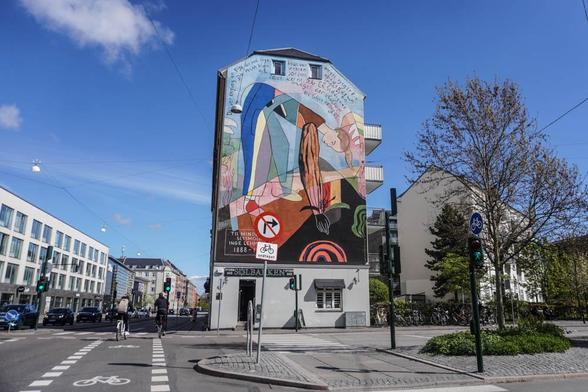
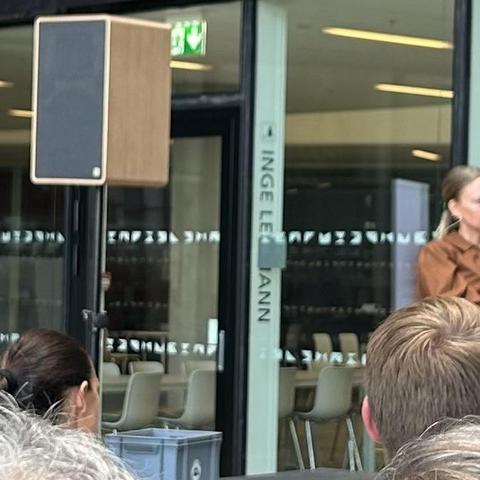
Fourth or fifth time in about two weeks that I cross paths with Inge Lehmann 😁 from hanging out with a geology student whose hero is Lehmann to meeting the artist behind this lovely mural, to several meeting & event locations... Copenhagen is very proud of her & rightly so 🥰

#WomenInScience

🤗🤗🤗 We welcome Allison Skidmore @Mol_Ecol @uniinnsbruck !

She currently investigates poaching and logging by transnational crime syndicates in Malaysia

https://molecular-ecology.at/allison-skidmore/

#WildlifeCrime #biodiversity #ecology #conservation #femtech #womeninscience

📢Nominate an eminent woman researcher for the 2027 L’Oréal-UNESCO For Women in Science International Awards.

🗓️Nomination deadline: 30 June 2026

🔗More Info: https://www.unesco.org/en/prizes/women-science

🔗Rules and Regulations: https://www.forwomeninscience.com/challenge/show/158

#WomenInResearch #STEM #WomenInScience #WomenInMath

L’Oréal–UNESCO for Women in Science Prize and Programme

The programme supports women researchers, inspiring young women to pursue careers in science and rewarding excellence.

🤗🤗We welcome Alina Wolfbauer and Daniel Egger
@Mol_Ecol
@uniinnsbruck !

They do their master theses on how hemeroby influences the common blackbird

https://molecular-ecology.at/alina-wolfbauer
https://molecular-ecology.at/daniel-egger

#biodiversity #ecology #conservation #urbanisation #femtech #womeninscience