Extreme heat and agriculture

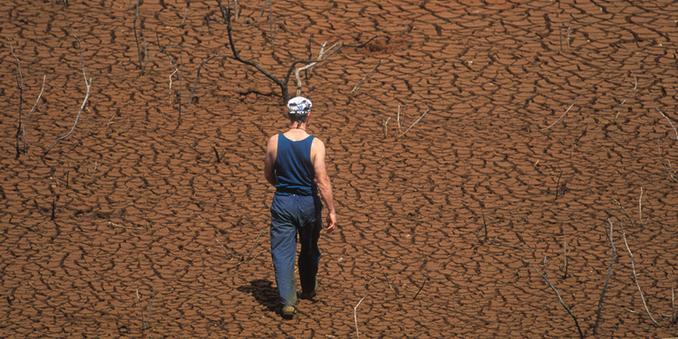
Extreme heat is emerging as one of the most urgent and least understood threats to agriculture and food security. Rising temperatures, prolonged heatwaves, and shifting climate patterns are already disrupting crop yields, livestock health, water availability, and rural livelihoods – with impacts falling disproportionately on the most vulnerable.Because extreme heat is predictable, strengthening climate services and early warning systems linked to anticipatory actions is a key opportunity. It is also clear that there are profound limits to what adaptation can achieve. With global mean temperatures on the cusp of exceeding the 1.5 °C warming limit outlined in the Paris Agreement, the urgency for adaptation and mitigation action only grows. The only durable solution to protect the future of global agrifood systems from the escalating threat of extreme heat lies in ambitious, multilateral climate change mitigation.

Extreme heat and agriculture

Extreme heat is emerging as one of the most urgent and least understood threats to agriculture and food security. Rising temperatures, prolonged heatwaves, and shifting climate patterns are already disrupting crop yields, livestock health, water availability, and rural livelihoods – with impacts falling disproportionately on the most vulnerable.Because extreme heat is predictable, strengthening climate services and early warning systems linked to anticipatory actions is a key opportunity. It is also clear that there are profound limits to what adaptation can achieve. With global mean temperatures on the cusp of exceeding the 1.5 °C warming limit outlined in the Paris Agreement, the urgency for adaptation and mitigation action only grows. The only durable solution to protect the future of global agrifood systems from the escalating threat of extreme heat lies in ambitious, multilateral climate change mitigation.

World Meteorological Organization (WMO)/ European State of the Climate 2025 report. #climate #WMO #Europe https://wmo.int/news/media-centre/earths-climate-swings-increasingly-out-of-balance
Earth’s climate swings increasingly out of balance

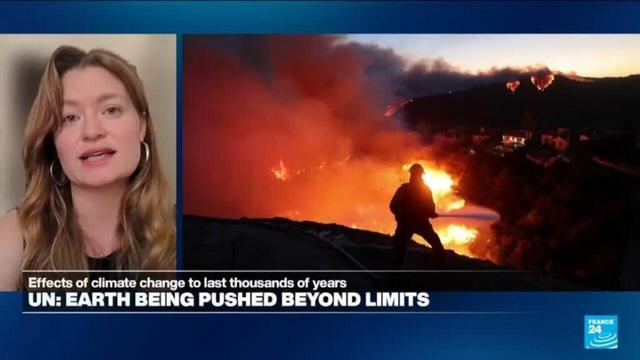
Geneva, Switzerland (WMO) – The Earth’s climate is more out of balance than at any time in observed history, as greenhouse gas concentrations drive continued warming of the atmosphere and ocean and melting of ice, according to the World Meteorological Organization (WMO). These rapid and large-scale changes have occurred within a few decades but will have harmful repercussions for hundreds – and potentially thousands – of years.

World Meteorological Organization
World Meteorological Organization (WMO)/ European State of the Climate 2025 report. #climate #WMO #Europe https://wmo.int/news/media-centre/earths-climate-swings-increasingly-out-of-balance
Earth’s climate swings increasingly out of balance

Geneva, Switzerland (WMO) – The Earth’s climate is more out of balance than at any time in observed history, as greenhouse gas concentrations drive continued warming of the atmosphere and ocean and melting of ice, according to the World Meteorological Organization (WMO). These rapid and large-scale changes have occurred within a few decades but will have harmful repercussions for hundreds – and potentially thousands – of years.

World Meteorological Organization

European State of the Climate 2025 report published

Warming is reducing #snow and #ice cover, while dangerously high surface air temperatures, #drought, and #heatwaves, as well as record-high #ocean temperatures, are affecting regions across the continent, from the #Arctic to the #Mediterranean. The result is increasing impacts – from record heatwaves over land and at sea, to devastating #wildfires, and accelerating #biodiversity loss – with consequences for #societies and #ecosystems across #Europe.  

The #ESOTC report is produced by the #EU’s #Copernicus Climate Change Service (C3S), implemented by #ECMWF, and the World Meteorological Organization (#WMO), and brings together the work of around 100 scientific contributors.

Report:
https://climate.copernicus.eu/esotc/2025

https://www.ecmwf.int/en/about/media-centre/news/2026/european-state-climate-2025-report-published

2026 könnte neue Hitzerekorde aufstellen

Das Vorjahr zählt zu den drei wärmsten Jahren in #Europa seit Messbeginn, wie ein aktueller #Klimabericht zeigt. Derweil bahnt sich das Wärmephänomen #ElNiño an.

Je nachdem, wie man die Grenzen Europas zieht, war 2025 das wärmste Jahr seit Messbeginn (nach der weit gefassten #WMO-Zone, die etwa #Grönland und den südlichen #Kaukasus inkludiert) oder eines der drei wärmsten Jahre. Im Vergleich zum Mittel 1991 bis 2020 war es im Vorjahr etwa 1,2 Grad heißer. Seit der vorindustriellen Zeit erhitzte sich Europa um 2,5 Grad, Österreich um 3,1 Grad.

https://www.derstandard.at/story/3000000318387/2026-koennte-neue-hitzerekorde-aufstellen

#Klimakrise
#Copernicus

Europa erwärmt sich am schnellsten

#Europa bekommt die Auswirkungen des #Klimawandel's besonders stark zu spüren: Es erlebte 2025 einen enormen Rückgang der Schnee- und Eisbedeckung, #Dürren, #Hitzewellen, #Waldbrände und #Meereserwärmung. Das fasst der Bericht über den Zustand des Klimas in Europa 2025 der Weltwetterorganisation (#WMO) und des #EU-Klimawandeldiensts #Copernicus zusammen. Kein anderer Kontinent erwärme sich schneller, geht daraus hervor.

Dass die Temperaturen in Europa besonders stark steigen, liege unter anderem daran, dass sich die atmosphärische Zirkulation geändert hat, sagte Samantha Burgess vom Europäischen Zentrum für mittelfristige Wettervorhersagen. Das begünstige im Sommer Hitzewellen. Zudem sei die Luft sauberer geworden. Es gebe weniger kleine Partikel, an denen sich Wolken bilden. So erreiche mehr Sonnenstrahlung die Erdoberfläche.

https://orf.at/stories/3428275/

#Klimakatastrophe

Klimawandel: Europa erwärmt sich am schnellsten

Europa bekommt die Auswirkungen des Klimawandels besonders stark zu spüren: Es erlebte 2025 einen enormen Rückgang der Schnee- und Eisbedeckung, Dürren, Hitzewellen, Waldbrände und Meereserwärmung. Das fasst der Bericht über den Zustand des Klimas in Europa 2025 der Weltwetterorganisation (WMO) und des EU-Klimawandeldiensts Copernicus zusammen. Kein anderer Kontinent erwärme sich schneller, geht daraus hervor.

ORF.at
Temperaturer som passerade 50 grader i Turkiet och norr om polcirkeln uppmättes 30 grader – Europa upplevde flera extremväder förra året. Det förändrade klimate#extremväder #klimat&miljö #europa #copernicus #meteorologiskavärldsorganisationen #wmo #klimatförändringar
Europa har feber – då slår förnybar el rekord

Temperaturer som passerade 50 grader i Turkiet och norr om polcirkeln uppmättes 30 grader – Europa upplevde flera extremväder förra året. Det förändrade klimate

Aftonbladet